
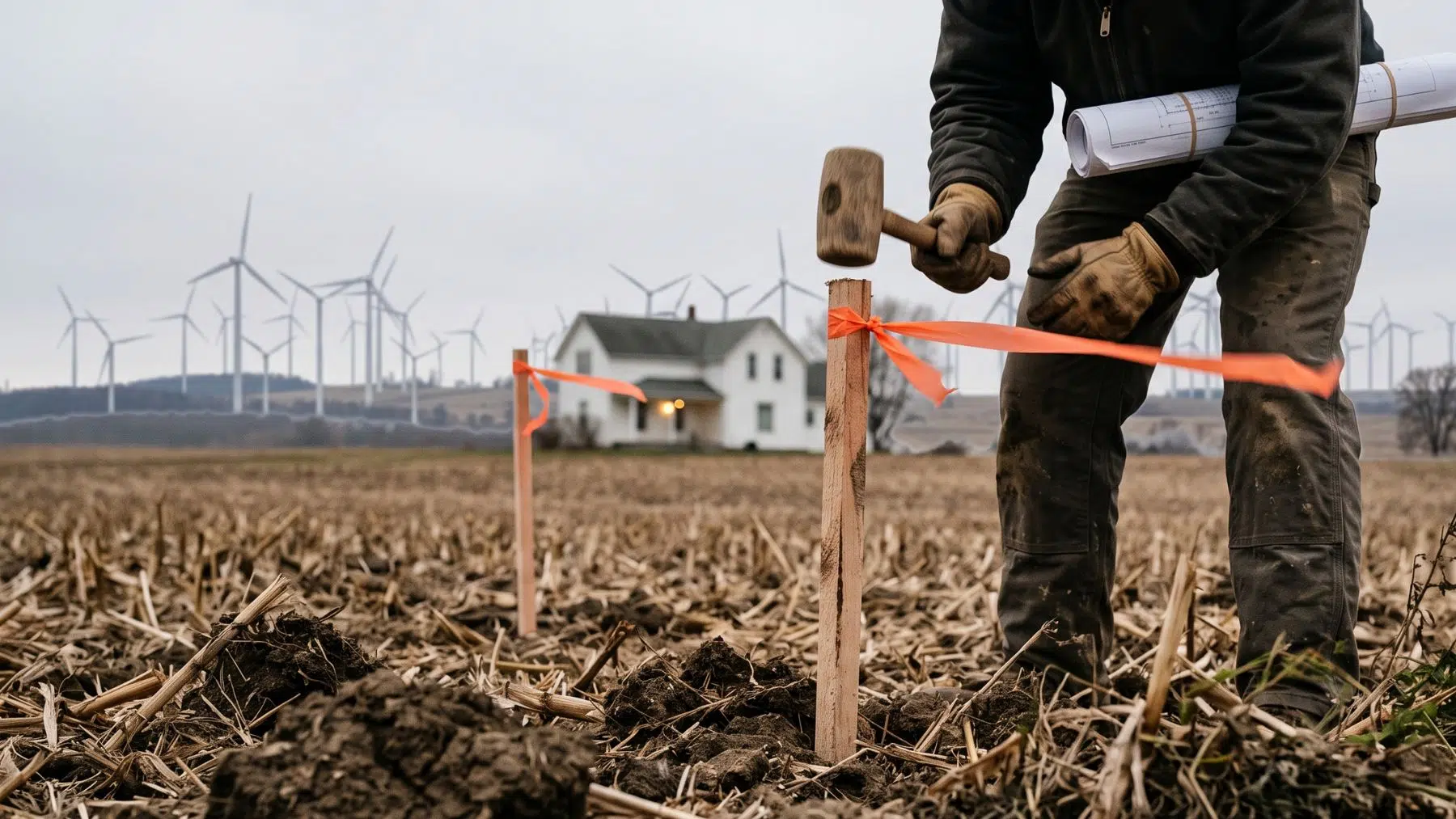
A notice goes up at the county office, and word moves faster than any turbine gets built.
Neighbors start doing arithmetic about what the view is worth, and some of them put the house up.
That reaction has been the loudest argument against wind projects in rural America for the better part of twenty years.
So researchers went and measured it, across 500,000 home sales.
And the answer has two halves that both get quoted, usually separately.
What was actually measured
The work covered 428 wind projects across 34 states, and every home sale within five miles of them.
Those sales ran from 2005 through 2020, which makes it the largest look at this question anyone has done in the United States.
The method matters as much as the size. It compares homes close to a project against homes farther out in the same region.
Which controls for the thing that ruins most property arguments, namely that rural markets and city markets move on entirely different tracks.
It also means the comparison of home values is near versus far, and not one county against another with no turbines in it.
The Department of Energy names that limit itself, and it is worth holding onto before anyone reaches for a broader conclusion.
The drop starts before the first turbine
Here is the part of the timeline that almost nobody in the argument expects to find.
Prices begin sliding an average of three years before construction starts, which means they respond to the announcement rather than to any machine.
No concrete has been poured, nothing turns yet, and the effect is already sitting there in the market.
Then it deepens through the build itself, which is the noisiest and ugliest phase of the whole thing, with haul trucks, cranes and a torn up county road.
At the bottom of that curve, homes within one mile sell for about 11 percent less than comparable homes farther away.
So the damage is real, and it is front loaded onto people who cannot yet see what they are getting.
Where the effect stops
But the effect stops far sooner than the argument at a county meeting usually assumes it does.
Beyond 1.25 miles the researchers found no effect at all, which is a much tighter ring than most objections imply.
Even the innermost band is odd. Within half a mile there were fewer sales, and no measurable price impact on the ones that happened.
Then there is the one finding in the whole analysis that cuts against every intuition people bring to this argument.
The price effect showed up only in counties with more than 250,000 residents.
In genuinely rural counties, which is where the overwhelming majority of American turbines actually stand, the analysis found no impact on prices.
What happens once they are spinning
And then, somewhere in the middle of the project’s first years of operation, the curve turns back up.
Three to five years after a project starts operating, prices in the affected ring return to their inflation adjusted level from before the announcement, according to the researchers.
Not partially, and not with a permanent discount attached. The home values land back where they were.
Which reframes the whole thing as a construction problem rather than a turbine problem.
The dip belongs to the years of uncertainty and heavy machinery, and it closes once the site goes quiet and the trucks leave, as the department summarized when the work came out.
That timing has an obvious practical use, and it is the same lesson that shows up around a solar site or an offshore project.
Whoever sells during the build absorbs the entire loss for everybody who stays put and waits it out.
What the data does not settle
None of this makes the original objection unreasonable, and none of it should be used to wave a neighbor away.
A household forced to move in year two of construction takes a real financial hit, and telling them the market recovers by year seven is no help at all.
There is also a separate international analysis, built on a far larger pool of sales going back to the late 1990s, that lands on roughly 1 percent for a home with a turbine within about six miles.
Different dataset, different distance bands and different years, so the two of them should never be quoted together as a single number.
What both of them agree on is the direction. The effect on prices is smaller and shorter than the fear it generates at the meeting.
And the honest way to use that is not to dismiss the neighbor with the sign in the yard, but to time the compensation to the years when the loss is actually landing.
Read the whole thing?
Get the week's signal, not the noise
Our sharpest reporting on energy, climate and nature — free, once a week.


