
Italian manufacturers have always been considered the royalty of the automotive industry. Ferrari, Lamborghini, Maserati, and Alfa Romeo have consistently set trends. It didn’t adapt to it. Marking its 60th anniversary, an iconic brand is back with one of the most famous cars. This is a move that has been coming in strong in the last couple of years, with brands deciding to bring back old, iconic models that made an impact when they were launched, adapting everything to the new-world fuels and technology—some so exclusive that you’ll only hear about when all models were sold.
The power of an established brand: Don’t bend or break
Some manufacturers can get lost in the industry if they fail to find a way to stay relevant. However, an automaker that has been immortalized is still considered important, even when it’s not launching new cars every year. This is especially true in the Italian car industry. Ferrari, for example, doesn’t launch new cars every year because, for them, it’s not about keeping up with the competition: it’s about doing things right.
With this in mind, the mythical brand will launch its first all-electric vehicle in 2027—almost two decades after the first Tesla was released, in 2008. While not many automakers have the same status as Ferrari, going out of the market and then returning seems to be a nice strategy, exactly what the Italian manufacturer De Tomaso did. Not many spotlights, journalists asking questions, or desperate fans. Now, they will launch their first car in over a decade.
Italian giant back in the market with a new car: it was recently revealed
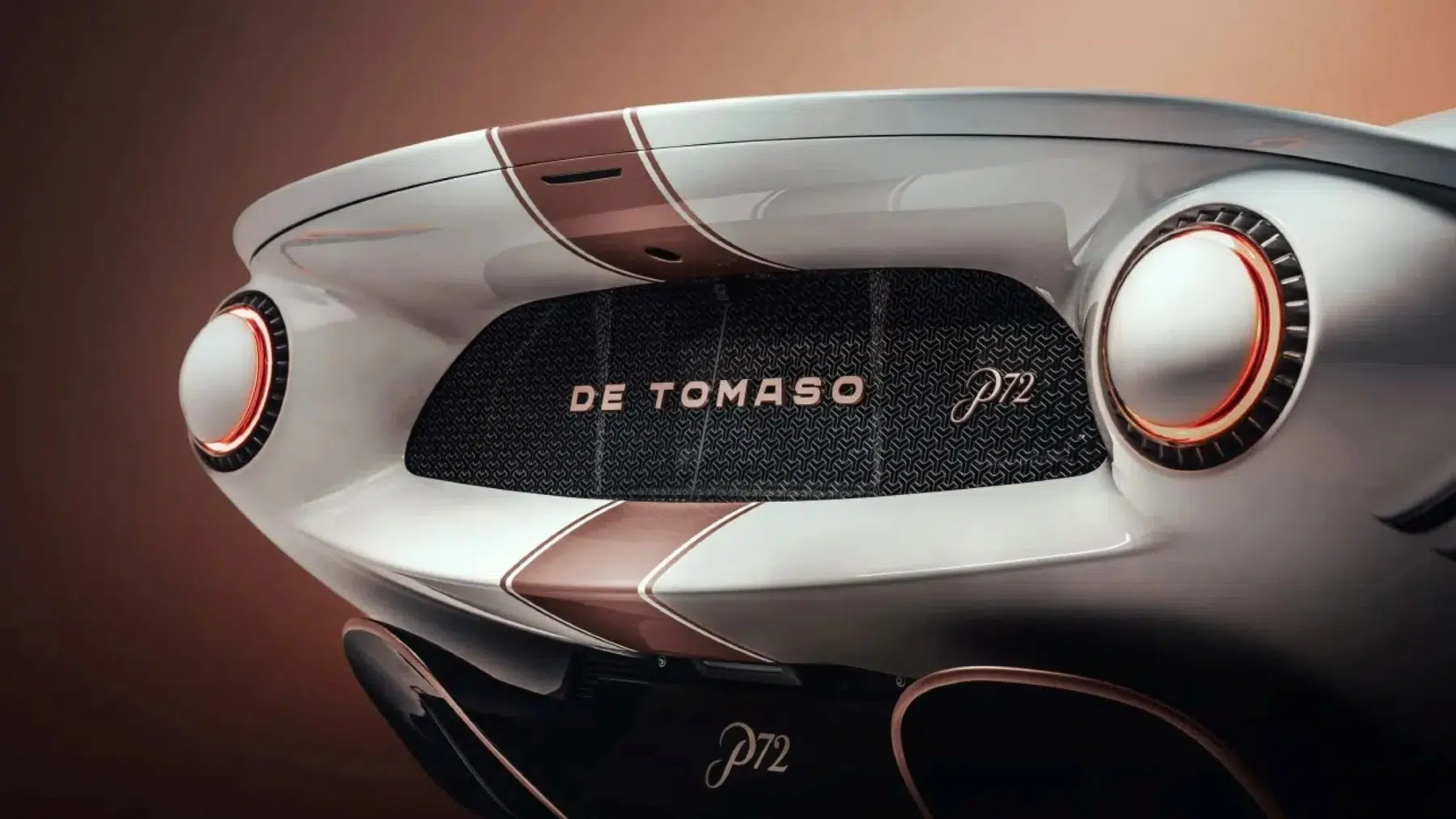
De Tomaso returned to the spotlight in 2019 with the P72, its first model in over a decade. The company initially stated that it would build only 72 examples, and after several years of limited updates, it has now revealed the car in its final production form. Deliveries are scheduled to begin later in 2025. The P72 features a carbon-fiber chassis.
The Italian car presents it as a new platform, although earlier reports linked it to the Apollo Intensa Emozione, another limited-run project associated with Norman Choi, the businessman behind De Tomaso’s revival. Its bodywork is also made of carbon fiber, with wide fenders, deep side intakes, and lines inspired by endurance racers from the 1960s.
A V8 and a manual gearbox: it doesn’t get more traditional than that
The P72 uses a supercharged 5.0-liter V8 with a six-speed manual gearbox. De Tomaso presents the engine as unique to the model, though outlets such as Top Gear report it is a Roush-tuned version of Ford’s Coyote engine, also found in the Mustang and F-150. The connection to American V8s fits the brand’s history, as the Pantera used Ford engines throughout its production from 1971 to 1992.
For the P72, De Tomaso states that the engine has bespoke internals and a proprietary supercharger, producing 700 horsepower and 608 lb-ft of torque. Performance numbers have not been disclosed, with the Italian company focusing on driver involvement rather than top-speed figures—pushrod suspension and manually adjustable dampers are included.
Technological features, but still an old-school approach: no screens while driving
The P72 avoids modern infotainment systems and touchscreens. The dashboard is fitted with analog gauges and physical controls, all finished in milled aluminum with a copper tint. A basic phone mount is included for navigation, but the car does not allow any digital integration. The Italian brand also highlights that the sound system is unnecessary, pointing to the V8 as the only soundtrack drivers will need – something that will be missing in supercars soon. The only screen inside the cabin is the legally required digital rearview mirror, which displays the backup camera feed.
Disclaimer: Our coverage of events affecting companies is purely informative and descriptive. Under no circumstances does it seek to promote an opinion or create a trend, nor can it be taken as investment advice or a recommendation of any kind.
Read the whole thing?
Get the week's signal, not the noise
Our sharpest reporting on energy, climate and nature — free, once a week.


