For nearly one hundred years, migratory aquatic life had been severely hampered by large barriers within river systems.
However, the creation of large hydroelectric structures severed ancient migratory routes for aquatic life through freshwater habitats.
Engineers used original plans created many decades ago to develop special passages above large hydroelectric dams. Immediately, thousands of juvenile aquatic animals began to migrate to areas historically known as their upstream spawning habitat.
Why did 18,000 eels suddenly show up at a historic North Carolina hydroelectric plant?
Modernizing historic infrastructure for aquatic conservation
Historically, developing large-scale energy generation projects completely disrupted natural river flow patterns. In 1912, a large hydroelectric dam was constructed in North Carolina.
It severely limited river access to freshwater habitats. As a result, native species could not continue to travel upstream into the headwaters of the river.
These catadromous species spend most or all of their lives in rivers before migrating to saltwater bodies (oceans) to spawn.
To address this problem, engineers revisited some of the original structural components that made up the dam from 1912. There were leftover components from a historic fish ladder in the original dam’s structure.
Engineers incorporated these durable aluminum parts into a modern-day fish ladder structure.
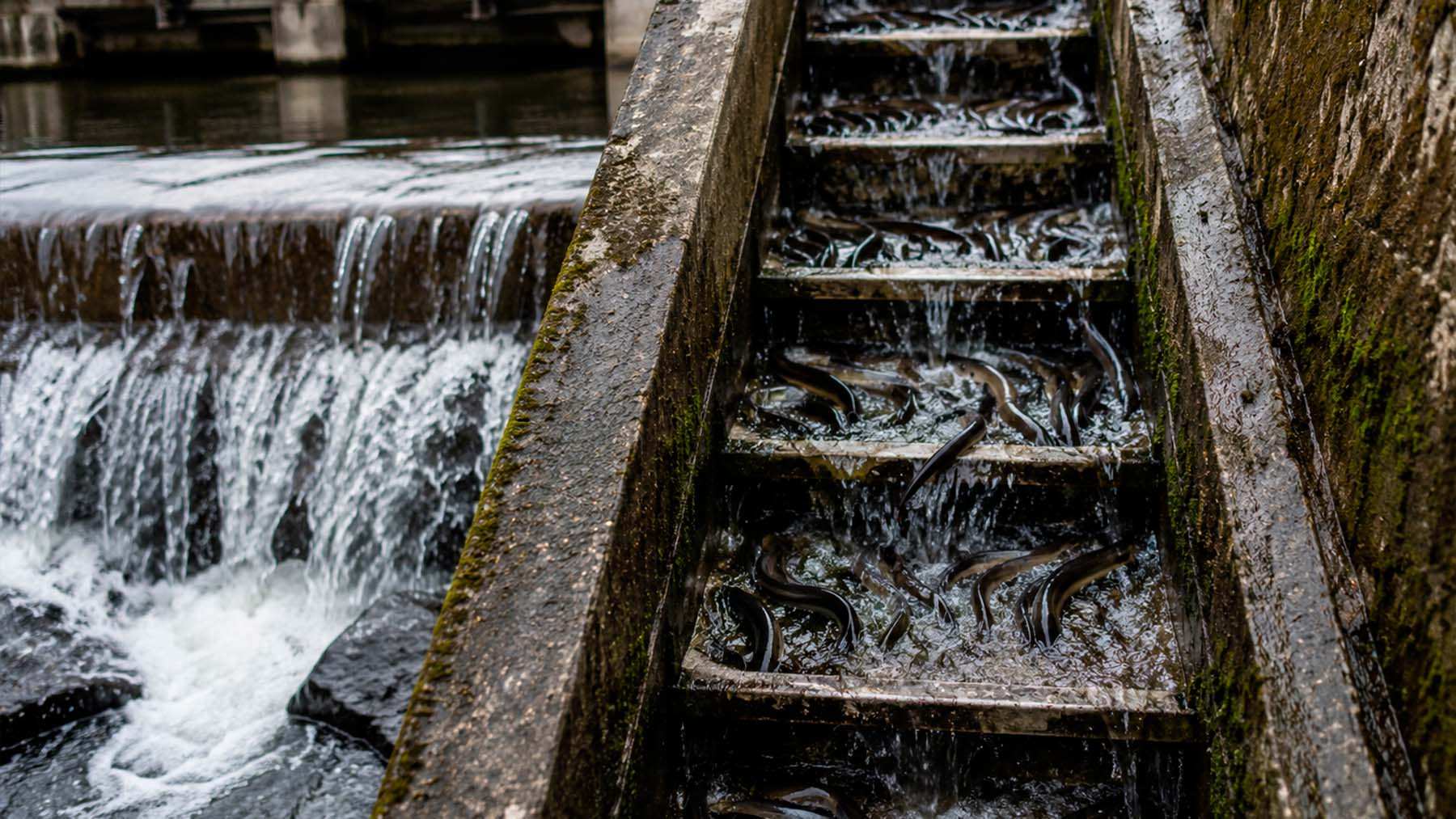
The restored fish ladder is composed of five aluminum sections connected with several resting pools.
Pumps below each section draw water down, creating continuous downstream flow.
Young aquatic animals sense water movement as they swim up. They follow the water upstream into their historic spawning habitat.
Engineered pathways and species collection systems
Establishment of aquatic migration routes required exact engineering and location placement. Duke Energy partnered with state and federal wildlife agencies to design and position the specialized migration ramp.
Scientists studied waterways to identify where juvenile aquatic animals naturally congregate when migrating upstream. The specialized ramp operates continuously without requiring frequent on-site staff visits.
An automated pump draws migrating wildlife directly into collection tanks. Field staff regularly record data on weight and population numbers.
Once evaluated, young aquatic life is released directly into the upstream lake.
At a later date, operators plan to eliminate manual intervention, allowing migratory species to pass over the dam unassisted.
Afterward, they are attracted back toward the open ocean via strong reproductive drives.
Why 18,000 eels showed up at the hydroelectric plant
Approximately 18,000 American eels migrated past the Blewett Falls Hydroelectric Dam for the first time in history. Why did such large numbers of eels appear at this particular industrial facility?
The Pee Dee River system has served as an ancestral freshwater nursery for millions of young eels for centuries.
Glass eels hatch far away in the Sargasso Sea and subsequently ride oceanic currents until they reach coastal estuaries.
From there, they initiate migration upstream through freshwater rivers toward their natal spawning habitat. When engineers activated the new eel ladder, they stimulated deep-seated behavior in thousands of waiting eels.
Pumps drew water from the lake downward through the length of the ramp, simulating natural upstream river flows.
Water surges signaled thousands of waiting eels to ascend the ramp simultaneously.
Sustaining regional population comebacks
Environmental teams monitor migrating species density along the new corridor.
This ongoing protection maintains ecosystem balance across hundreds of miles.
Fishing regulations near Blewett Falls Lake require anglers to release migratory species immediately. The low-technology, automated fish ladder marks an enormous breakthrough.
It drives restoration efforts aimed at healing degraded freshwater habitats. The project demonstrates that existing utility infrastructure and native wildlife can be integrated and thrive side-by-side.
By bridging a century of industrial history with modern environmental ingenuity, this project makes a powerful statement.
Utility operators continue to seek ways to harmonize infrastructure with natural wildlife.
Similar engineering solutions are now being applied to advanced thermal energy systems.
Read the whole thing?
Get the week's signal, not the noise
Our sharpest reporting on energy, climate and nature — free, once a week.