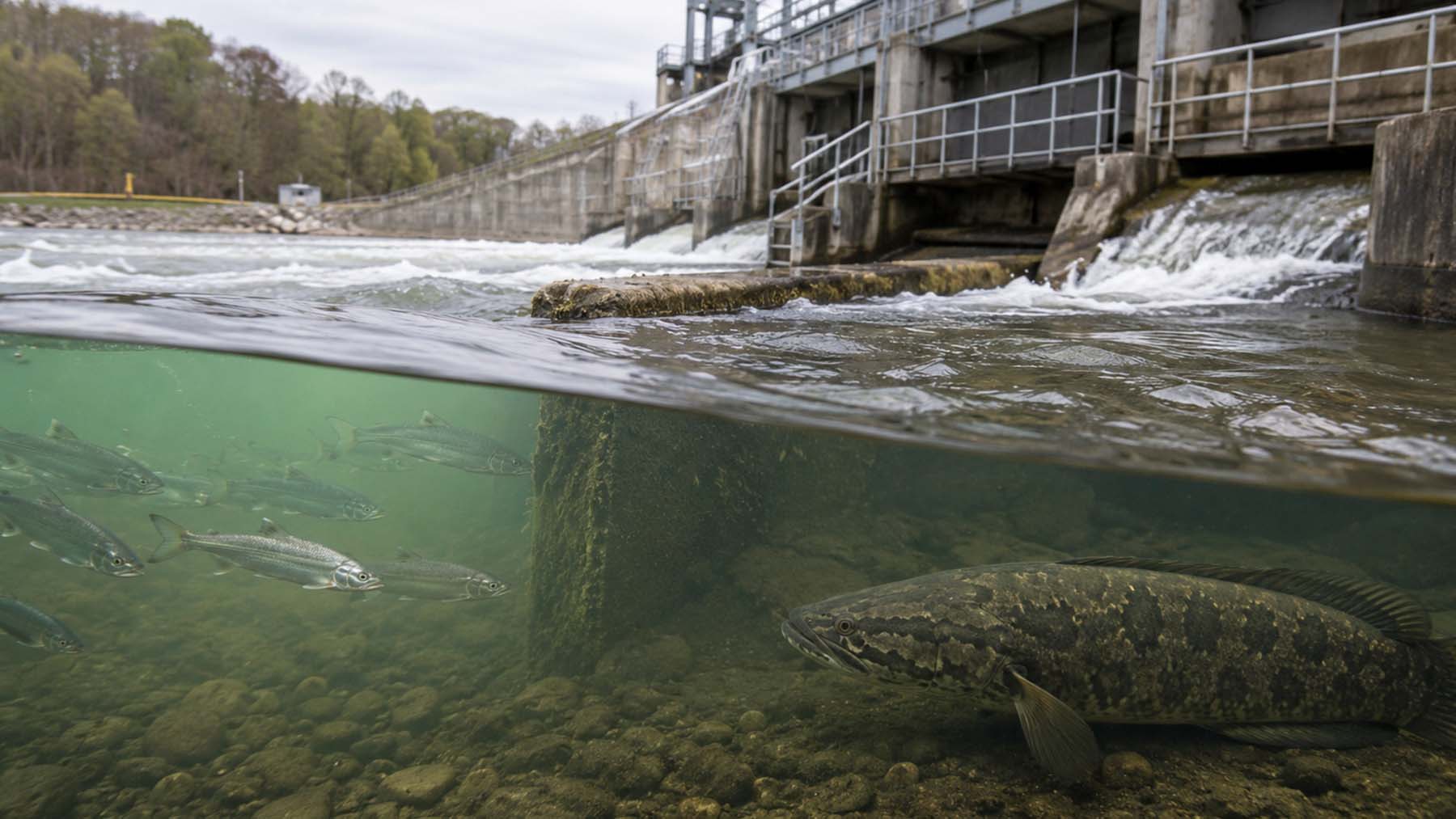
The rivers along the East Coast of the United States see a burst of activity in spring as millions of fish make their ancient migration journey upstream.
But these days, those reaching the Susquehanna River from Chesapeake Bay find their way blocked.
There is a concrete obstacle in the path in Maryland. It is a massive hydroelectric dam that does more than generate clean power.
It is also a highly specialized ecological boundary. How have engineers created a system that sorts native species from invasive ones?
How an ecological crisis meets a wall of renewable energy
Native American shad start their journey in the Atlantic Ocean, where they spend most of their lives. When temperatures in the Susquehanna River rise to 50 degrees Fahrenheit, mature shad instinct kicks in, and they enter the fresh water to spawn.
The entire river ecosystem is sustained by this vital reproductive cycle. But there is a barrier in the form of the nearly 100-foot-tall Conowingo Hydroelectric Dam.
The migratory fish depend on human engineering ingenuity to survive and bypass the wall. But before they even reach it, the native fish have a different modern problem.
Non-native predator fish species occupy the same lower-river waters as the American shad. They aim to colonize the untouched waters upstream, and the ecological stakes are high.
Energy generation needs to be balanced with wildlife management at the highest levels as more hydropower projects are undertaken.
An ancient fish ecosystem that needs to be protected
The Conowingo Dam has fish passage facilities that allow the migratory species to enter upstream. The fishery health of the Susquehanna River has seen fluctuations over recent decades, recorded by the same passage system.
In 2001, the numbers hit a record peak of almost 194,000 American shad passing through the dam. In 2025, the annual count had dropped to just 2,000.
The severe decline is much worse, because invasive predators are spreading. The northern snakehead and blue catfish are two of the most voracious. If they pass through the dam, the fragile upstream spawning grounds are under threat of being permanently destroyed.
The problem is so severe that the Holtwood and Safe Harbor dams shut down their fish passages completely in 2020. The Maryland facility is now the last line of defense.
One dam now has to act as the sole checkpoint for the entire upstream American shad ecosystem by separating native species from invasive ones, explains the Fish and Wildlife Service.
A concrete sorting station operating like a factory production line
Biologists are accomplishing the vital job with advanced fish-lift tech. A hydroelectric system allows operators to release controlled water currents that attract and collect native fish in a channel.
When enough of them have gathered, a gate is closed to crowd the fish over a hopper bucket. An elevator system lifts the fish together with the water to a sorting facility upstream. Manual sorting starts at the elevated platform, where staff members examine every fish picked up.
It is all paying off: Shad numbers doubled in one year
During the spring season, biologists managed to intercept and remove 369 northern snakeheads and several blue catfish. An encouraging 4,054 native shad were recorded, double the numbers of last year.
The precious native fish were transferred into oxygenated tanks and driven past the dams to be released safely upstream, detailed in another report from the Fish and Wildlife Service.
Almost a million non-target fish like gizzard shad (also native) were returned to the waters below the dam. A total of 970,000 went back home.
It is an intense, labor-intensive, hands-on operation, but all efforts are worth it to protect the upper Susquehanna River from ecological collapse.
Similar efforts are needed in other parts of the country, such as at the Oroville Dam in California, where fish were forced to leave the water completely.
Read the whole thing?
Get the week's signal, not the noise
Our sharpest reporting on energy, climate and nature — free, once a week.