The blade is already longer than a subway car when it arrives, and its walls are thick with resin locked glass fiber that no ordinary furnace can separate.
For decades, the answer was to cut it into pieces and bury it.
But a team outside Knoxville has been pulling that fiber back out intact and sending it into new products.
The plan now is to scale that work up on east Tennessee ground that once supported the production of the world’s first nuclear weapons.
What, exactly, makes the blade so stubborn to break down?
Why a turbine blade has always been almost impossible to recycle
Wind turbine blades are built from composite materials, and the central problem is the thermoset resin system that binds them. Unlike a plastic bottle or an aluminum can, those resins form permanent polymer networks that cannot be melted or remolded. Heat them and they burn rather than flow, which makes every conventional recycling route useless from the start.
So for most of the industry’s history, the blade simply went into a trench. A single unit can weigh ten tons or more, and glass or carbon fiber composite typically accounts for about half that weight. Bury enough of them and you have buried a small mountain of material that took real energy and rare inputs to produce.
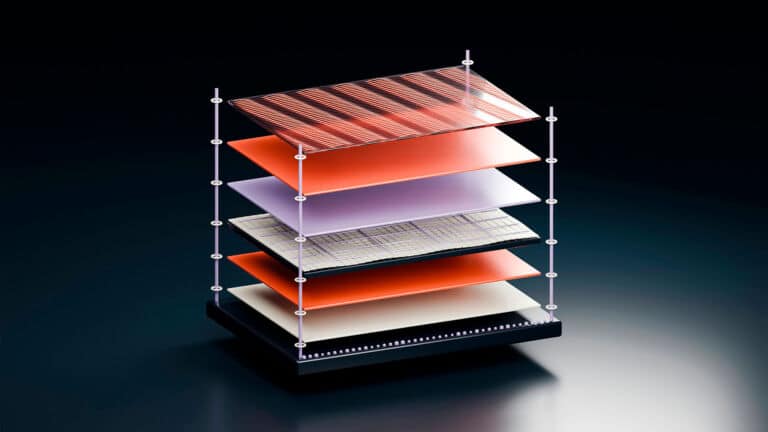
That paradox is what the Kingston project was designed to crack. The method is pyrolysis: intense heat in an oxygen free chamber that breaks down the organic components and separates them from the inorganic fiberglass. The organic fraction returns as syngas and pyrolysis oil, giving the process a net positive energy output rather than a fuel bill.
What the operation on the old nuclear site is set up to do
The planned full scale plant sits in Kingston, Tennessee, on a site that supported nuclear weapons production during the Second World War, and it is being developed as a stand alone company spun out of the original team. The feedstock is bulk fiberglass composite waste: retired blades, but also boat hulls and automotive panels, shredded and sorted before they reach the furnace.
Inside the chamber, the resin is thermally decomposed and driven off, leaving behind long, mechanically intact strands. That wholeness of approach separates it from cement co processing, where shredded blade material feeds into a kiln and the glass disappears into the clinker rather than coming back as a usable fiber.
The company says it upcycles all components of the blade, including the steel.
The numbers already on the floor and the ones still coming
A pilot line running at roughly one ton per day came first, and the team reports having upcycled a few thousand metric tons to date. It is now building capacity to take in more than 50,000 metric tons a year, a facility the Department of Energy describes as able to recycle 5,000 blades weighing ten tons each, annually.
The quality figure is the one that makes the tonnage worth chasing. The recovered glass fiber has tested at 99.9 percent purity, and that near total removal of contaminants is what allows reclaimed strands to stand in for virgin fiberglass instead of being downgraded. High purity also opens the door to remelting, which is the closed loop outcome the industry has been working toward for years.
Eva Li, one of the project leads, called the result “an extraordinary leap for upcycling materials from wind turbines.”
What the fiber goes into next, and what is still hard to recover
The recovered strands carry enough structural integrity to serve in non woven mats, 3D printing filament and thermoplastic pellets. That matters commercially, because a fiber sold back into the market at a useful grade offsets the cost of running a pyrolysis line, while filler grade material does not.
Yet the hard part is grade, not volume. Randomly oriented, discontinuous recycled fiber has historically been limited to non structural components and insulation, where the value sits below the cost of recovery. Work on spinning reclaimed strands into yarns and continuous forms has drawn separate industrial interest for exactly that reason.
A parallel story plays out at the solar end of the industry, where recycled glass from a retired panel in Georgia matched the performance of virgin mined sand in test modules. Proving that a reclaimed strand can carry the same structural load as a virgin one, through decades of flexing in the wind, is the test still running.
Why this site and what comes next for blade recycling in the US
Placing the plant on the Kingston site carries its own logic. The land already has industrial infrastructure, a regional workforce trained in careful materials handling, and a history tied to energy production. About $2.4 million from the Department of Energy’s Wind Energy Technologies Office supported the scale up, developed in collaboration with the University of Tennessee, Knoxville.
Although the process was initially developed for retired wind turbine blades, it has since been adapted for composite waste from automotive, marine and infrastructure sectors. A facility that can accept boat hulls and car parts alongside turbine blades is not dependent on the timing of any single decommissioning wave.
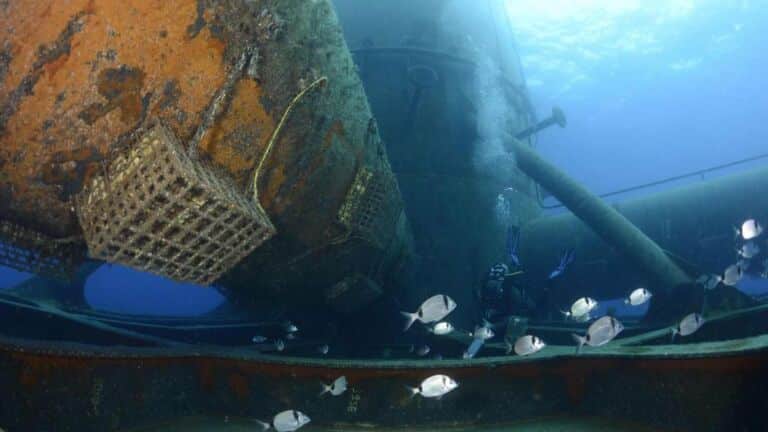
The turbine foundations off New York that became an accidental reef show how wind hardware can find a second life. The Kingston project is working out how to give the blades that same second life on land, and the next stage will be proving that reclaimed fiberglass can be supplied consistently enough to become a routine raw material, with more blades in, more fiber out, and a buyer willing to spec recycled glass strands into the next thing they build.
Read the whole thing?
Get the week's signal, not the noise
Our sharpest reporting on energy, climate and nature — free, once a week.