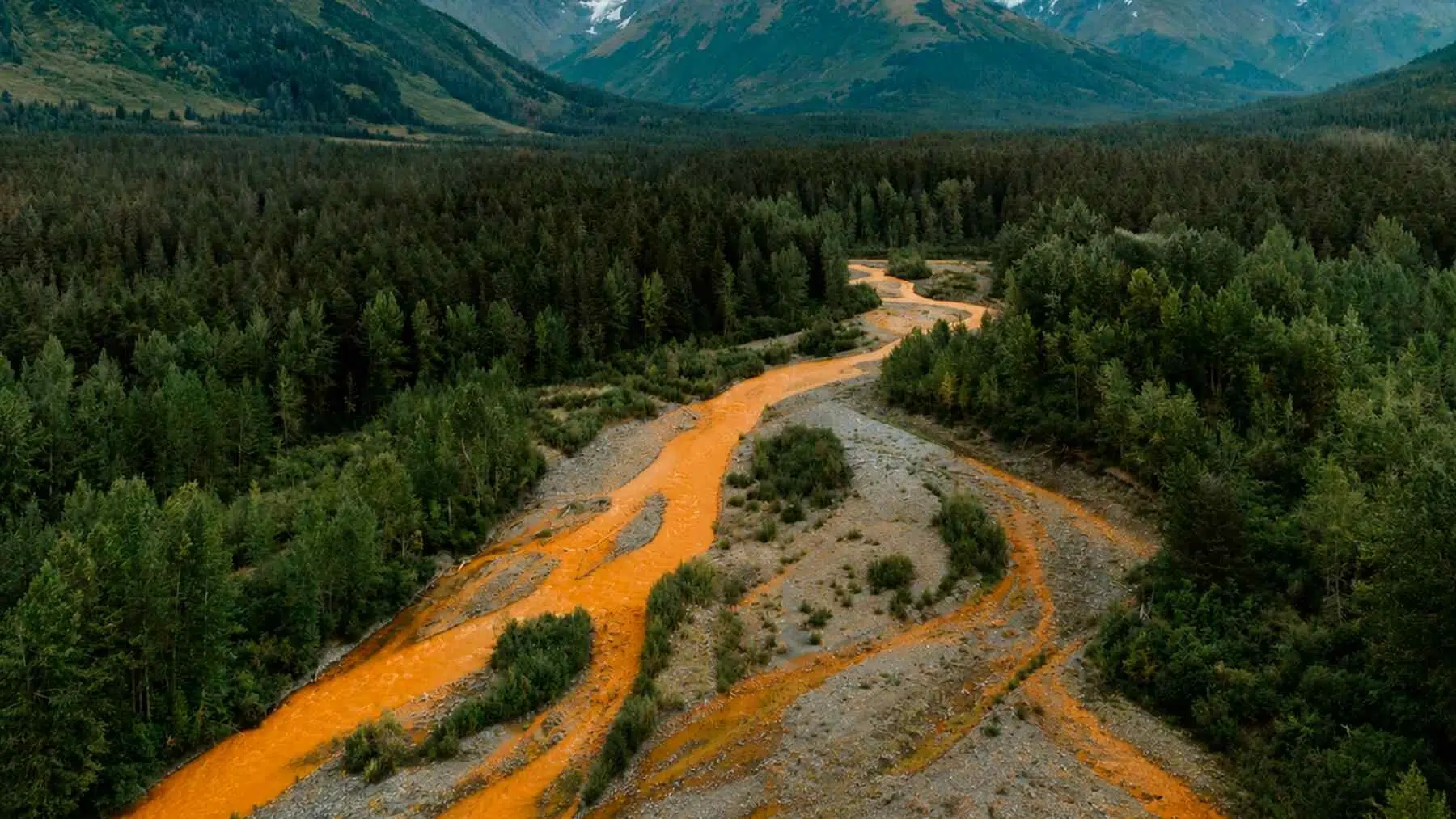
From the air, it looks like an industrial disaster.
But in the Alaskan wilderness, there isn’t a factory for hundreds of miles.
Previously pristine Arctic rivers are bleeding a thick, metallic orange sludge.
No factories to speak of. No spills of chemicals. The orange hue kept spreading across remote wilderness untouched by humanity and industry.
Now, experts say the odd transformation is no longer isolated to Alaska.
A mysterious ‘orange wave’ is consuming the North. Why is the Arctic turning to rust?
Why locals call it ‘rust,’ but experts are calling it a warning
The first reports emerged from Alaska’s Brooks Range. This is one of the most remote regions in the nation.
Dozens of rivers that once ran as clear as day began to change color. Some almost overnight.
Some turned a milky orange color. Others looked like diluted rust in the water.
At the very least, 75 rivers have been affected in the Arctic region.
The water hasn’t just changed color—it has turned corrosive, suffocating local fish populations.
The experts quickly realized this was no temporary anomaly. The Arctic’s plumbing has been compromised. This isn’t a temporary glitch; it’s a structural shift.
Cry me an orange river, says the Alaskan wilderness as it warms
At first, experts suspected contamination of some kind.
But these rivers flow through protected wilderness with no industrial activity at all. That forced scientists to look deeper, literally beneath the surface of Alaska.
The culprit isn’t above ground. It’s a chemical time bomb buried in the permafrost.
Most of the Arctic sits on permafrost. Soil that has remained frozen for thousands of years, at least.
But rising global temperatures are thawing out the Arctic ground at an accelerated rate.

As the permafrost melts, it exposes hidden and buried minerals that have been frozen in time for millennia.
These unusual changes in the Arctic have raised a deeper question.
How are such clean and crystal-like bodies of water changing so rapidly?
Meltwater is leaching ancient heavy metals directly into the Arctic’s arteries.
Consistent patterns were emerging across several Alaskan rivers. Lower pH levels. Higher concentrations of metal. Reduced oxygen in the water.
The rivers were doing so much more than just changing color.
Their chemistry was being altered. But by what?
The National Park Service took note.
The details have been explained by the study, “Metal mobilization from thawing permafrost to aquatic ecosystems is driving rusting of Arctic streams,” published in Communications Earth & Environment.
A rust epidemic: Orange rivers are contagious in the Arctic region
Unusual chemistry in Arctic rivers is becoming more common.
Researchers quickly figured out what was causing this colorful transformation.
The orange hue is oxidized iron—literally rusting rivers from the inside out.
More specifically, the color comes from oxidized iron particles in the water. Thawing soil exposes pyrite (Fool’s Gold).
Once exposed, the minerals react with oxygen and water.
In a few cases, the process creates acidic conditions that one might find in acid mine drainage.
A natural reaction to a climate that is warming: Experts are sounding the alarm
Similar permafrost conditions can be found in other areas around the Arctic.
Alaska is just the canary in the coal mine. Canada, Russia, and Scandinavia are likely next.
Researchers warn that this future may become a reality as the issue spreads.
The Arctic climate is changing rapidly.
The orange stain is a visual alarm. The Arctic isn’t just melting; it’s dissolving.
And with that change comes a natural warning from Mother Nature. We aren’t just losing ice. We are losing the very chemistry that supports Arctic life.
Read the whole thing?
Get the week's signal, not the noise
Our sharpest reporting on energy, climate and nature — free, once a week.