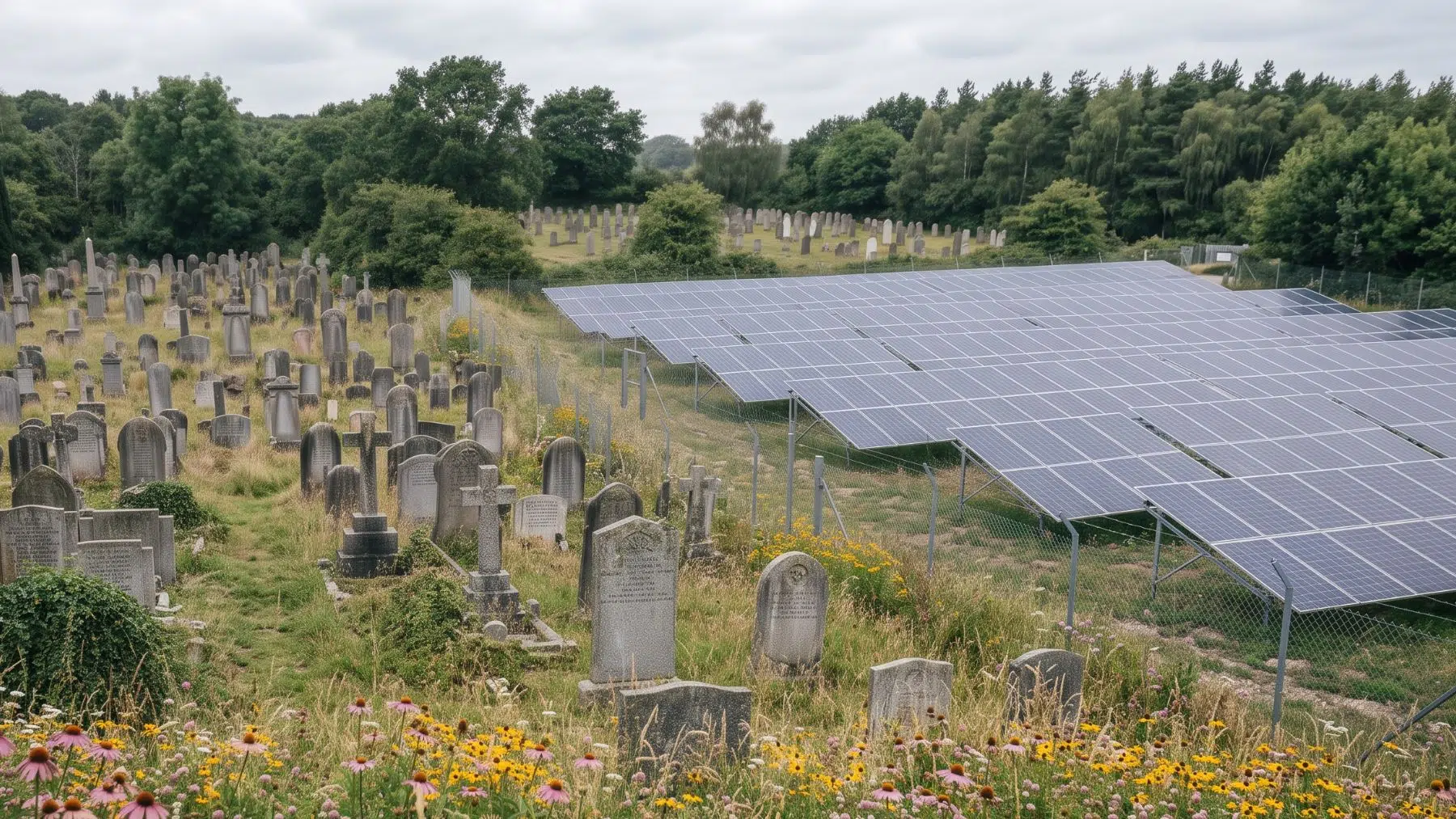
At the back of a Catholic cemetery in Torrington, Connecticut, a wide field runs off toward the trees.
For years it held nothing, too far from the graves to be needed.
Then rows of dark solar panels marched across it.
The old burial ground had grown itself a small power plant.
And the low green ground beneath the panels was suddenly worth a second look.
So what happens to eleven idle acres when the sun goes to work on them?
What eleven idle acres now do
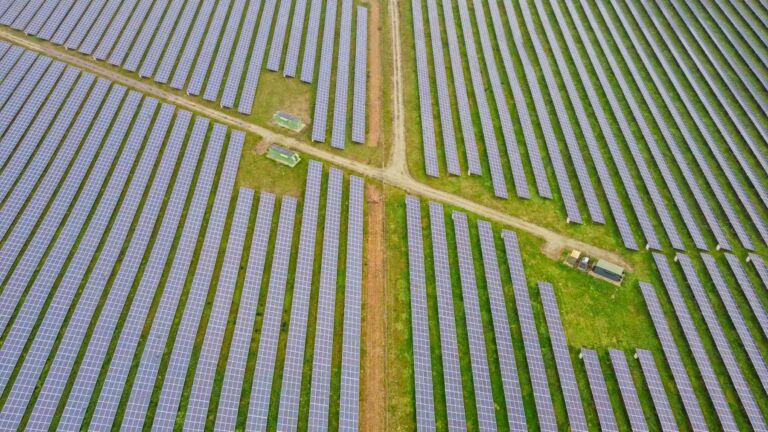
The numbers on that spare field add up to real work. Roughly 7,000 solar panels now cover about eleven acres of it, a two megawatt array wired into the local grid. In a good year it makes enough power for around 476 homes.
That is a lot from land nobody was using.
The array also keeps carbon out of the air, trimming close to 2,800 metric tons a year, and it does it on ground the cemetery was never going to fill with graves. A dead corner of the property turned into a steady earner.
The money matters as much as the megawatts. Rent from the panels helps fund the upkeep of the cemetery itself, and the electricity feeds nearby homes rather than a distant utility, keeping both the power and the profit close to home.
Why a cemetery had land to spare
A cemetery is bigger than the part you see. The association that runs this one holds a 66 acre parcel, yet only a fraction ever fills with headstones, and the rest sits as open mowed grass for years. That kind of surplus is common across large burial grounds.
The land cannot simply be sold off or built on.
So a solar lease is a rare clean fit. Panels sit lightly on the surface, can be pulled up if the plots are ever needed, and pay a rent for ground that otherwise just costs money to mow. The graves stay undisturbed, and the idle acres finally earn their keep.
Burial grounds are planned in centuries, not years. An association buys far more land than one generation will ever use and holds the rest in reserve for demand that arrives slowly, which is why so much of it sits empty and green for decades.
The ground beneath the panels
The interesting part is not the panels but the dirt under them. A ground mounted array like this one leaves most of its soil exposed, open to sun and rain in the gaps between and below the rows. What grows there is entirely a choice.
Most solar fields waste that choice.
The default is gravel or turf grass, scraped bare and mowed short for easy access, a green desert that feeds almost nothing. But that same open ground can just as easily be sown with native flowers and left to grow into a real meadow.
The bare look is not an accident. Crews keep the ground clear so trucks can reach the rows and so tall growth never shades a panel, and gravel or clipped grass is simply the cheapest way to manage it.
What a solar meadow can become
When developers make that second choice, the results are striking. Seeded with the right mix of native plants, the strips under and around solar panels turn into working pollinator habitat, the same careful land accounting behind an offshore wind survey.
The gains can be dramatic.
At two Minnesota solar sites that swapped bare ground for prairie, national lab researchers counted native bee numbers climbing close to twenty fold over five years, and the bees spilled across the fence to pollinate neighboring soybeans. A power plant had doubled as a nature preserve.
The plants do real work below ground too. Deep native roots break up packed soil, soak up rain and pull carbon down, so a seeded array slowly rebuilds the land it stands on instead of sterilizing it.
Land that does two jobs at once
Torrington’s field is exactly the kind of ground where this works. It is flat, sunny and already cleared of forest, sitting undisturbed behind a screen of trees, the very conditions a pollinator meadow needs to take hold. Nothing about the panels rules it out.
Whether one blooms there is a management choice.
Seed the strips with native flowers instead of mowing them to stubble, and the same acres that power hundreds of homes could hum with bees, the way a fox settles in around some solar panels once a place turns friendly. Federal energy programs now openly push developers toward that kind of planting.
None of that happens on its own. A meadow has to be seeded and given a few seasons to establish, and a site left on a mowing schedule will stay a green desert no matter how much sun it catches.
The graves stay undisturbed, the grid gets its power, and the ground is finally doing more than one job at a time.
Read the whole thing?
Get the week's signal, not the noise
Our sharpest reporting on energy, climate and nature — free, once a week.