
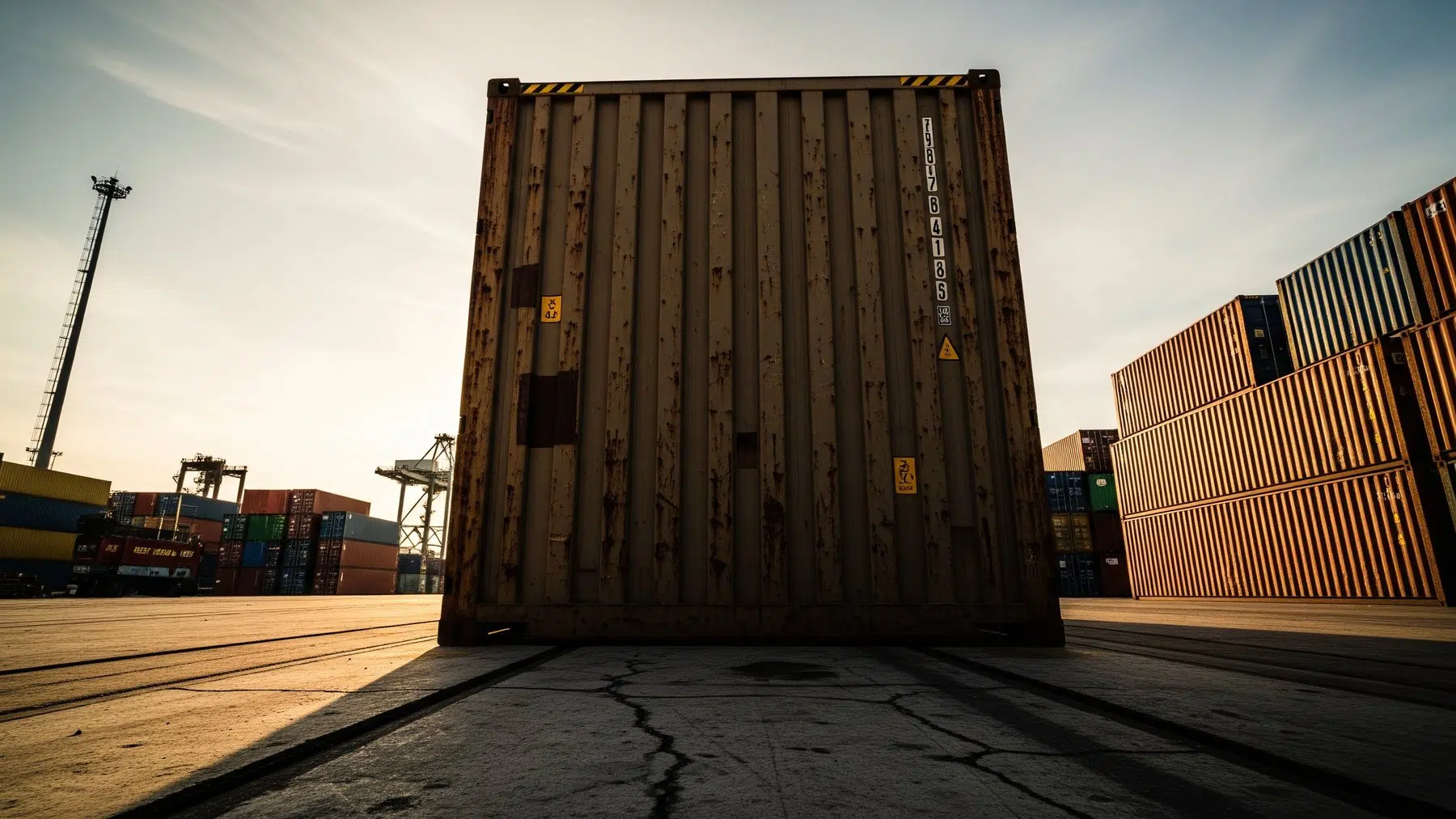
On a January morning at the Bayport Container Terminal in Seabrook, Texas, four Coast Guard inspectors were doing what they do most days.
They walked a landscape of stacked steel boxes, each one sealed and silent, the ordinary machinery of global trade.
Then one box was not silent. Something inside it scratched and barked, four units high, and the whole morning changed.
A random pick from ten thousand boxes
Marine science technicians Bryan Wainscott, Lucas Loe, Ryan McMahon and Jose Reyes, of Coast Guard Sector Houston-Galveston, were working a routine inspection when the sound stopped them cold.
They had been randomly choosing containers to check when barking rose from a box stacked four high, deep inside a wall of steel.
The container had sat sealed at the terminal for at least eight days, in the heat, packed with junked cars bound overseas.
The box was set to be shipped to Dubai, one anonymous steel unit in a stack that ran for acres.
The team called a crane to lower it down. One inspector later marveled that out of thousands of boxes, they happened to be standing beside the only one with a heartbeat inside.
Eight days with no food, no water, no daylight
The dog inside, soon nicknamed Connie the Container Dog, had survived in total darkness, locked in with old vehicles and stale air since around January 23, 2024.
Investigators believe she had been sheltering inside a car at a junkyard when that car was loaded into the container, sealing her in by accident.
A veterinarian found her underweight and positive for heartworm. She was also pregnant, though no one knew it yet.
Despite the ordeal, she was immediately friendly, leaning into the inspectors who freed her, and was soon flown to a rescue group in Maryland for care.
Connie was the stowaway everyone could see and hear. The ships she nearly sailed on carry another kind of stowaway entirely.
What the ocean already knew
Connie’s voyage was a fluke of bad luck and good timing. The cargo ships she almost rode are already full of travelers that cross every ocean, every day, and almost no one thinks about them.
Every large ship takes on seawater at one port to steady itself while empty, then dumps it at the next port when cargo comes aboard. That water is not empty.
Roughly ten billion tonnes of ballast water move around the world each year, enough to fill about four million Olympic swimming pools.
An estimated seven thousand species ride inside that water every hour, from microscopic bacteria to jellyfish to young fish, each one a potential disaster for the ecosystem that receives it.
Most of that life is invisible, scooped up off one coastline and carried to another in the days it takes a ship to cross.
The hidden fleet inside every ship
This is the real stowaway story, and one of the stranger facts in modern biology.
In the early 1980s a comb jelly from the North American coast rode a ship’s ballast tanks into the Black Sea, where it found no predators and endless food. Within a decade its descendants had gutted the sea’s fisheries, with anchovy, sprat and horse mackerel collapsing as the invader ate their eggs and larvae.
The zebra mussel made the same crossing into the Great Lakes, where it still clogs water intake pipes and smothers native mussel beds across the region. Scientists at the Smithsonian Marine Invasions Research Lab call commercial shipping the dominant pathway for these arrivals.
Even animals hitch rides. Satellite tagged birds have been tracked resting on cargo vessels far out at sea, crossing open water the way elk cross a Colorado overpass, by using whatever infrastructure happens to be heading the right way.
A slowly turning tide
The tide is turning, slowly. New ballast treatment systems, now required under international maritime rules, are being fitted to ships worldwide, filtering or sterilizing the water before it is ever released.
The technology is not perfect yet, but ports and regulators are finally treating the water inside a hull as seriously as the cargo stacked on top, much as engineers learned to read an offshore structure as living habitat.
As for Connie, she was lifted out into a family’s arms, gave birth to eight puppies and was adopted. Her time turned out to be heartbreakingly short.
Months later she died of pythiosis, an infection from a water mold she most likely swallowed while drinking to survive on the streets of Texas.
It is a bitter echo of the larger story. The stowaway the world noticed did not make it, while the ones still riding in every ship’s belly are the ones scientists are racing to catch before they arrive somewhere they were never meant to be.
Read the whole thing?
Get the week's signal, not the noise
Our sharpest reporting on energy, climate and nature — free, once a week.


