Two European countries share a few similarities, such as their like-mindedness in their commitment to the European Union. They also share a land border, ancient roots from the Proto-Germanic peoples, and a deep cultural bond. Thanks to a little sea island, these two European countries will share something else, as it will quietly become a continental plug with 3 GW on a Baltic rock. This project could redefine these two nations’ power, and potentially help them to achieve their climate targets.
This is why these two European countries will benefit
Within the European context, another thing that these two European countries have in common is that they have a historically high power consumption, with one country’s consumption remaining high.
Germany’s power consumption
According to Clean Energy Wire, Germany’s power consumption increased by 0.9%, boosting consumption to 497 TWh. This increase was driven by a severe rise in fossil fuels such as hard coal and lignite, and decreased wind and hydro power capacity at the beginning of 2025. Nearly 43% of the country’s power production was provided by fossil fuels in 2024, as per Ember-energy.org.
Denmark’s power demands
Now, thanks to a little sea island, it could change it all for these two nations, as it will become a continental plug.
The little sea island that will change it all by becoming a continental plug
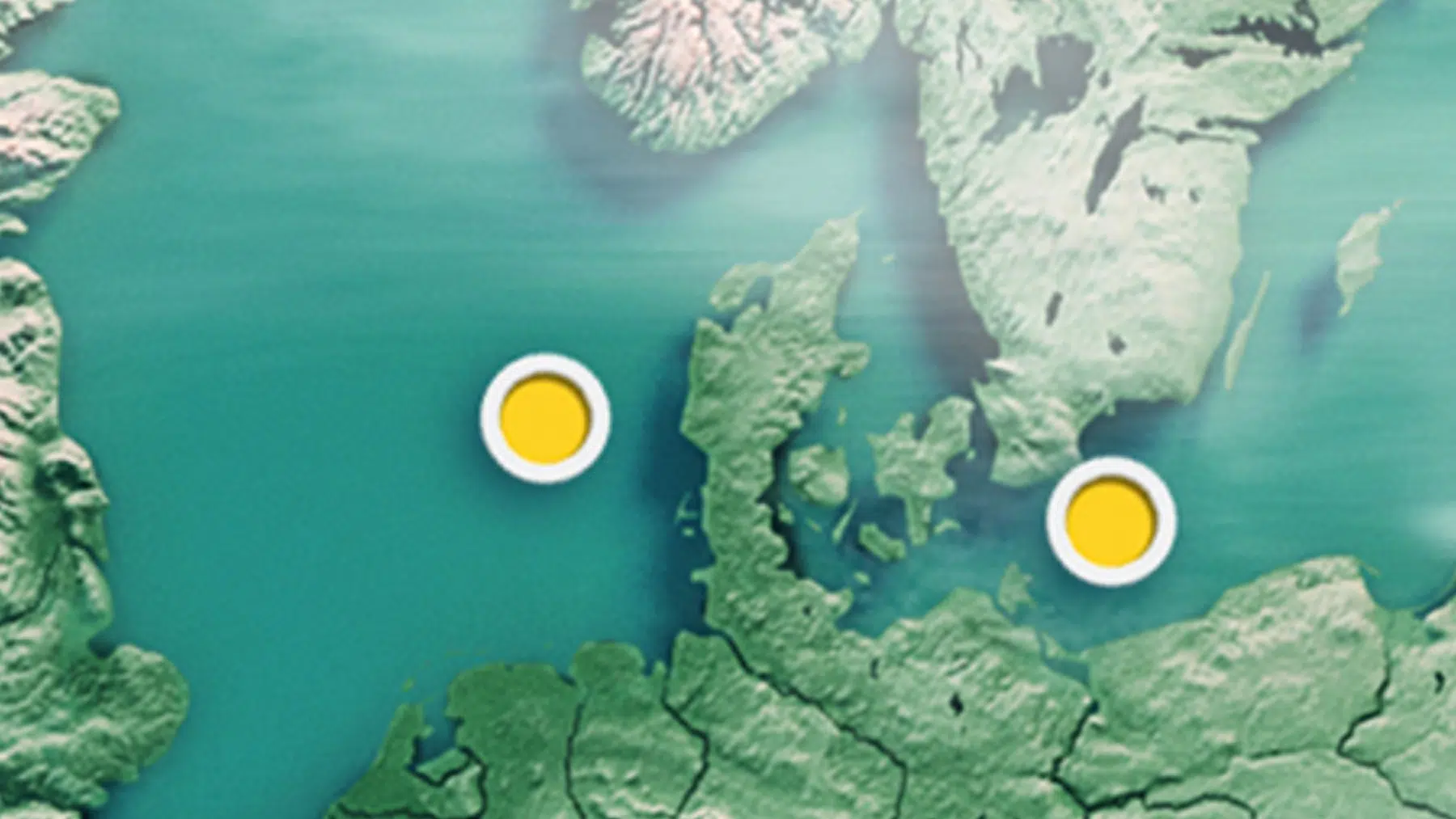
An innovative and pioneering project will soon connect multiple wind farms through a single 3 GW offshore power hub on the Danish island of Bornholm in the Baltic Sea. The project will be led by Energinet (Denmark) and 50Hertz (Germany), as per the European Commission. The project’s construction will be funded by CEF Energy.
Bornholm and Zealand will each be receiving new converter stations, and an extensive submarine cable system of nearly 200km will be installed, complemented by a 17km onshore connection between Zealand and Bornholm. This project will be a bridge between offshore production and consumers, allowing clean power to flow where it is in demand. It will also promote energy security, price stability, and integrate renewable power on a large scale.
This project will have a crucial role in both Germany’s and Denmark’s power consumption and costs, but it will also help these two countries so much more than additional, affordable power.
Achieving so much more than additional, affordable power
According to Klimarådet, Denmark’s Danish Climate Act highlights the country’s climate targets, which are decreasing greenhouse gas emissions by 70% by 2030 compared to 1990 emission levels, and to achieve net-zero by 2050. The act also includes the following intermediate targets:
- Decreasing emissions by 50-54% by 2025
- Make Denmark a climate-neutral society
According to the Bundesministerium für Wirtschaft und Energie (BMWE), Germany’s Climate Action Law highlights the country’s climate targets, which are decreasing greenhouse gas emissions by 65% by 2030 and achieving net-zero by 2045. The country also had an additional target, which is achieving an 88% decrease in emissions by 2040.
So, not only do these two European countries share a commitment to reducing emissions with their respective climate targets, but they will also more easily achieve these climate targets thanks to this pioneering project that will bring 3 GW of offshore clean power onshore and distribute it through Germany and Denmark. This means that millions of households and businesses will be powered by clean power. Another European breakthrough will rewrite energy’s history, highlighting the EU’s resilience in achieving its targets.
Read the whole thing?
Get the week's signal, not the noise
Our sharpest reporting on energy, climate and nature — free, once a week.