

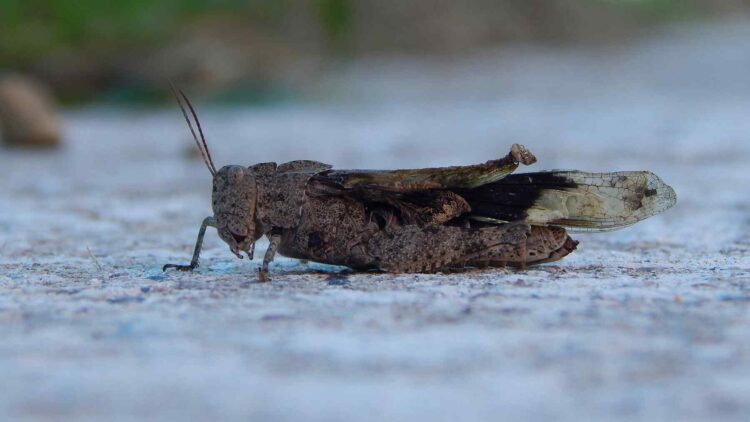
A strange development in Arizona is raising questions for experts.
The world has developed the solar power industry to become the undisputed king of the renewable energy market. But when grasshoppers began swarming parts of Arizona, the race was on to decipher why solar panels are causing this unusual development regarding insect life.
What affects are solar panel farms having on insects around the world?
How the solar power industry has come to dominate the world
Global domination by one particular energy resource is not a new development by any stretch of the imagination.
Oil has dominated the international energy industry for the last century, but this reality is slowly changing as more and more of us turn to the renewable energy market to power our homes and lives overall.
Decarbonizing the international energy sector requires the collaborative efforts of the entire world.
And with the most recent war in the Middle East raising the price of Brent Crude Oil to unprecedented levels, the energy transition towards clean energy methods like solar power has become paramount to address the issues we are currently facing.
How the world around us is being affected by energy generation
The global shift away from fossil fuel-based energy production has been a major step forward in addressing climate change.
However, as we progress more and more into the renewable energy sector, a few unexpected consequences have emerged that need to be discussed, at the very least. Such as how a huge solar power project in Tibet is reshaping the local climate around the site.
Solar panel farms can simultaneously create beneficial aspects for Mother Nature, as well as become problematic in some cases.
On the one hand, solar power plants have been found to create preferable environments for some species, even allowing certain living fossils to live beneath the panels that now dot the international landscape.
On the other hand, solar panels can adversely affect how some species are able to navigate the world around them.
But when a recent study by the Argonne National Laboratory aimed to understand why grasshoppers were swarming parts of Arizona in astonishing numbers, the race was on to track this odd development.
Solar panels are good for us, but may not be so great for all life
We have to learn that solar panels can simultaneously be good and bad for animal life on this planet.
Recent studies have found that solar panel farms are confusing certain bird species that mistake the smooth surfaces of the panels for water, which affects their ability to navigate the world accurately.
But the study conducted by the Argonne National Laboratory has found that insects are thriving in the immediate area around solar panel farms.
Study details the unintended consequences of solar power for insects
The world has come to accept that solar power could be a replacement for the generational reliance on fossil fuel-based energy production.
At the moment, this nation has 6,960 utility-scale solar farms dotted around the American landscape. The aforementioned study has found that some solar projects are intentionally restoring native vegetation in the area around the solar farms, with a few intentional benefits for insects.
A strange development in Arizona showed that solar panel farms are creating what is known as “evolutionary traps” for some insect species.
The study also details how the solar farms are causing unintended disruptions for animal life through light pollution. The paradoxical impact of solar panels has created yet another issue for energy experts to get to the bottom of.
We know that weather plays an integral part in how much we rely on solar power, but this study has proven we need to understand the implications of solar farms on wildlife more thoroughly.