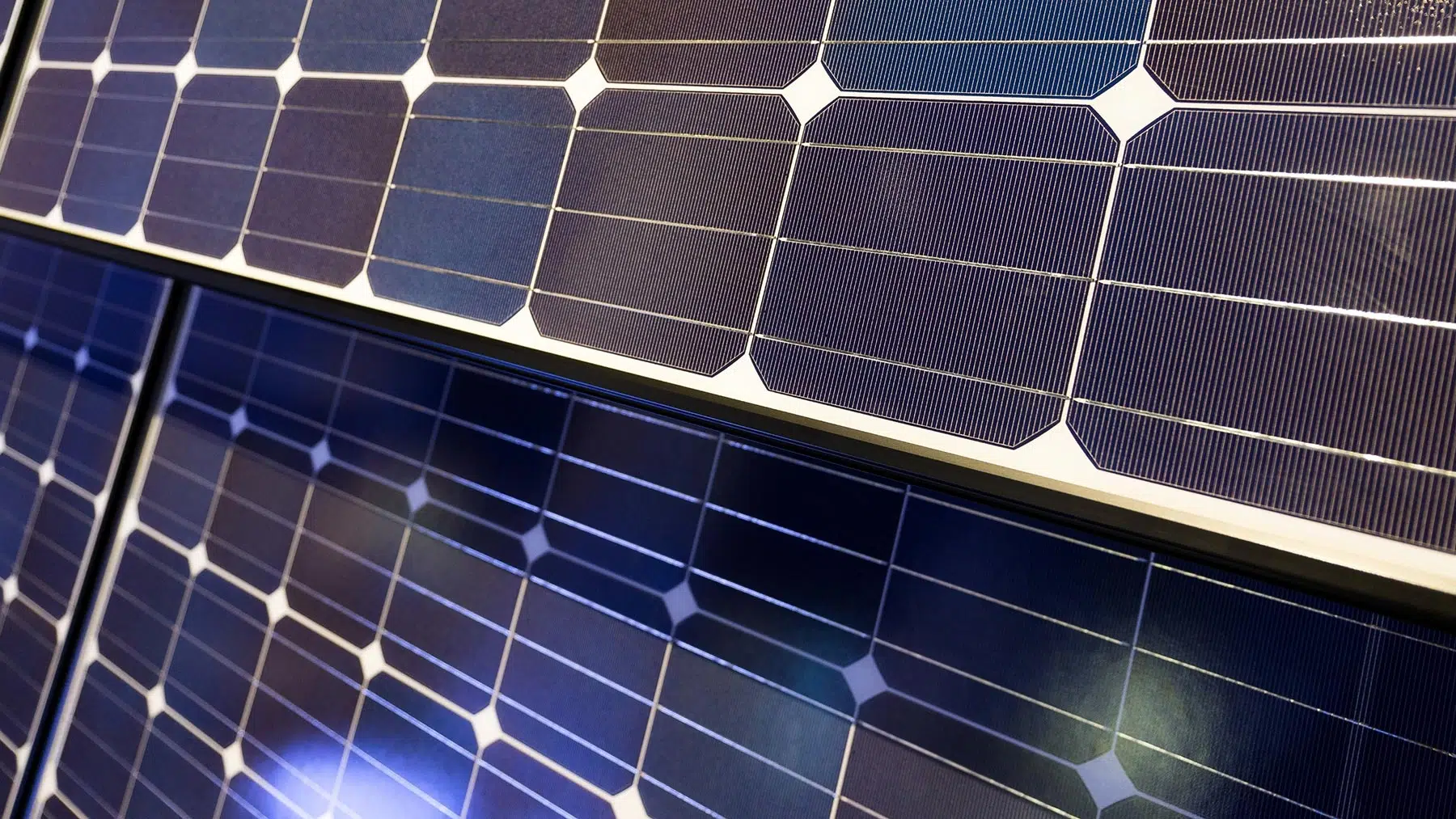
The Japanese government has made a firm decision about the future of solar power technology, and the direction chosen is the development of perovskite panels. The flexible and thin nature of the photovoltaic panels is one of the factors that have led to perovskite being called the “miracle material,” in addition to claims that the tech could significantly boost the country’s energy output.
New solar technology out of Japan may impact nuclear plant output
The Japanese are set to capitalize on the potential of innovative perovskite solar panels. The mass production of these kinds of panels, which have several application options due to their flexibility and reduced thickness, could launch Japan into an accelerated phase in the renewable energy transition.
Perovskite is receiving attention worldwide due to its much higher efficiency rate than traditional silicon-based cells. The theoretical efficiency limit for a perovskite tandem cell is 43%, compared to 29% for a standard silicon cell.
According to Japan’s industry ministry, adoption of the new PV panels could see 20 gigawatts of electricity being added to the grid by 2040.
There are other developments happening in Japan. Femtosecond lasers are innovations in solar technology that enable glass to be turned into a semiconductor. For now, the innovative concept is new, but the potential is so significant that researchers are motivated to take the next step in making the tech accessible on a broader scale.
Japan views solar power generation as vital since the Fukushima nuclear disaster
In 2011, Japan experienced a tsunami as a result of an earthquake that devastated the country and caused the Fukushima nuclear disaster. The incident resulted in the failure of the electrical grid and the release of extremely harmful radioactive agents that contaminated the environment. The disaster initiated the evacuation of more than 160,000 residents.
Since then, Japan has focused on alternative energy sources, and solar generation has become vital in its energy mix. Solar is a popular choice all over the world due to its renewability, scalability, eco-friendliness, low operating costs, job creation potential and contribution to energy independence and reduced reliance on importing fossil fuels.
The last decade has seen exponential growth in the use of solar panels, and this source of energy now accounts for 10% of the country’s power generation.
How bendable perovskite panels are going to change the face of solar in Japan
Two of Japan’s features are its high population density and mainly mountainous terrain, which means that land space for large-scale solar power installations is limited. This is not helped by the fact that conventional silicon solar cells are quite bulky. The new perovskite technology will solve this challenge because it is lightweight, vastly thinner than silicon panels, resilient, durable, and flexible.
This flexibility makes the perovskite PV cells suitable for application on countless surfaces, such as cars, windows and roofs.
Japan does not have a monopoly on perovskite
Japan is not the only country looking into the development of new perovskite photovoltaic technology. Research is being conducted in many parts of the world, and the new systems have already seen several advancements, upgrades and innovations.
A number of energy startups have dived into perovskite solar power generation systems and are already commercializing them on an industrial scale. There is little doubt that we will start seeing the new tech emerging across the globe in the coming years, even though Japan may emerge at the forefront of innovation.
Great Britain is also moving ahead with new solar technology. Oxford PV, an energy offshoot company of the University of Oxford, has set a new solar panel efficiency world record with its innovative perovskite-on-silicon tandem panel.
Read the whole thing?
Get the week's signal, not the noise
Our sharpest reporting on energy, climate and nature — free, once a week.