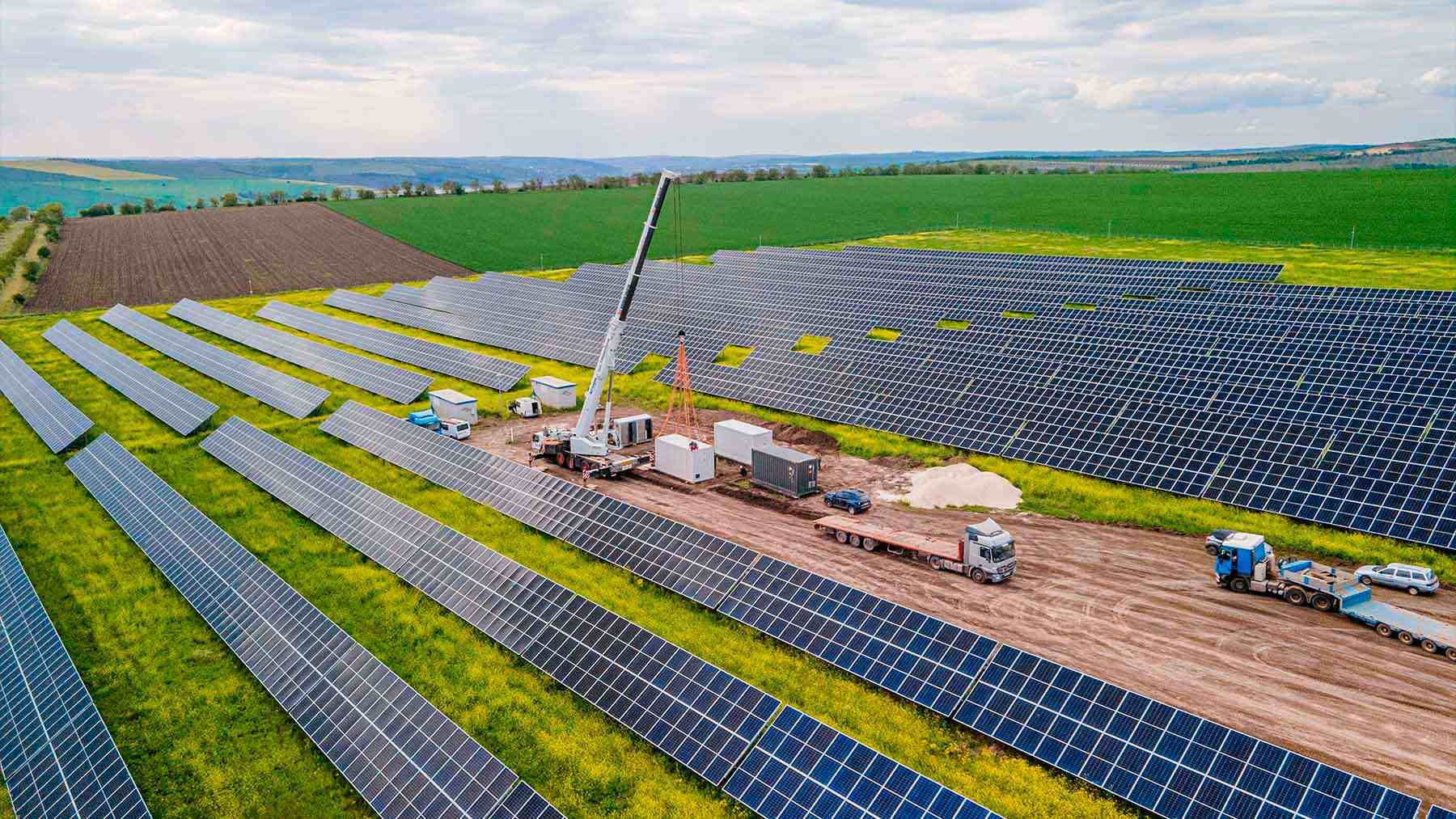
In Germany’s most recent solar park, wildlife cameras are quietly observing wildlife, and it appears the animals are not bothered by this new solar park development. Wildlife cameras have already recorded roe deer, wild boars, fallow deer, hares, and foxes roaming the area of the recently inaugurated Juliusburg-Krukow Solar Park in Schleswig-Holstein.
The video footage provides an initial insight into how wildlife uses an area that was previously completely unbroken land that has been converted to solar panels.
While the solar park was built to generate green electricity, researchers are equally interested in what occurs between and amongst the solar panels.
Although the full diversity picture is still evolving, preliminary findings indicate that the area is attracting a wide variety of species.
Wildlife is providing answers that assumptions never could
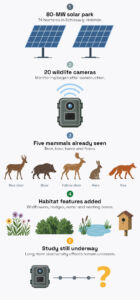
The 74-hectare Vattenfall Juliusburg-Krukow Solar Park generates approximately 80 megawatts (MW) of renewable electricity. That is enough to provide clean electricity for more than thirty thousand households annually. The project also cuts construction and supply-chain CO2 emissions by 67 percent through the use of low-emission steel.
As well as installing the equipment to generate clean electricity, Vattenfall has initiated a biodiversity survey and monitoring program. As part of this initiative, twenty wildlife cameras have been placed throughout the solar park to monitor wildlife after construction.
Wildlife camera footage has identified a growing range of species using the solar park.
However, these findings only represent an initial snapshot of biodiversity in the area.
Researchers continue to process the data. They are also gathering further insights into how different species use the area over longer periods of time.
Unlike previous studies, assumptions were often made about whether wildlife would accept or reject solar developments. Researchers are now able to draw conclusions based directly on observations gathered in the field.
The experiment started before the monitoring did
Biodiversity was a major consideration when Vattenfall developed Juliusburg-Krukow, according to the Vattenfall Biodiversity Program. Additionally, the measures put in place exceed the typical minimum standards required by law for solar developments.
Beetle Banks, made up of native wildflowers and grasses, have been added to support insects and nesting birds. Additionally, there are hedgerows and areas of open ground which contain piles of stones and dead wood. Nesting boxes for birds and bats have been erected in addition to small water features that may act as water sources during times of drought. Practices related to land management were also implemented for the benefit of wildlife.
Refuges will remain intact throughout the year due to planned mowing and grazing schedules. These features will be reviewed scientifically as research continues.
Researchers hope long-term observations will show whether the biodiversity benefits outweigh those associated with fossil-fuel electricity.
The project also forms part of the broader renewable-energy expansion being pursued by Vattenfall.
Seeing wildlife is not the same thing as measuring success
The presence of deer, boar, and foxes does not answer every ecological question surrounding solar parks. Longer term usage patterns of various species utilizing the site seasonally will require continued observation.
Researchers are still attempting to establish whether the habitat features contribute to long-lasting increases in local biodiversity. A monitoring program was established to address these concerns.
The expanded renewable energy investments are also part of Vattenfall’s overall strategy for expanding its renewable energy generation portfolio. Additional investments are underway in both new solar generation and the infrastructure needed to support future energy systems.
Wildlife has begun to roam through the solar park, even though the final biodiversity study has not yet been completed. Researchers now have thousands of images to examine as they work to determine what this behavior actually represents.
Read the whole thing?
Get the week's signal, not the noise
Our sharpest reporting on energy, climate and nature — free, once a week.