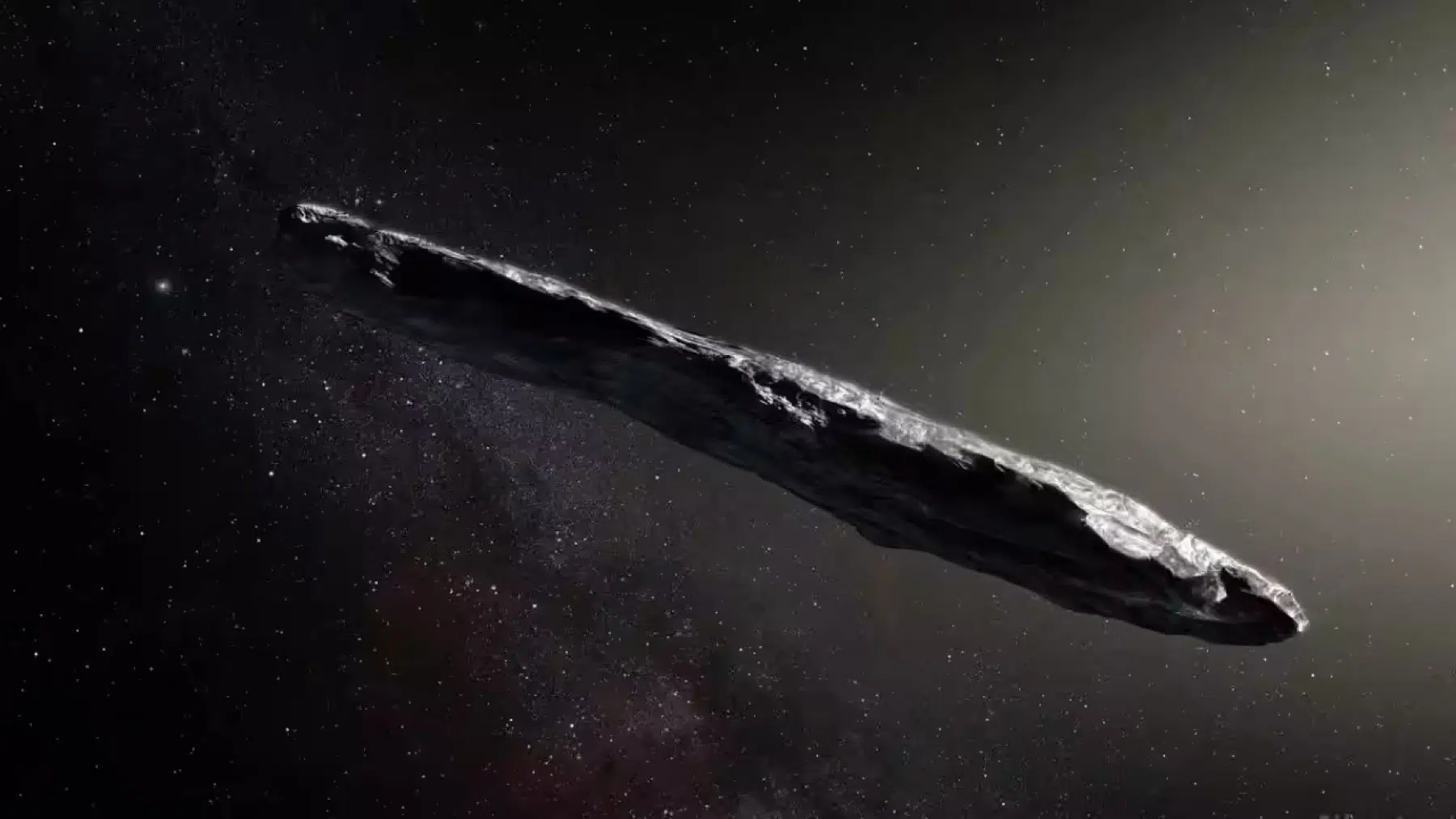
Dark comets have been observed by many telescopes over the years, but their precise origin remains an open question for researchers. Unlike regular comets, these objects resemble an asteroid, but move like comets. Their shape is also distinct from the regular ones, with a non-visible tail. Although these comets are not rare, they are still different from most cosmic bodies we are able to see – and their mysterious nature is bringing new insights to astronomy.
Comets vs asteroids: What’s the difference?
The dark comets play a crucial role in the formation of our planet. Studies have shown that they may deliver water to Earth. Contrary to common thought, water did not suddenly appear and it’s not unique to Earth; it was delivered during the formation phase and ultimately formed the oceans. This means that Earth was impacted more times than previously thought, and while these impacts shaped the planet, they also destroyed some parts – it ultimately depends on one’s perspective.
While past dark comets that resembled asteroids were important, the current ones offer a significant scientific challenge. The space agency cannot yet determine which of two distinct populations each object belongs to, and researchers are working to understand their origins.
Dark comets spotted near Earth: They don’t belong to the same group
NASA announced the discovery of seven more “dark comets”, bringing the total to 14. These objects are a peculiar mix of asteroids and comets. They resemble asteroids but sometimes change speed in ways that suggest gas is being expelled, like in comets. The difference is that they lack a bright coma and are unusually dark – something that reminds scientists of ‘Oumuamua, the interstellar traveler that passed through our solar system in 2017.
A new study, published in the Proceedings of the National Academy of Sciences, suggests that these comets may belong to two distinct groups. Larger ones may be found in the outer solar system, while smaller ones are found closer in. Darryl Seligman from Michigan State University explained that by comparing how much light they reflect and their orbital paths, the team concluded that not all dark comets are the same.
The significance of the objects in the early stages of Earth
Scientists believe that these objects might have brought essential material to Earth long ago, including water and organics that helped life appear. “Dark comets are a new potential source for having delivered the materials to Earth that were necessary for the development of life,” said Seligman.
The exact method they could have delivered water is still difficult to prove. However, we do know that objects from the asteroid belt can only remain on stable paths for about 10 million years – a fraction compared to the 4.5 billion years of the solar system’s history.
This is how people can differentiate between the two categories of the cosmic objects
Under normal circumstances, the distinction between a comet and an asteroid is clear: comets develop long, bright tails, while asteroids do not. These tails appear because comets contain ice. As a comet moves closer to the Sun, the heat turns the ice into gas. That gas escapes, pulling dust and small rocks with it, and the sunlight makes the whole stream shine. This is the glowing tail we see from Earth (but it’s not what NASA spotted in something moving differently than we are used to)
Read the whole thing?
Get the week's signal, not the noise
Our sharpest reporting on energy, climate and nature — free, once a week.