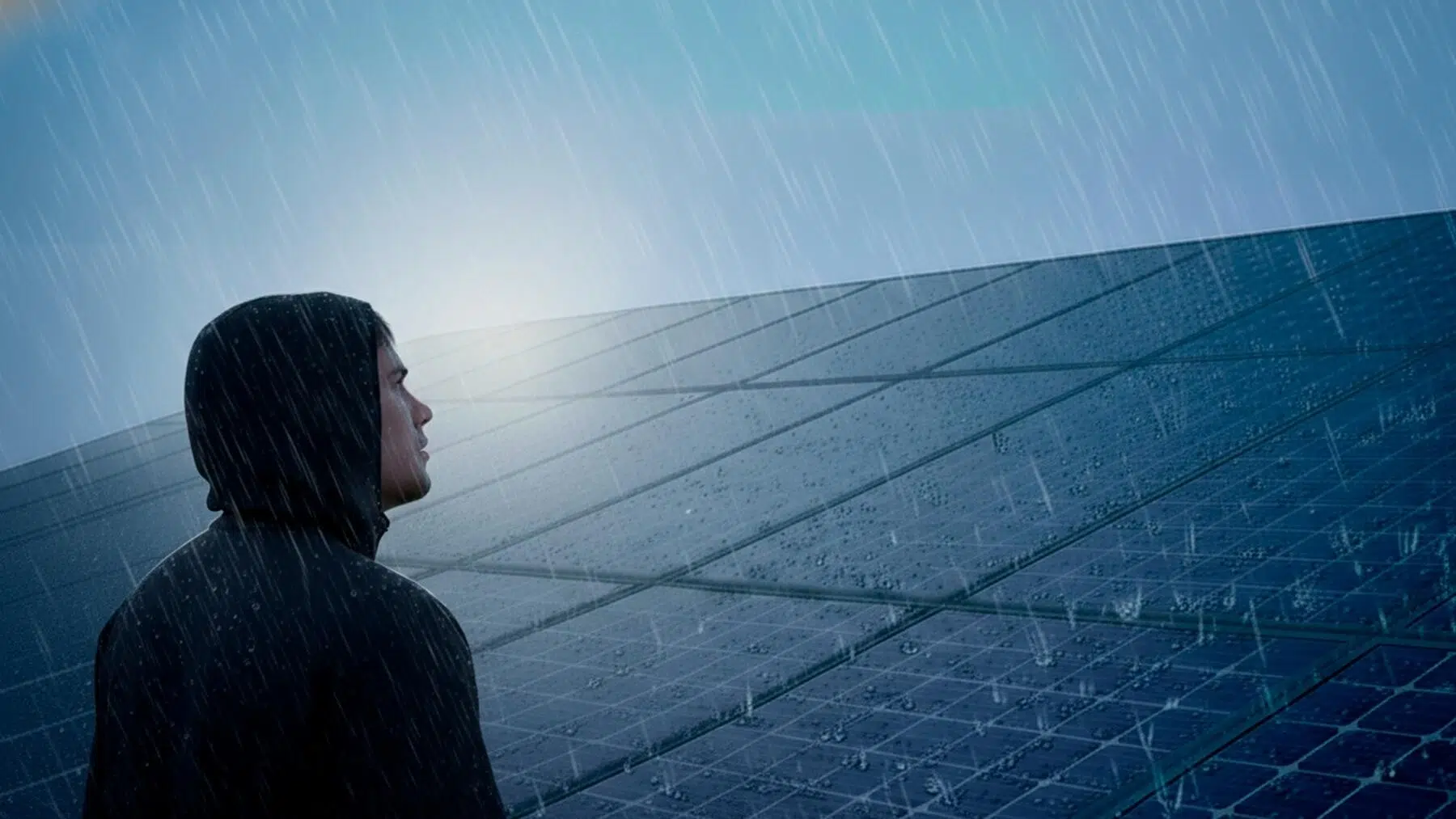
Rain is often considered a “free” method of maintaining solar panels. Homeowners often believe that when the clouds darken, Mother Nature will wash away dirt from the solar panels, restoring efficiency and allowing them to run efficiently. However, the solar industry warns that this thinking may be misleading and expensive for some homeowners.
Solar panels are created to work in wet weather, and the rain will help keep them clean
Although the rain does not guarantee an effect on efficiency, the amount of energy produced by your solar panels may be affected by precipitation. Clouds block sunlight, which causes a significant decrease in electricity production due to the fact that the solar panels use sunlight to create electricity (not heat).
Modern solar systems that function well in low light conditions can experience a drop in electricity production on rainy days, especially during extended periods of rain or heavy overcast conditions. Many homeowners consider the decrease in electricity production as a normal fluctuation and do not realize that there may be an underlying issue with their solar panels.
There has been growing attention to this topic on social media, particularly since a TikTok post made by @kimverduyckt. Kim Verduyckt is a solar cleaning entrepreneur and educator who also founded the Solar Cleaners Network, a global network of professionals who help each other to develop and grow their solar panel cleaning business.
Kim’s posts often challenge conventional wisdom in the solar industry, and his recent post generated new discussions about one of the most commonly believed myths in the solar industry: that rain is sufficient to maintain clean solar panels.
Rain: A partial solution to a bigger problem
Australian solar industry professionals agree that while rain can help, it is only a partial solution. While light rain can remove loose dust from the panels, the rain typically does not remove the bonded dirt or debris, such as pollution residue, bird droppings, salt spray, and construction dust.
In urban and coastal areas, the rain can actually contribute to dirtying the panels by distributing oils from the atmosphere onto the glass surface of the panels instead of removing them. This results in the gradual buildup of non-uniform soiling that reduces the ability of the solar panels to capture the sun’s light.
The bigger issue is what happens to the panels after the rain ends
Dirty panels not only produce less power, but the soiling can cause “soiling losses,” where the panels consistently produce lower levels of power on sunny days. Studies and field data collected by Australian researchers have demonstrated that soiling can reduce the efficiency of solar panels by 5% to 15% or greater, depending on the location and climate.
Different climates and their impact on solar panels
In arid climates and/or regions that experience frequent storms followed by extended periods of drought, the potential for reduced efficiency is much higher.
Therefore, experts suggest that solar panel owners should inspect their panels manually after a period of rain rather than assuming the rain was able to sufficiently clean their panels. Signs of the need for manual cleaning include streaking, patchy residue, and dull spots on the solar panels. If left unaddressed, the effects of the lack of maintenance can lead to reduced lifespan of the solar panel system and delayed return on investment.
The take-home message is straightforward yet often misunderstood by solar panel owners: rain is not maintenance. Rain provides a quick rinse, but it is not a substitute for regular inspections or actual cleaning. Voices such as @kimverduyckt continue to educate the public regarding the importance of understanding what the rain cannot accomplish for solar panels versus what it can, and this knowledge can directly affect the quality of the service provided for your solar panels.
Disclaimer: Our coverage of events affecting companies is purely informative and descriptive. Under no circumstances does it seek to promote an opinion or create a trend, nor can it be taken as investment advice or a recommendation of any kind.
Read the whole thing?
Get the week's signal, not the noise
Our sharpest reporting on energy, climate and nature — free, once a week.