
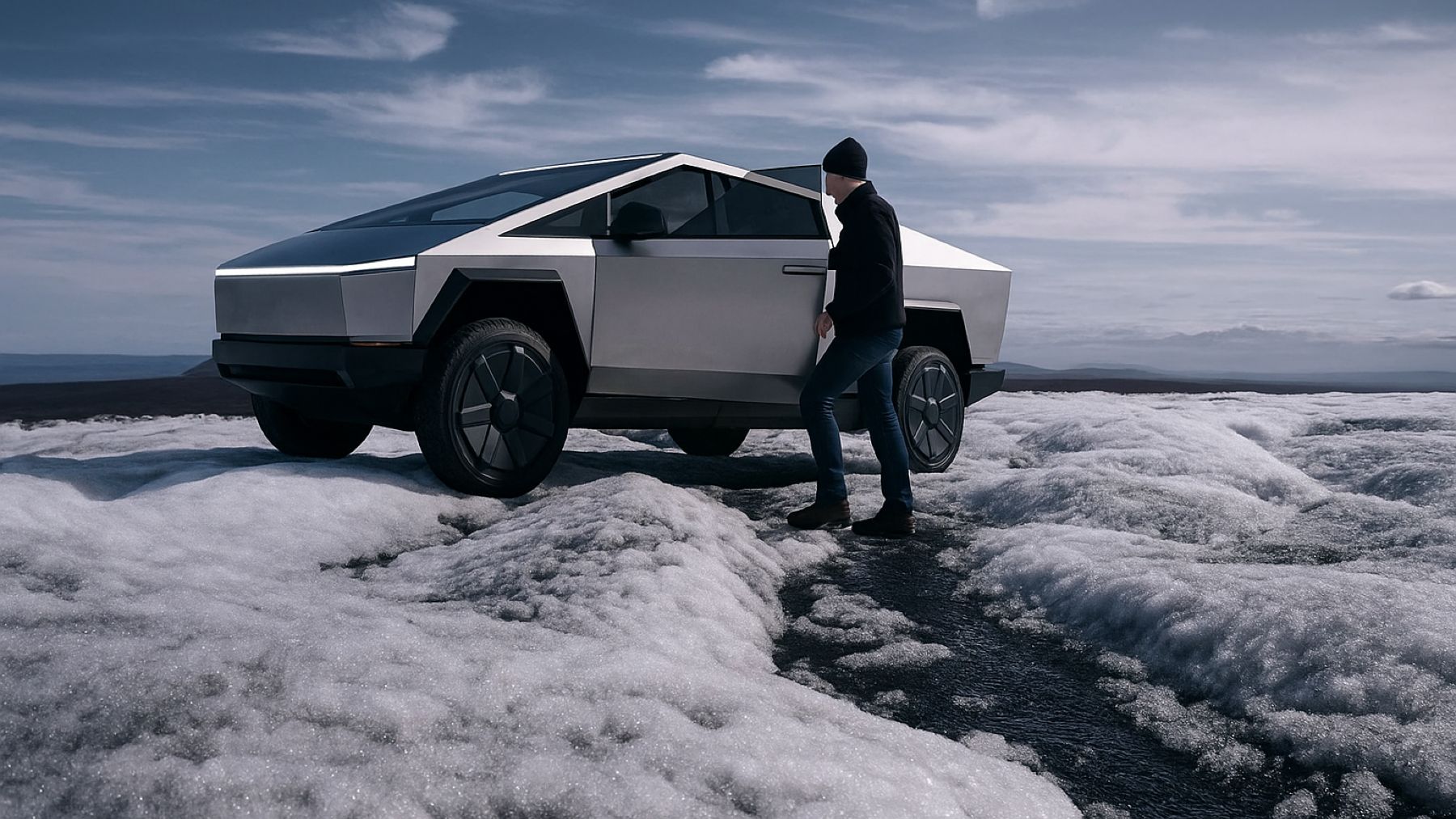
The Tesla Cybertruck is one of the most famous vehicles in the world. However, while it is considered by many as a state-of-art electric vehicle, with the capacity of beating Lamborghini’s in drag races, UK authorities do not like its appearance. It’s bigger and larger than the cars sold in the Kingdom. The car barely fits in the streets of Europe, and it’s not easy to import it to England, Wales or Scotland. Now, the police will have stricter guidelines to follow, as the vehicle is not allowed to be driven in the UK.
Tesla Cybertruck banned in the UK: New country joins the movement
Elon Musk’s electric vehicle company has been experiencing an all-time low in 2025. While the cars are still considered to be among the best available, the company’s involvement with the U.S. government and increasing competition in the market have put Tesla in a difficult spot. The UK’s prohibition of Cybertrucks on its streets has nothing to do with political rumours, but rather the main reason is that the vehicle does not fit in the streets.
The UK was one of the first places to ban the Tesla SUV, and now another country is joining the movement. Not only the UK banned the vehicle, but the entire European Union also don’t see the Cybertruck as a reliable vehicle, and putting a car like this on the streets could attract unwanted attention, which is not exactly what U.S. army members living in Germany would want when trying to import one.
Europe does not want the vehicle: The import process is difficult
Bad news for Cybertruck fans in Europe – the continent has closed its doors to Tesla’s latest giant. The SUV failed to meet key safety requirements that Europe takes seriously. The first issue is pedestrian safety. The vehicle sharp stainless-steel body looks futuristic, but it is also dangerous. It does not have the same soft crumple zones that other cars use to absorb impact, meaning that in an accident, pedestrians could take the full hit. On the other hand, their latest car could fit perfectly in the streets.
Then there is the weight problem – around 4 tonnes – and that is above Europe’s 3.5-tonne limit for standard drivers. Anyone wanting to drive it would need a special C1 licence. The final obstacle is paperwork. Tesla has not put the Cybertruck through the EU’s official crash tests, which are mandatory for any car sold to the public. The company still relies on the U.S. self-certification system, but Europe does not accept that. Without passing independent crash safety tests, the car cannot be sold in Europe.
Tesla has other models selling well in the continent
Europe is one of Tesla’s biggest markets, and blocking the Cybertruck is a significant blow to the company’s image. While the Model Y and Model 3 continue to sell well, the ban means that one of Tesla’s most talked-about vehicles will not be available in the region anytime soon. Some say the company might design a lighter, rounder version for Europe – but for now, that is just speculation. In the end, Europeans think it is simply too big for their cities. Parking would be very difficult in the narrow streets.
Competition is rising: BYD has big plans for the future
Other EV companies are also entering the continent to change the landscape and try to take Tesla out of the top of the market – BYD has something different for Europe. While the company is still working on making the recently founded factory in Hungary up to speed in terms of production, there is another one being built in Turkey. Rumours also point to the Chinese creating new models to be sold in the continent and adapting others.
Disclaimer: Our coverage of events affecting companies is purely informative and descriptive. Under no circumstances does it seek to promote an opinion or create a trend, nor can it be taken as investment advice or a recommendation of any kind.


