
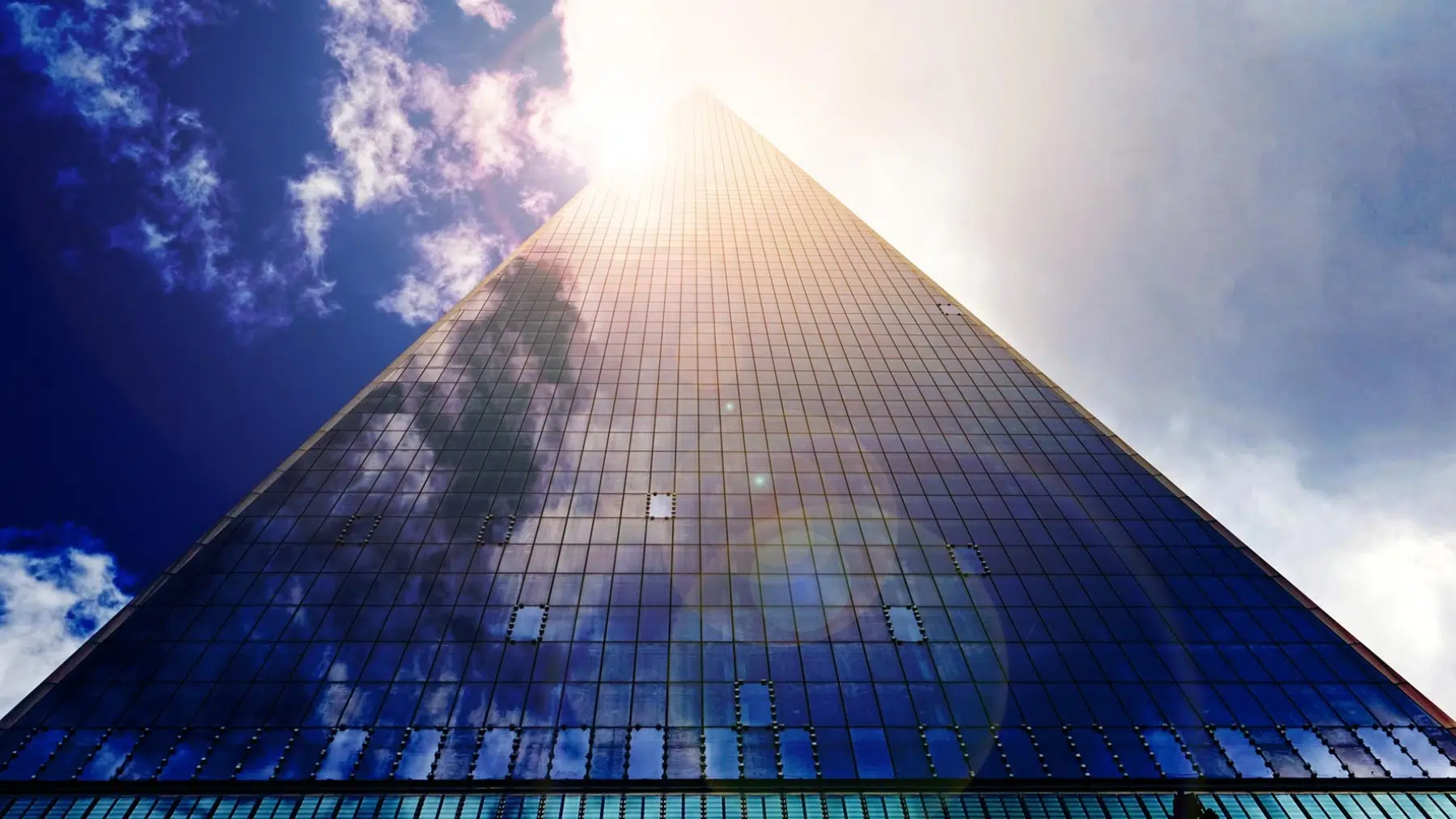
In 1885, Chicago went down in history for the world’s very first skyscraper, the Home Insurance Building. Its steel-framed structure permitted loftier heights and lower dependence on usual load-bearing walls. Since then, skyscrapers have been constructed in numerous cities, maximizing urban land use and providing spectacular views. Unfortunately, skyscrapers contribute to high emissions and have much higher energy consumption compared to smaller buildings. This is why one U.S. state is testing energy-generating skyscrapers.
The U.S. state that is testing energy-generating skyscrapers
Skyscrapers are known for their spectacular views, which is why they typically have glass fronts. These glass fronts are coated to reflect and absorb light in the visible and infrared divisions of the spectrum, which lowers the skyscraper’s inside brightness and heating, resulting in a vast loss of energy. According to a research team from the University of Michigan, this wasted energy can rather be utilized to lower the skyscraper’s energy demands by implementing transparent solar panels.
“Windows, which are on the face of every building, are an ideal location for organic solar cells because they offer something silicon can’t, which is a combination of very high efficiency and very high visible transparency.” – Stephen Forrest, the Peter A. Franken Distinguished University Professor of Engineering and Paul G. Goebel Professor of Engineering, who led the research.
According to Forrest’s research group’s findings in Proceedings of the National Academy of Sciences, certain windows have transparency similar to solar cells. Thanks to their research, skyscrapers are another step closer to producing their energy after setting new efficiency records for color-neutral, transparent solar cells.
This is how skyscrapers will generate energy
Forrest’s team started by combining organic molecules designed to be transparent in the visible but absorbing in the near infrared. The near-infrared is a transparent division of the spectrum responsible for a lot of sunlight’s energy. They also created optical coatings for the new material that will enhance power production from infrared light and transparency in the visible spectrum. This design is significant since these two divisions normally compete with each other.
The Michigan University team’s new organic design achieved 8.1% efficiency and 43.3% transparency. The design’s cells may seem to have a slight green tint, which may not be acceptable in certain applications; however, the color is more like the gray of car windows and sunglasses. After their initial success, the team focused on making the cells fabricable. Imagine something thinner than paper.
A multiphase removable patterning approach was created, which executed micrometer-scale resolution. The team placed thin plastic films in patterns to create very thin strips, after which the organic and metal layers were placed. The strips were then peeled, resulting in extremely delicate electrical interconnections between the cells. The new design neared a transparency of 50%.
These energy-generating skyscrapers will have zero emissions and so much more
The team’s new approach to converting skyscrapers into energy-generating buildings will have many benefits. Both versions can be used for large-scale manufacturing and use materials that are more eco-friendly and less toxic than other solar cells that are transparent. Other benefits include:
- They can be altered for local latitudes
- They can be added to double-glazed window panes
- The design is applicable for commercial use
- The design can be used in other organic electronic devices, such as OLEDs
- The design can be used in residential markets that prefer higher transparency
Professor Forrest and his team are continuously improving their technology, especially with a focus on enhancing its lifetime and efficiency. They are also exploring its cost-effectiveness by adding transparent solar cell windows to current and new buildings.
Read the whole thing?
Get the week's signal, not the noise
Our sharpest reporting on energy, climate and nature — free, once a week.


