This American automaker has undergone quite a few transitions over the past few years, but since 2011, its vision has become crystal clear. The company has set its sights on playing a major role in the Climate Pledge to achieve zero carbon emissions by 2040, and plans on achieving it with the 10,000,000 kWh from a large-scale wind turbine. The entire setup is something that has never been seen before.
The renewable driving force behind these vehicles
The American automaker Rivian was founded in Florida as Mainstream Motors. After rebranding, it became known as Avera Motors and eventually Rivian. In 2011, Rivian set its sights on electric vehicles (EVs), such as trucks and SUVs. The company set a long-term renewable energy vision, which entailed the manufacturing of high-impact projects to decrease its carbon footprint and simultaneously aid communities, customers, and the power grid.
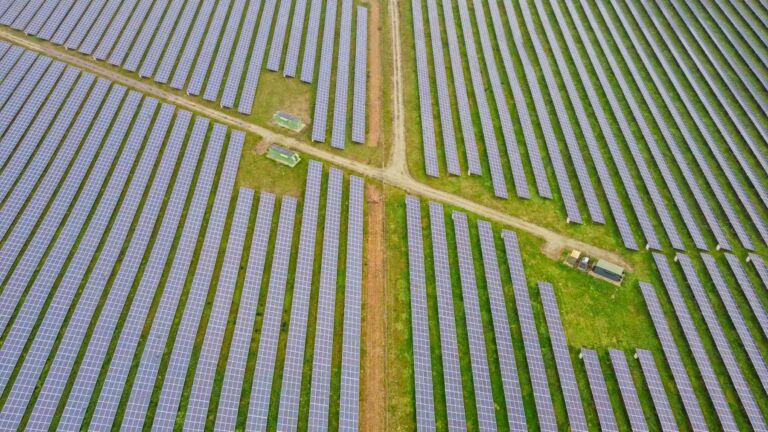
At the beginning of 2022, the company installed a 783 kW solar canopy at its shipping charging area. Later that year, the company announced its plans to install a large-scale wind turbine at its production site, which formed part of its long-term renewable energy vision. Not only was this wind turbine project renewable, but it was also extremely big and powerful, and would help ensure that every Rivian R1 EV coming off the line gets its first charge with 100% clean energy.
The never-before-seen wind turbine project
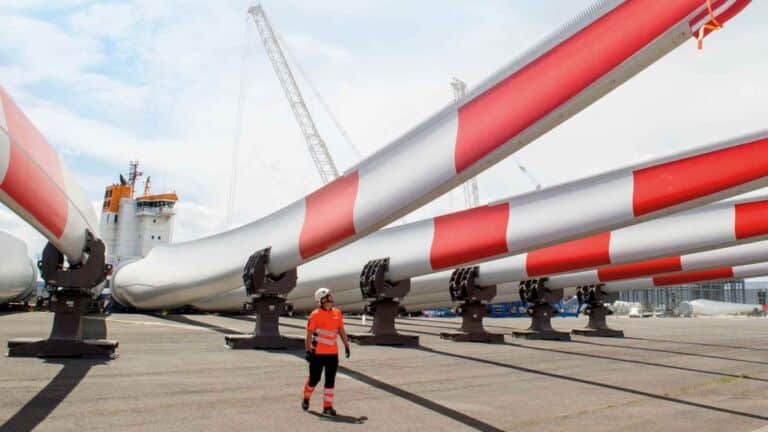
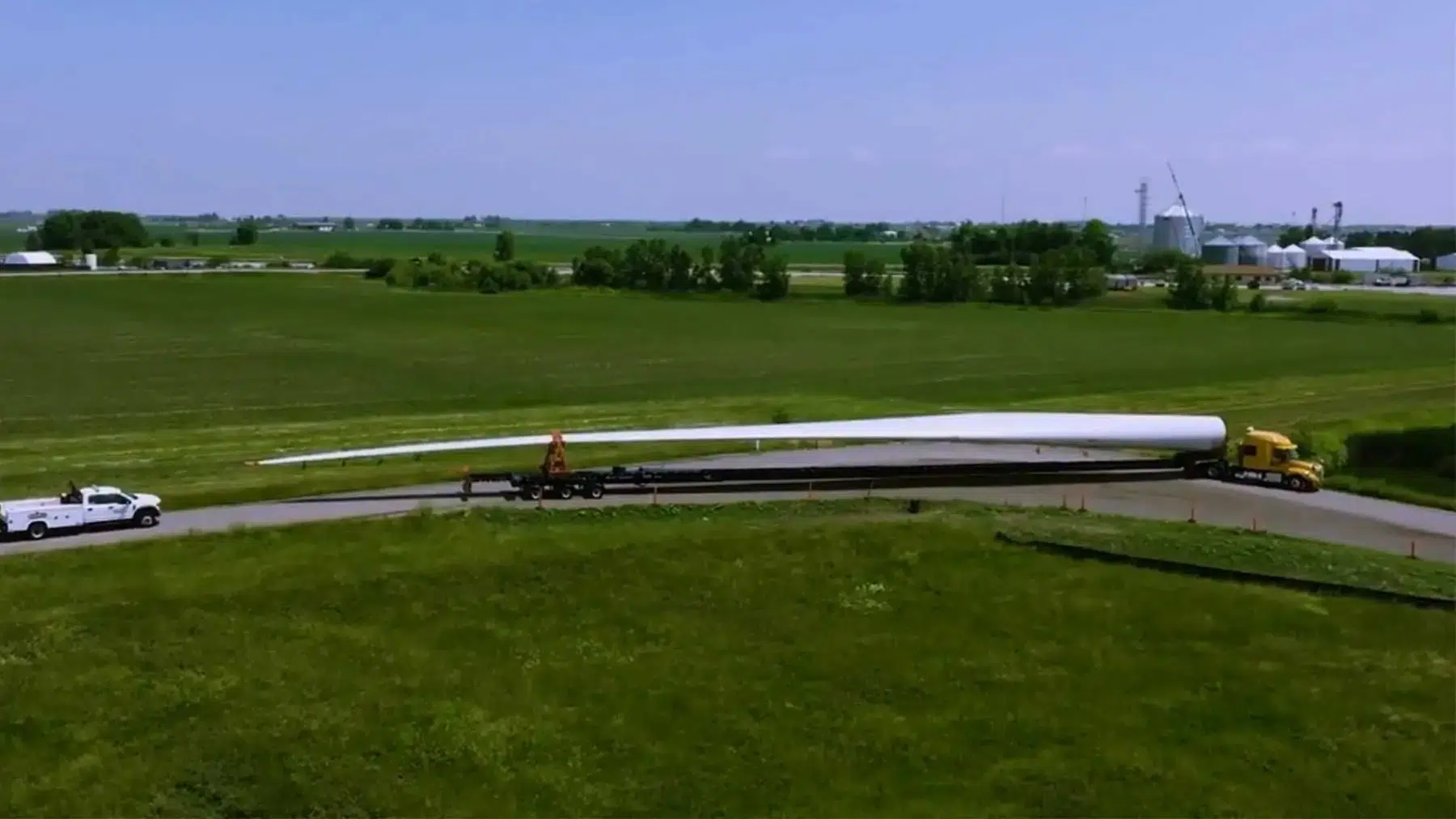
Rivian partnered with the Virginia-based renewable energy company for its wind turbine project. The turbine, once constructed, stood at less than 510 feet in height. It’s white and has non-reflective blades, and it was installed on the east side of the company’s production site, inside the vehicle test track. According to Rivian, this wind turbine has a 2.8 MW capacity and can supply about 10 million kWh of power annually. That is enough to charge 150,000 EVs annually.
“To us, our job isn’t done when our vehicles come off the line. While we’re working hard to help electrify transportation, we’re also pushing to accelerate the shift to carbon-free electricity for all. This wind turbine is an early step on that path, and it’s also a beacon of our vision for a clean energy future.” – Andrew Peterman, Rivian Director of Renewable Energy
This entire project also aligns with the automaker’s game plan of installing renewable resources in regions in the country with the highest need. The company also agreed to the Climate Pledge to reach net-zero carbon emissions by 2040, 10 years ahead of the global zero-carbon mission by 2050.
Advantages beyond power production
Now, many people know that traditional wind turbines come with some disadvantages, which, according to Blue and Green Tomorrow, include but are not limited to:
- Visual pollution
- Noise pollution
- Harmful to the surrounding wildlife
Thankfully, Rivian did its homework and researched the project’s potential impacts due to sound and shadow flicker, and its potential impact on endangered species, communication systems, and cultural resources. These impact studies highlighted the following advantages:
- It has low noise pollution, as it produces limited sound with an average of 35 decibels and a maximum of 42 decibels (the same as a refrigerator)
- Throughout 25 years, it could diminish 177,000 tons of carbon-equivalent emissions (the same as removing 34,000 internal combustion engine vehicles from the roads for one year)
- The fact that the turbine has been installed on the company’s production site means that visual pollution is not a concern, especially considering its height.
It is one thing to implement renewable energy sources into your company, but the responsible construction management and necessary environmental impact studies play a crucial role in ensuring that the entire project remains green. Rivian has proven its dedication to keeping its carbon footprint small and to achieving its goal of adhering to the Climate Pledge. Who knows, soon other wind turbine projects such as this one may follow suit.
Disclaimer: Our coverage of events affecting companies is purely informative and descriptive. Under no circumstances does it seek to promote an opinion or create a trend, nor can it be taken as investment advice or a recommendation of any kind.
Read the whole thing?
Get the week's signal, not the noise
Our sharpest reporting on energy, climate and nature — free, once a week.