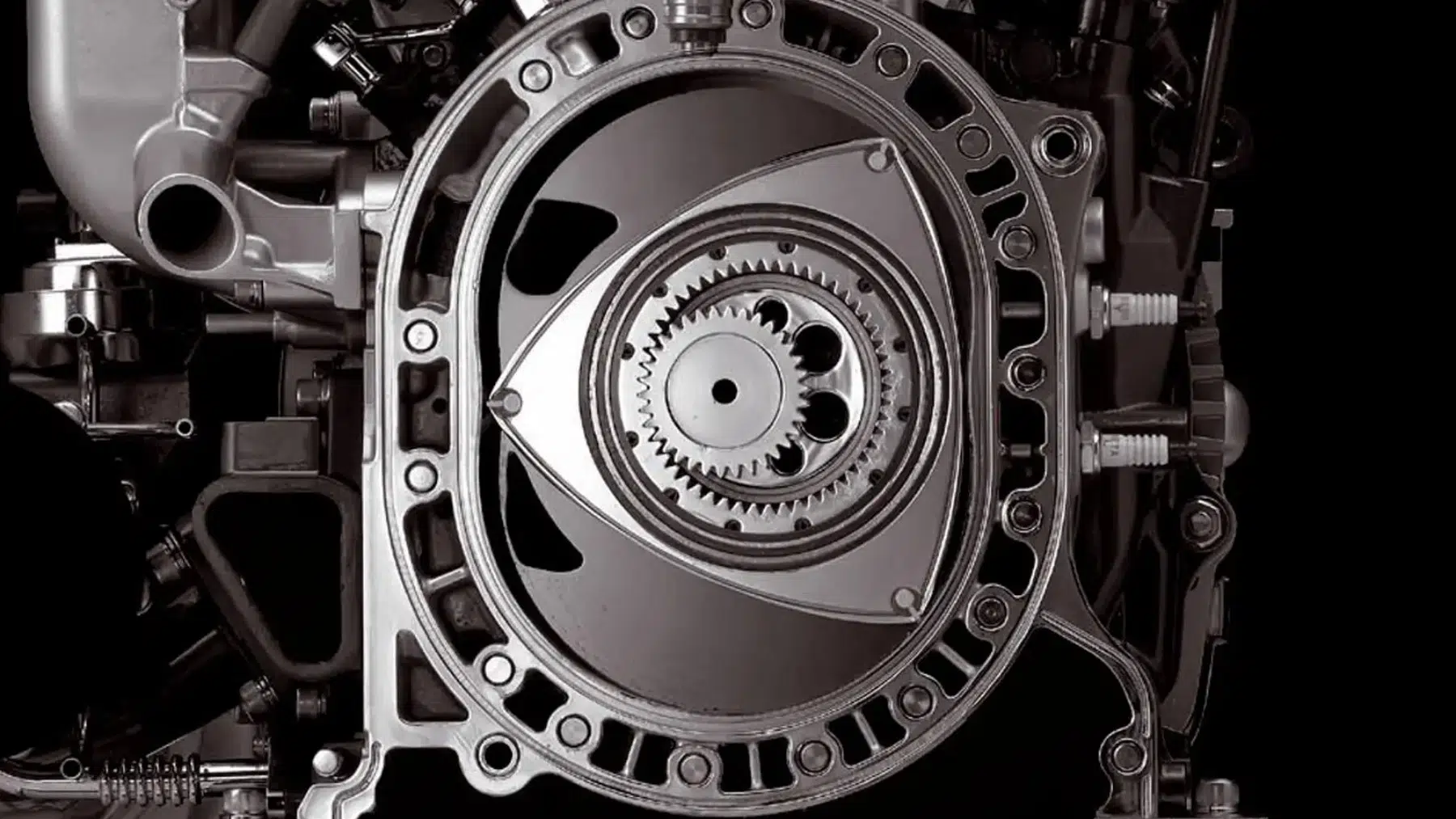
Mazda is fully committed to rotary engines and the design team proved it when they started working on laser ignition technology for its 16X model. The next generation of Mazda powertrains is expected to function without spark plugs and instead, ignition of the fuel-air mixture will be sparked by tiny, high-powered lasers. Mazda expects that combustion efficiency will reach new highs utilizing laser ignition.
The Mazda engine codenamed 16X is expected to replace the RX8
Mazda’s RX8 model, which was the brand’s flagship for many years, started being phased out of production due to challenges meeting emissions regulations and disappointing sales figures, among other reasons. News then emerged about a new rotary version in the works, and it was confirmed to the media that the new model would offer a displacement of 1.6 liters, an upgrade from the current 1.3 liters in the previous rotary unit.
The 16X will come out as a more compact and lightweight engine, occupying less space under the hood thanks to being manufactured partially from aluminum. It’s believed that eliminating spark plugs from the system will enhance overall combustion efficiency, thereby improving fuel economy and torque.
High-powered lasers are the future of rotary engines, according to Mazda
Laser ignition technology is nothing new in the world of automotive. It’s been used in the aerospace and automotive industries and works by applying high-powered laser pulses to ignite the air-fuel mixture inside an engine’s combustion chamber, replacing the function of spark plugs.
The tiny lasers that the Japanese are working on are significantly smaller than spark plugs and facilitate more precise control of ignition timing. This translates into leaner engine mixtures and lower emissions, which is a global priority in the face of climate change and the transition away from fossil fuels to cleaner options.
The rotary engine was once the epitome of auto technology
When first developed, the rotary engine was the epitome of engineering and the technology was described as being way ahead of its time. The spinning triangle system was capable of delivering a lot more horsepower to displacement than any other engine of the day, but after extensive production complications, the rotary engine has been largely abandoned. But not by Mazda.
When can drivers expect a new Mazda engine option?
A small laser beam about 0.35 inches in diameter and 0.39 inches long is expected to be sufficient to ignite the fuel mixture in Mazda’s next generation of rotary engines. The new range, possibly dubbed RX-7 or RX-9, should debut within a few years, although the biggest challenge appears to be getting the Mazda engine compliant with global emission standards and the timeframe is unclear.
Mazda is not the only Japanese auto manufacturer looking to new engine types to sustain its fleet. Toyota is getting together with BMW to develop a hydrogen fuel cell engine and it’s got the motoring world hopping.
The challenges of rotary engines
There are reasons why the rotary engine has fallen out of popularity since its heydays from the 1970s to the 1990s. There are a number of valid reasons for this:
- Low fuel efficiency: Rotary engines tend to consume more fuel than other kinds. This is due to higher internal friction and incomplete combustion.
- High emissions: Developers struggle to get rotary engines to meet current, stringent environmental regulations as they emit high levels of hydrocarbons.
- Oil consumption: Rotary engines rely on lubrication from oil injected into the combustion chamber, leading to higher oil consumption.
- Sealing challenges: The apex seals used in rotary engines tend to wear out faster than the piston rings used in traditional engines, which can lead to compression loss.
- Cooling issues: Maintaining effective cooling in rotary engines is challenging due to continuous combustion and high operating temperatures.
Mazda’s commitment to the rotary engine is admirable, and if the hype around its laser ignition is real, there may soon be a revival of the rotary engine in the automotive industry.
In other news about leaps in engine technology, German engine manufacturer MAN Energy Solutions is working on a fresh new offering for the maritime industry. Even though the dual-fuel engine is only being released in 2026, it’s already generating hype in the shipping world due to its fuel versatility.
Read the whole thing?
Get the week's signal, not the noise
Our sharpest reporting on energy, climate and nature — free, once a week.