New York farms are now expected to do two things: grow food and generate electricity.
Ground mounted solar usually takes up space that has been cleared and fenced, which means the land cannot be used for farming.
There are 33,000 farms in NY covering 7 million acres.
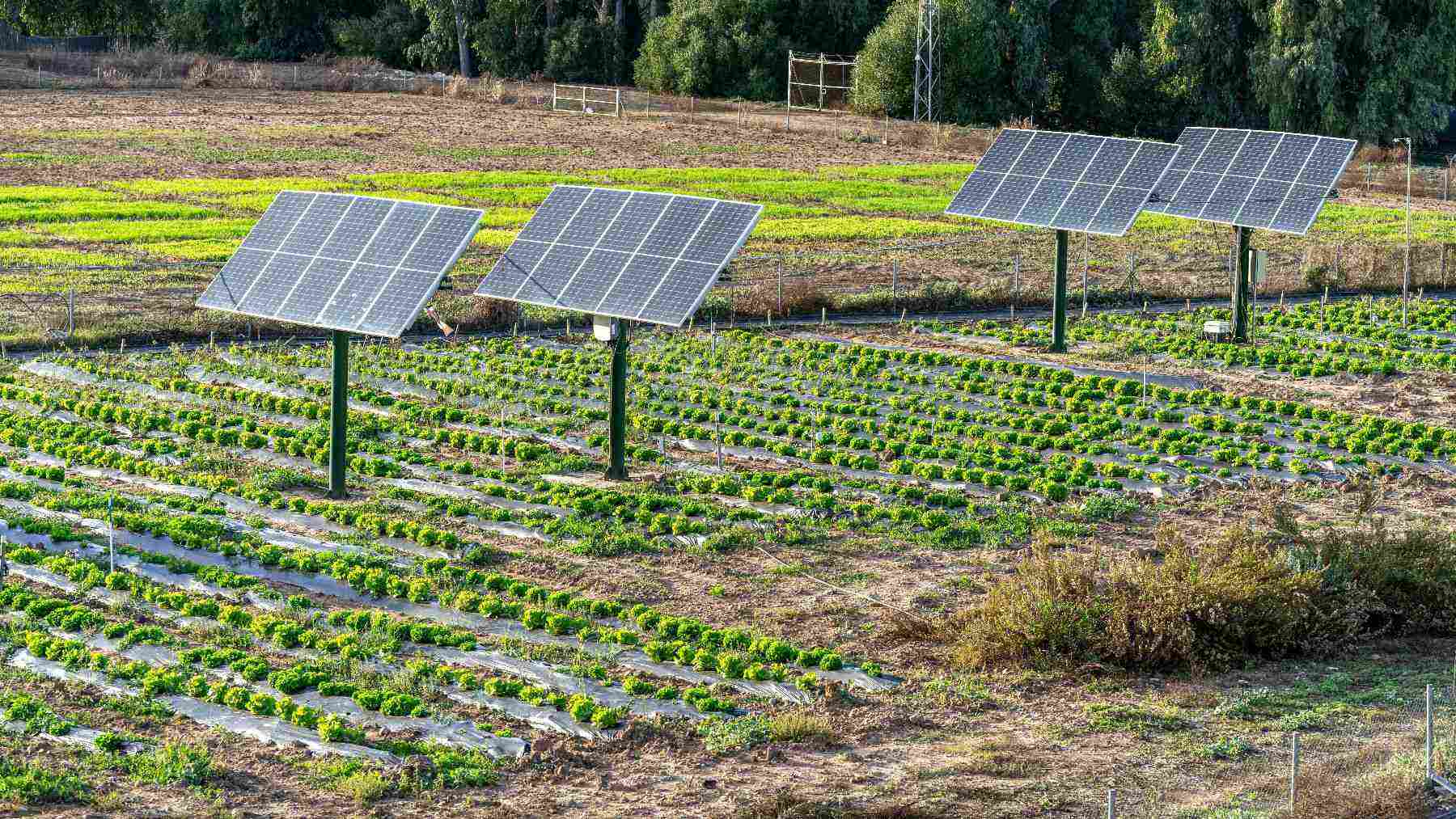
The state recently created a program to keep that farmland in production. The approach is called agrivoltaics, which places solar panels above cropland without replacing farming.
Growing corn and generating solar power on 14 acres in NY
On Sept. 15, 2026, NYSERDA announced a new $10 million Sun and Soil Program that will support agrivoltaic projects by keeping land producing food.
One prior pilot is located on the college farm at SUNY College of Agriculture and Technology at Cobleskill, developed in coordination with the New York Power Authority.
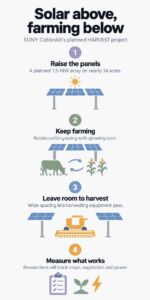
A planned solar system at the site is expected to have a capacity of approximately 1.2 to 1.5 megawatts, span nearly 14 acres, and could generate enough electricity to power about 230 homes each year.
The proposed design places solar panels on tall poles that would allow cows to graze beneath the panels while supporting continued agricultural use of the land.
The spacing of the panels is wider than common solar, which makes it easier for large farm machines to pass between posts.
Testing how much shade, spacing, and fencing farms can tolerate
A New York dairy farm is testing shade limits.
Under prior state funding from NYSERDA, K&MH Martens Farms received $185,000 for a 300 kW microgrid using shade to prolong the growing period of cool-season grasses.
Lightstar Renewables in Orange County is testing what crops will be compatible with solar development.
In that same earlier program, the developer has received more than $515,000 for a 3.2 MW system that enables the continued production of hay and also adds vegetables on about one to two acres.
As part of the earlier pilots, United Agrivoltaics was awarded $750,000 to test adding pigs, poultry and specialty crops at currently operational solar sites that collectively cover more than 100 acres.
Livestock help control weeds and vegetation in place of mowing. Instead, grazing occurs underneath an elevated solar generation platform.
Cornell is developing a planned Hudson Valley research installation featuring adjustable solar panels above apple production, with a proposed capacity ranging from 150 to 300 kW, alongside additional research at its Agricultural Experiment Stations.
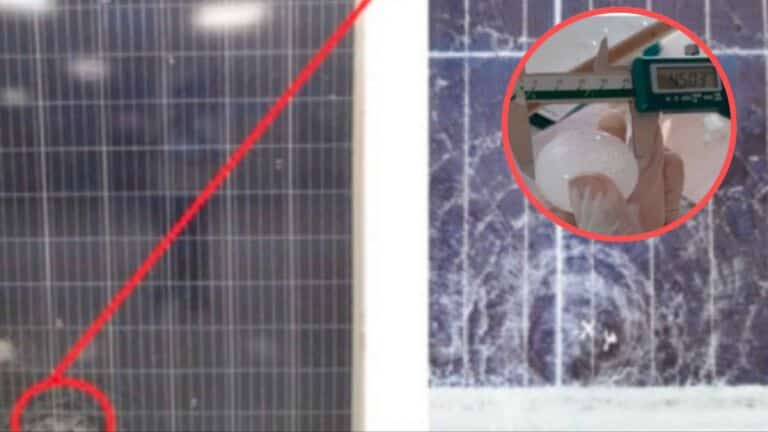
As the array moves, researchers can assess the effects of light, hail, and temperature on plant growth.
What each design had to solve to keep land in production
The four funded demonstration projects each tested a different constraint for using the same land for food and electricity.
Cobleskill addressed height for harvesters, Martens addressed generating power on the farm for grain processing, and Lightstar addressed distance between rows for hay balers.
United addressed fencing for pigs and chickens, while Cornell is separately developing research installations focused on how solar panels affect apple production.
To address these issues, NYSERDA formed an Agricultural Technical Working Group that provides input on a Smart Solar Siting Scorecard.
Their first findings included that sharing space is feasible, based on four funded demonstration projects and additional agricultural research sites.
Evaluating long-term yield, snow load, and upfront costs
None of the agrivoltaic projects have operated for twenty-five years, so long-term corn yields under partial shade are not yet known.
No site has evaluated if less hail damage from moving panels pays for the motors.
Building agrivoltaics requires more steel and engineering than ground mount, which equals higher upfront costs.
All data from all projects will be shared. The best characterization is demonstrated, not proven at scale.
Although the planned project is designed to generate between 1.2 and 1.5 MW without replacing cattle or corn, it is not yet demonstrated that any configuration is financially viable each year.
How do you build solar in a state with seven million acres of agricultural land? You stop viewing land as food or energy and design for height, spacing, and movement.
Read the whole thing?
Get the week's signal, not the noise
Our sharpest reporting on energy, climate and nature — free, once a week.