It is not new that scientists and researchers have, for centuries, been searching for evidence of life on Mars. It looks like we might have an answer to this ongoing situation. The history books could be rewritten by scientists with what I am about to break down in relation to finding out whether there is life beyond planet Earth.
There are the findings of a recent study written by Georgetown organic geochemist and postdoctoral researcher Anais Roussel (G’24). Roussel investigates the effects of cosmic radiation from supernovae on biomarkers that may indicate the presence of extinct life on Mars, a planet that is uninhabitable by modern life because of its frigid temperatures, high radiation levels, and arid climate.
Indications of life: What researchers have discovered on Mars
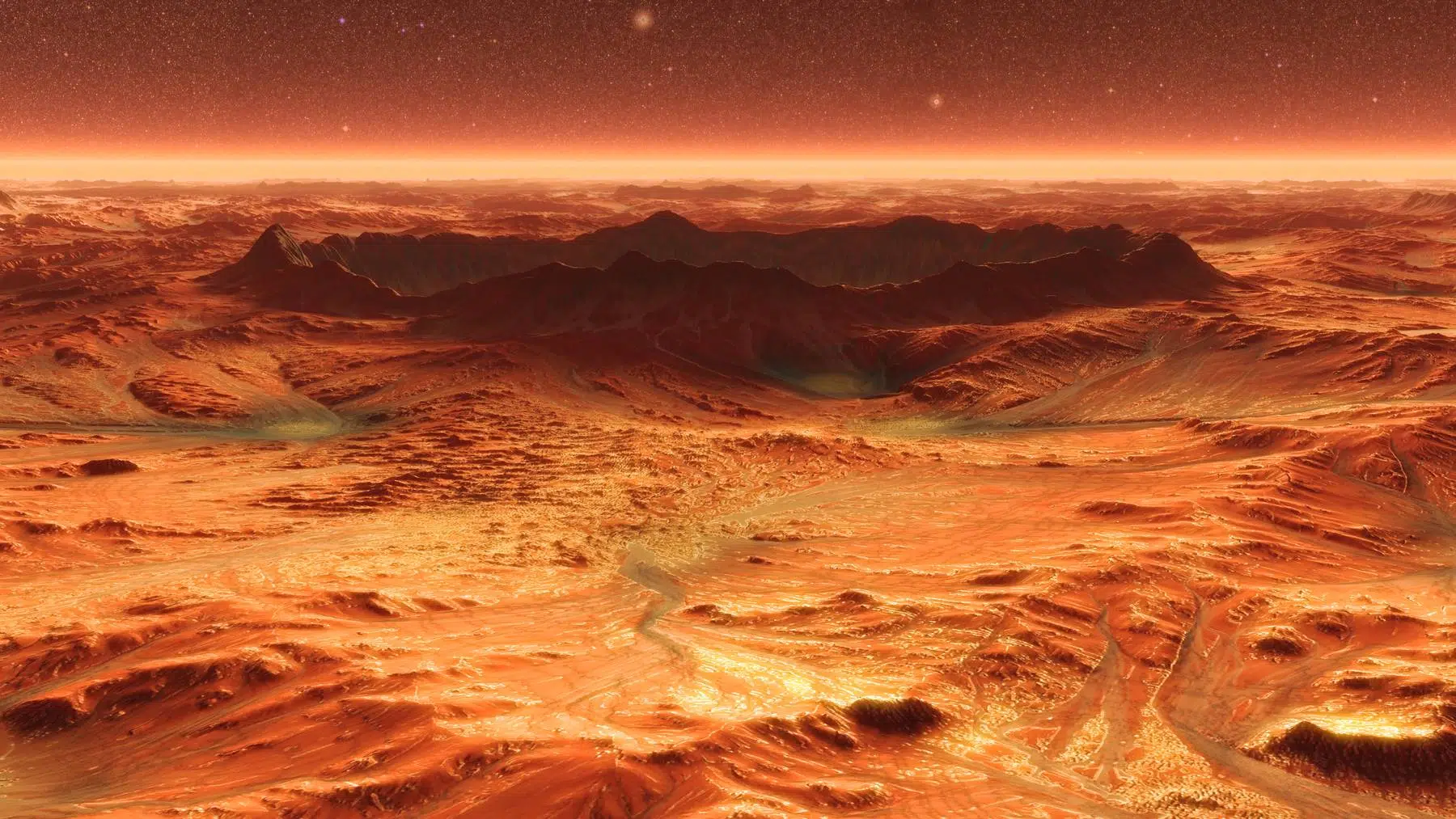
According to scientists, Mars was once habitable. The Red Planet used to be covered in rivers, canyons, oceans, warm temperatures, and a thick atmosphere. In many aspects, Mars is comparable to Earth. It is comparable in size to other planets in the solar system, has a similar geological composition, and is roughly 4.6 billion years old, making it similar in age to Earth.
Although Mars might have originally resembled Earth, the possibility that it could support life diminished when it lost its magnetic field and atmosphere about 4 billion years ago. According to Roussel, Mars’ water was largely blown away or frozen in the planet’s polar caps in the absence of its atmosphere. Astrobiologists frequently look for amino acids, one of the building blocks of life, when searching for extraterrestrial life.
Roussel’s research focuses on hopanes and steranes — complex lipid-based molecules found in cell membranes that cannot exist without life. These are among the strongest biosignatures on Earth. Her central question is whether such clues could survive Mars’ intense cosmic radiation over geological timescales.
Is life possible on Mars right now? Researchers collaborate with NASA on the Red Planet
NASA’s car-sized Mars Perseverance rover landed on the Red Planet in February 2021 to begin looking for signs of life after a seven-month voyage. The rover’s goal is to investigate several ancient ecosystems on Mars and gather materials for eventual return to Earth.
With the support of more than £400,000 in funding from the UK Space Agency, scientists from the Natural History Museum and Imperial College London will assist in selecting which samples to be transported to Earth to look for signs of ancient microbial life on Mars. Jezero Crater, a 28-mile-wide depression that contains sediments from an old river delta, is the research site. Evidence of previous life may be retained here.
How does the search for life on Mars look at this present moment and for the future?
Using its drill, the Perseverance rover will collect samples of Martian soil and rocks. In preparation for a return mission that would deliver about 30 samples to Earth in the early 2030s, the rover will subsequently store the sample cores in tubes on the Martian surface. This discovery has far-reaching consequences that go well beyond Mars.
Life may be significantly more prevalent in the universe than we previously believed if it were ever present on another planet in our solar system. The increasing amount of evidence indicates that Mars was once a much more hospitable planet than previously thought, even though conclusive evidence of life has not yet been discovered.
A rover capable of drilling two meters into the Martian surface will be sent to the planet by the European Space Agency later this decade. Roussel thinks the rock samples will be less radioactive by drilling deeper than previous Martian trips. Roussel herself intends to further explore some of the issues raised by her research in the future.
Read the whole thing?
Get the week's signal, not the noise
Our sharpest reporting on energy, climate and nature — free, once a week.