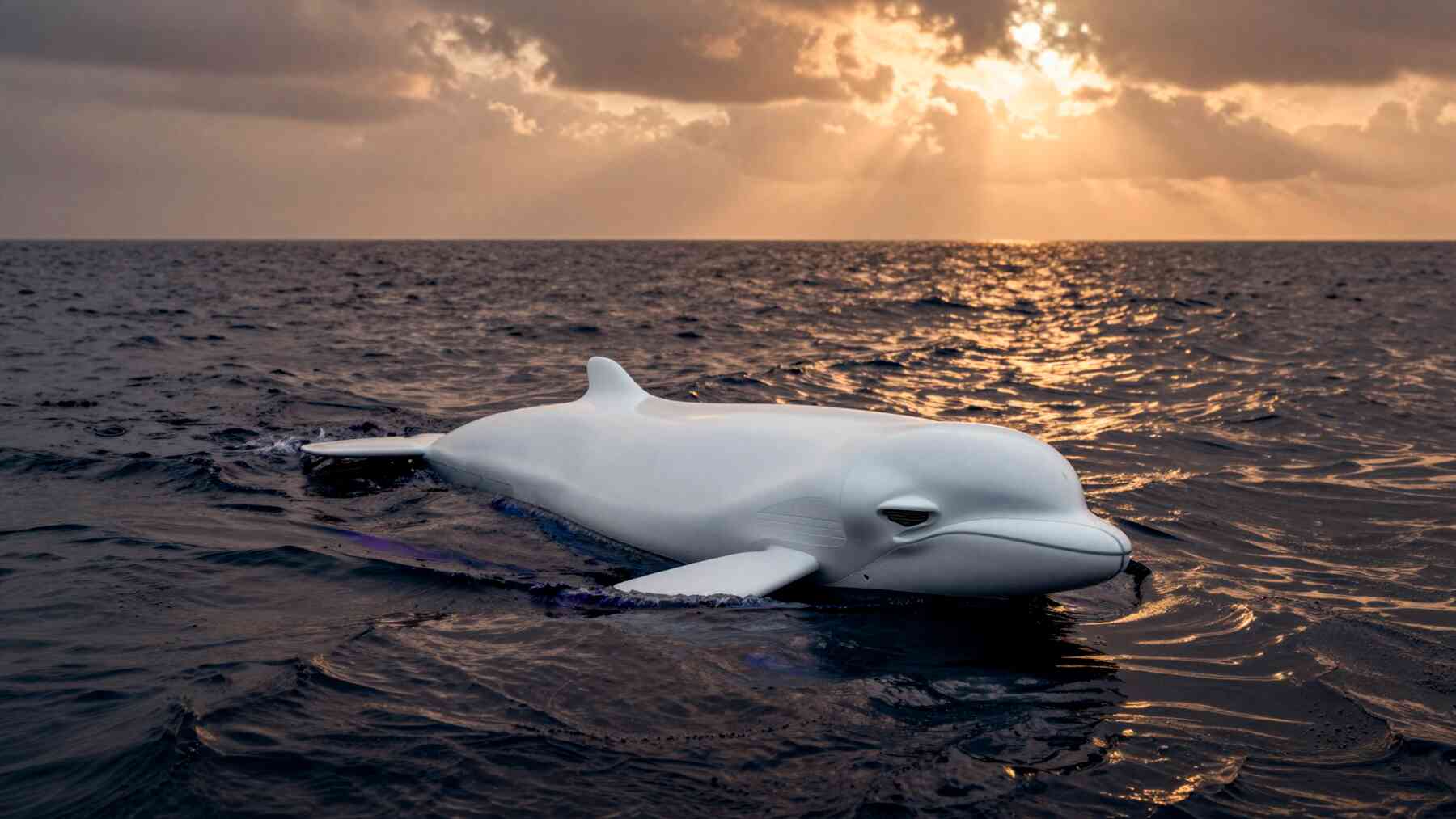
Picture a robot that looks like a mini beluga whale or dolphin, gliding around the ocean. It has a super important job.
It looks almost effortless as the bot travels the surface of the water, vacuuming up toxic oil spills as it goes.
The real magic is in the science. Without using harsh chemicals, the oil is able to be separated from the water. The secret is in the filter.
How did a robot learn from a sea urchin?
How a silent ocean crisis forced a solution
Oil spills are a global disaster affecting almost all oceans in the world. When oil is released into the water, it devastates ecosystems and kills wildlife.
Sea turtles, pelicans, and fish are particularly at risk. But no marine life has any defenses.
In addition to the ecological effects, toxic disasters cost billions to clean up each year.
Unfortunately, the tools we have to remove the oil from the water and beaches are insufficient. They usually involve harsh chemicals, which are hazardous in themselves.
For humans, the work is dangerous, as they have to enter toxic environments and operate heavy equipment at the same time.
It’s vital that we find a safer, faster, and cheaper way to fix the damage that oil spills cause.
What if we could send a remote-controlled robotic helper instead? One with a nature-inspired defense mechanism that prevents waterlogging as it does its essential job.
What does this smart tech look like, and how does it ‘eat’ the oil while returning clean water?
Enter the Electronic Dolphin: New tech to fight oil pollution
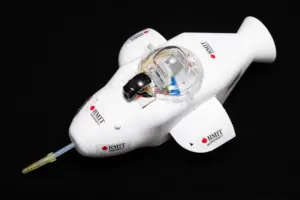
The new robot patrolling the seas is called the Electronic Dolphin. Engineers at RMIT University have been testing their tech, and it’s at the proof-of-concept stage.
The bot is about the size of a sneaker, but it has a big job to do. The prototype is a rechargeable unit capable of running for 15 minutes per charge.
Operators can control it with a remote control as it skims over the waves. Its target is specifically dangerous, sensitive environments, eliminating most of the risk to humans.
It has a front-mounted nozzle and a small internal pump. The oil is vacuumed straight into an onboard collection chamber before the water is returned.
The results were positive in controlled laboratory tests. The minibot recovered oil at a rate of about 0.07 fluid ounces per minute.
Even better, it achieved a purity rate of more than 95%.
Future scaled-up versions will empty their tanks and recharge automatically. They’ll also be capable of running for much longer than 15 minutes.
How does it manage to pull this off without needing to retain any water on board?
The microscopic secret behind an urchin-inspired filter
The Electronic Dolphin’s water-repelling filter is entirely chemical-free.
Instead, it works with an eco-friendly coating. Under an electron microscope, this special material reveals an intricate structure of millions of microscopic spikes.
RMIT University researchers say they have a fascinating purpose. The spikes trap miniature pockets of air all along the filter’s surface.
The air layer creates a strong physical barrier that can’t be penetrated by water. Instead, it beads up and rolls off without being absorbed into the material.
Oil doesn’t behave this way. It bypasses the air pockets and attaches to the mesh.
Urchins had the answer the whole time
The eco-friendly coating mimics the structure of a sea urchin shell, which is covered in millions of tiny bumps and spikes.
The onboard pump then pulls the trapped oil into the storage tank. The filter stays light and efficient, meaning responders can reuse it in the field.
It’s a clever combination of robotics and material science, proving that very often, nature knows best if we look closely enough.
Read the whole thing?
Get the week's signal, not the noise
Our sharpest reporting on energy, climate and nature — free, once a week.