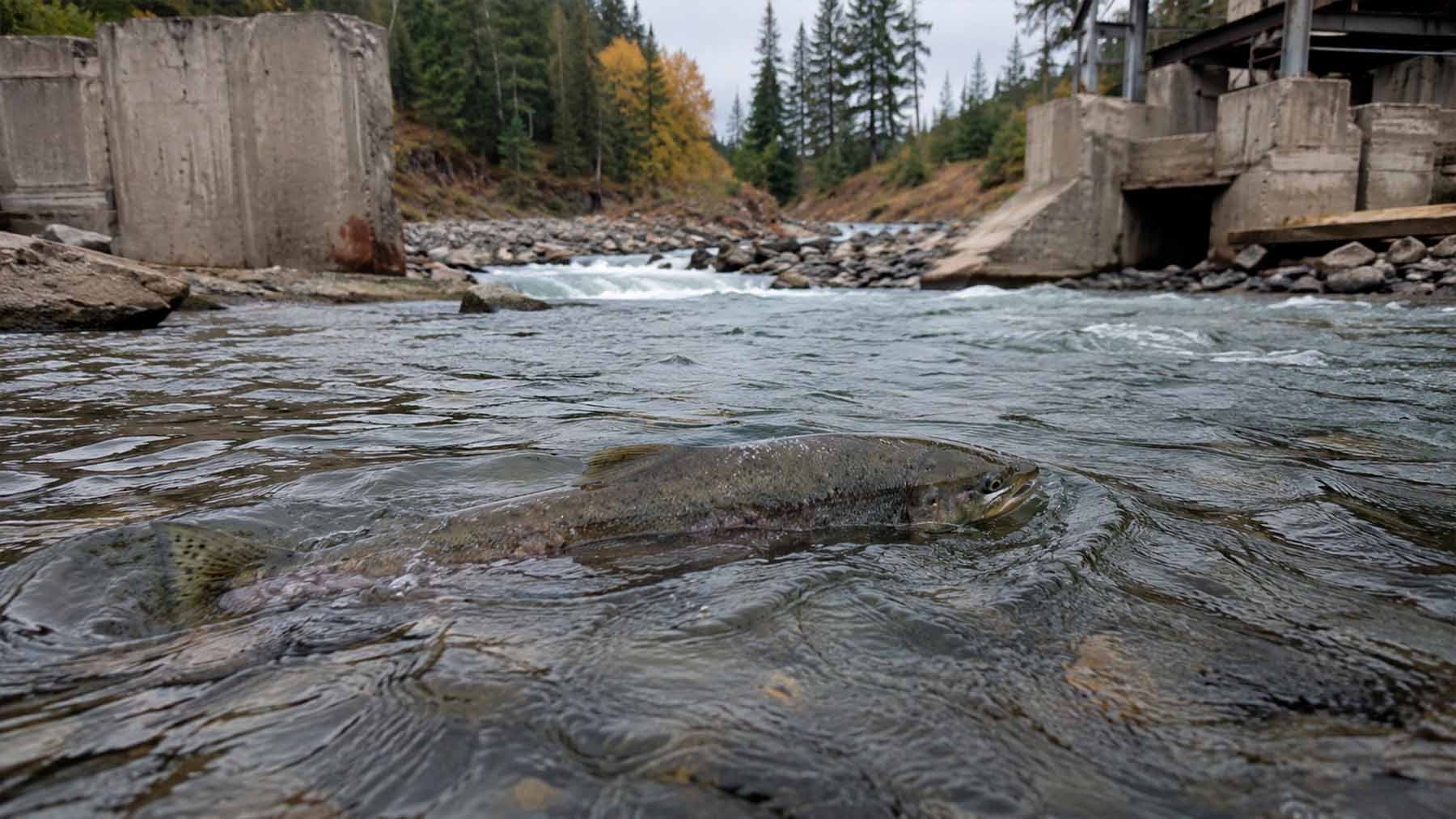
Only months after the dams were removed, an unexpected visitor appeared upstream. One salmon isolated from those waterways for decades managed to migrate back upstream.
The four hydroelectric dams that previously occupied the Klamath River have now been removed.
These dams prevented fish from accessing much of their historic habitat.
Together, the four dams were part of the largest dam-removal project in U.S. history.
Collectively, the removal of these dams opened up nearly three hundred miles of fish habitat. Those areas had been inaccessible to migratory fish for generations.
A river reopened after more than a century
Hydroelectric dams have influenced fish migration within the Klamath Watershed for decades.
The four dams removed from the Klamath River allowed roughly 420 miles of habitat to be reopened. These newly accessible areas support salmon and steelhead, lamprey, and several other native species.
In addition to opening new habitat, the project restored access to areas that had been isolated for generations.
Removing the four dams required significant amounts of planning, negotiation, and cooperation. Tribes, conservation groups, government agencies, and others all played a role.
To numerous communities, however, the project was not simply about changing the physical infrastructure.
It was about whether or not fish would continue to migrate through the ecosystem once a barrier had been removed.
This question did not go unanswered for long.
Signs of life appeared almost immediately
Access is a key factor in fish migration. Once a barrier has been removed, there is an opportunity for fish to move upstream.
Whether fish take advantage of that opportunity is a different issue altogether.
Early indicators of what might occur if the river were reopened began showing up in the Klamath River fairly quickly after the dams were removed.
Salmon were observed moving past old dam site locations far quicker than most people thought they would. This represented an early indication that reopening a river could quickly reconnect fish with their historic habitat.
Monitoring by NOAA Fisheries helped document these early movements through the river system.
Their arrival also meant they entered river stretches that had been off-limits for decades. The hydroelectric system had blocked access to those areas.
Recent imagery released by USGS has documented how the river has changed following the dam removals.
That raised an obvious question about how one returning salmon got back so quickly.
A route that had been waiting to reopen
The answer lies in changes occurring throughout the river as a result of removing the dams.
The return happened while remnants of the dam structures were still in place.
After the dams were no longer present, what happened next caught many observers by surprise.
How did the lost salmon manage to find its way back in just one day?
As soon as there was access upstream for fish again, they began moving into newly opened habitats. When the dams were removed, the river flow was unimpeded.
Fish once again had free passage to travel between downstream and upstream habitats. The rapidity at which the return took place indicated just how quickly fish would respond once the river was reconnected.
In fact, rather than taking years before they began traveling upstream again, some salmon responded much more quickly. They made their journey almost immediately after the river flowed freely again.
The return illustrated a basic truth.
For decades, the route “home” for salmon existed below each of the dams.
Once those barriers were removed, some of those fish wasted little time finding and utilizing that route.
The Klamath Project focused on restoring connectivity in a river system.
Other restoration projects are investigating how rivers respond when migration barriers are eliminated.
Read the whole thing?
Get the week's signal, not the noise
Our sharpest reporting on energy, climate and nature — free, once a week.