Somewhere beneath the Antarctic Peninsula, a remotely operated vehicle named SuBastian descended into darkness — near-freezing water, crushing pressure, and almost total silence. Above it, the research vessel R/V Falkor (too) held position at the edge of one of the most extreme ocean environments on Earth.
For 35 days this past January and February, scientists from the Ocean Census and Schmidt Ocean Institute explored these largely uncharted depths. What they found there — life thriving where little should, and processes quietly shaping the planet’s climate — is only beginning to come into focus.
Into the deep: what drew scientists to Antarctica’s seafloor
The Ocean Census and Schmidt Ocean Institute partnered on the “Climate Connections at the Ice-Sea Interface” expedition, running January 10 through February 13, 2025. Three Ocean Census scientists joined the R/V Falkor (too) for the 35-day mission around the Antarctic Peninsula — one of the least-explored stretches of ocean on the planet.
Two key tools made the work possible: high-resolution seafloor mapping technology and ROV SuBastian, which could reach environments too extreme for human divers. Together, they gave researchers an unprecedented window into the deep.
The scientific objectives were broad but tightly linked. The team set out to document biodiversity, study how glacial activity reshapes the seafloor, and reconstruct past ice sheet dynamics — each goal feeding directly into our understanding of climate change and future sea-level rise.
Methane seeps and the microbes that feed on them
Among the expedition’s most notable targets were methane seep ecosystems — cold, chemically rich zones where gases leak through cracks in the seafloor. These aren’t barren wastelands. Surprisingly active communities take hold here, built on a foundation that has nothing to do with sunlight.
The key is chemistry. Chemosynthetic microbes convert methane into energy, bypassing photosynthesis entirely — a process that allows entire food webs to flourish in total darkness.
That biological activity also carries a climate benefit. By consuming methane before it escapes into the water column and eventually the atmosphere, these microbial communities act as a natural brake on greenhouse gas emissions. Quiet and invisible, but significant.
A climate alarm hidden beneath the ice
The problem is that this brake may be slipping. As Antarctic ice sheets retreat at accelerating rates, the ecosystems built around methane seeps face serious disruption. If those communities collapse, stored methane could escape into the atmosphere in greater quantities — setting off a feedback loop where more methane drives more warming, which drives more ice loss, which releases still more methane.
To study these dynamics, the team deployed gliders and baited landers alongside the ROV, examining ecosystem connectivity and nutrient cycling across different seafloor zones. The data collected will feed into climate models used to project sea-level rise and global temperature trends, making this expedition far more than a biological survey.
Searching for species no one has ever seen
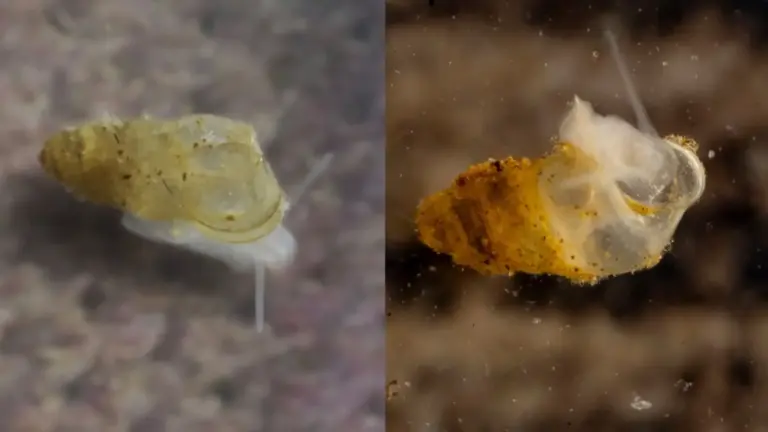
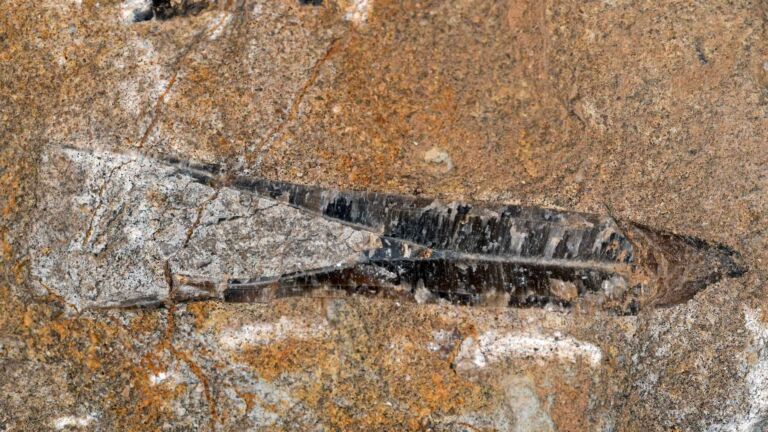
Alongside the climate research ran a parallel mission: find life that science hasn’t yet named.
Antarctic marine environments push organisms to their limits. Near-freezing temperatures, crushing pressure, and near-total darkness filter out most species — those that remain have evolved remarkable survival strategies, and those strategies were exactly what the Ocean Census scientists came to study.
The three researchers Ocean Census supported each brought distinct expertise. Patricia Esquete Garrote is an assistant researcher at the University of Aveiro’s Centre of Marine and Environmental Studies. Sofia Ramalho is a junior researcher at the same institution’s CESAM center. Prof. Erin Easton is an assistant professor at the University of Texas Rio Grande Valley and director of the UTRGV Marine Ecosystems Institute. Between them, they covered marine biology, ecology, and ecosystem science across two continents.
New species discovered in extreme environments often carry value well beyond taxonomy. Unique biological compounds and evolutionary adaptations found in deep-sea Antarctic organisms can have applications that reach far outside basic research.
Why exploring Antarctica’s ocean matters now more than ever
Antarctica’s deep waters rank among the least-surveyed ecosystems on Earth — and also among the most climate-sensitive. That gap between what we know and what we urgently need to know is precisely what the Ocean Census was created to close.
The initiative aims to dramatically accelerate species discovery worldwide. Findings from this expedition will contribute to global datasets covering biodiversity, carbon cycling, and ice-sheet behavior — data that researchers and policymakers increasingly depend on. The broader Ocean Census Alliance supports that mission by uniting marine institutes, museums, and universities to pool resources and expertise. As more expeditions follow and SuBastian’s data gets analyzed, the picture of what lives beneath Antarctica will grow steadily clearer. These 35 days, in all likelihood, are just the start.
Read the whole thing?
Get the week's signal, not the noise
Our sharpest reporting on energy, climate and nature — free, once a week.