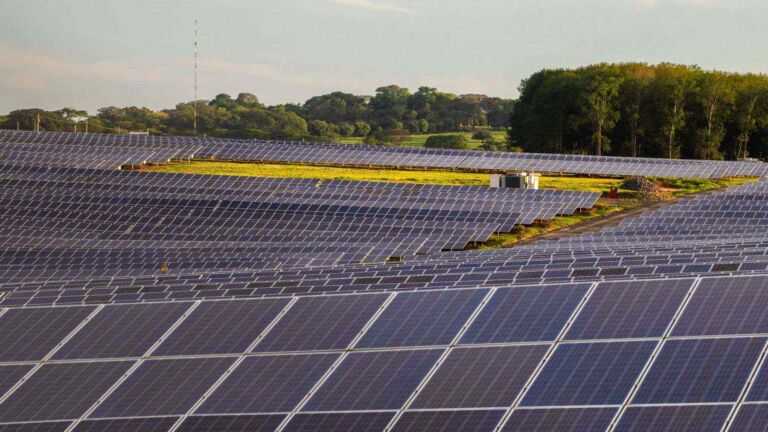
Argonne National Laboratory researchers set out to track wildlife near solar facilities using a custom cutting-edge AI camera system. A 2026 report updated the dataset to 19,000 hours of video across five sites.
Tens of thousands of animal encounters were logged over years. The automated monitoring provided answers to long-standing safety questions around clean energy infrastructure, and also answered an important biological question.
How do birds decide where to perch, feed, and nest in the vicinity of solar farms?
How deep-learning artificial intelligence tracks wildlife around solar farms
The United States Department of Energy (DOE) funded the training of deep-learning AI models to analyze continuous video feeds. The software is engineered to distinguish between birds and insects, moving grass, and shadows and achieves a solid 95 percent accuracy in classification.
The initial dataset, between 2019 and 2024, of 17,000 daytime hours recorded was updated to 19,000 hours this year. More than 68,000 separate bird detections were picked up across the five selected facilities. These were Desert Southwest 1 (DS1), Desert Southwest 2 (DS2), Midwest 1 (MW1), Midwest 3 (MW3), and Northeast 1 (NE1).
The AI software also logged just under 26,000 insect sightings and 169 mammal visitations.
Traditionally, this kind of avian tracking required human spotters on site. Rather than eliminating the human element, this AI-assisted monitoring workflow streamlines the process by filtering raw footage, though substantial human interpretation remains necessary to identify and categorize wildlife observations.
Scientists were able to compile an unbiased, unaffected, years-long record of wildlife activity without disturbing the animals. The result was a clear understanding of flight paths and landing choices across the different environments.
Collision metrics challenged by automated analysis
While researchers recorded over 19,000 hours of footage across five sites, 4,373 hours were processed with AI assistance. No bird collisions were confirmed within those observations (though it must be noted that this result is subject to the system’s detection limits).
While conservationists have raised concerns about the “lake effect” hypothesis for decades, the study’s processed daytime footage provided little evidence to support it. Waterbirds were rarely observed. However, the findings do not disprove the hypothesis. The study was limited to the daytime and could not evaluate nighttime movements or potential site attraction.
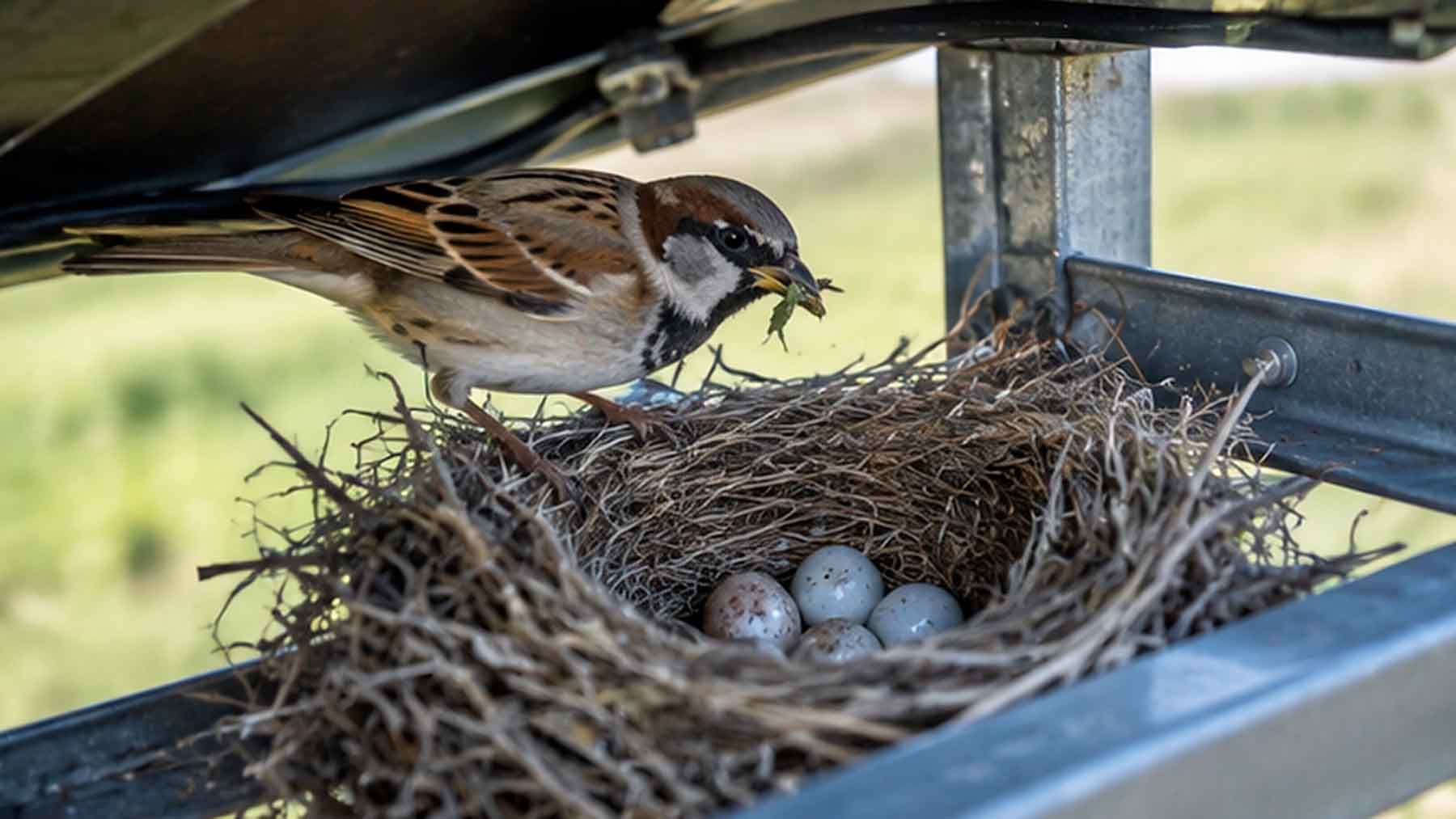
The birds were observed actively seeking out the solar panel structures for a variety of uses. Some of the species visiting the site were songbirds like eastern bluebirds, finches, and doves, but also raptors. They all managed to maneuver safely around the arrays.
The comprehensive, updated dataset confirms that avian wildlife treat the energy infrastructure as features of the natural landscape. The birds started integrating the equipment into their daily lives.
There were distinct functions observed, like resting, hunting, and sheltering throughout all hours of the day. It is evidence of the value that artificial installations deliver to bird populations.
Microclimatic and structural drivers behind avian choices
Rather than establishing a definitive three-factor model for habitat selection, the study provided descriptive observations showing that birds utilize PV structures and ground areas for perching, foraging, and nesting in ways that vary by site and season. Birds like perches that have height and clear sightlines. The tops of solar infrastructure act like tree branches, making them a natural choice. Both songbirds and raptors were recorded making use of panels this way.
A beneficial microhabitat rather than a threat
Birds that decided to roost or nest under the panels were attracted by the physically protective microclimate, offering some warmth in cold conditions, shelter out of heavy weather, shade in the heat, and protection from predatory aerial species.
When it came to choosing where to feed, birds sought out the ground under the panels, according to the Argonne National Laboratory. The shaded soil is less susceptible to evaporation. The increased moisture levels mean more insect activity and denser vegetation.
These findings are limited in that only five sites were observed. Whether solar facilities act as long-term habitat supplements or present ecological trade-offs across different regions requires ongoing studies to guide future clean energy site planning.
Read the whole thing?
Get the week's signal, not the noise
Our sharpest reporting on energy, climate and nature — free, once a week.