Haakon County in South Dakota is getting set for 87 new wind turbines, and thousands of acres are being developed to accommodate 333 megawatts of electricity capacity to be delivered by Philip Wind Partners.
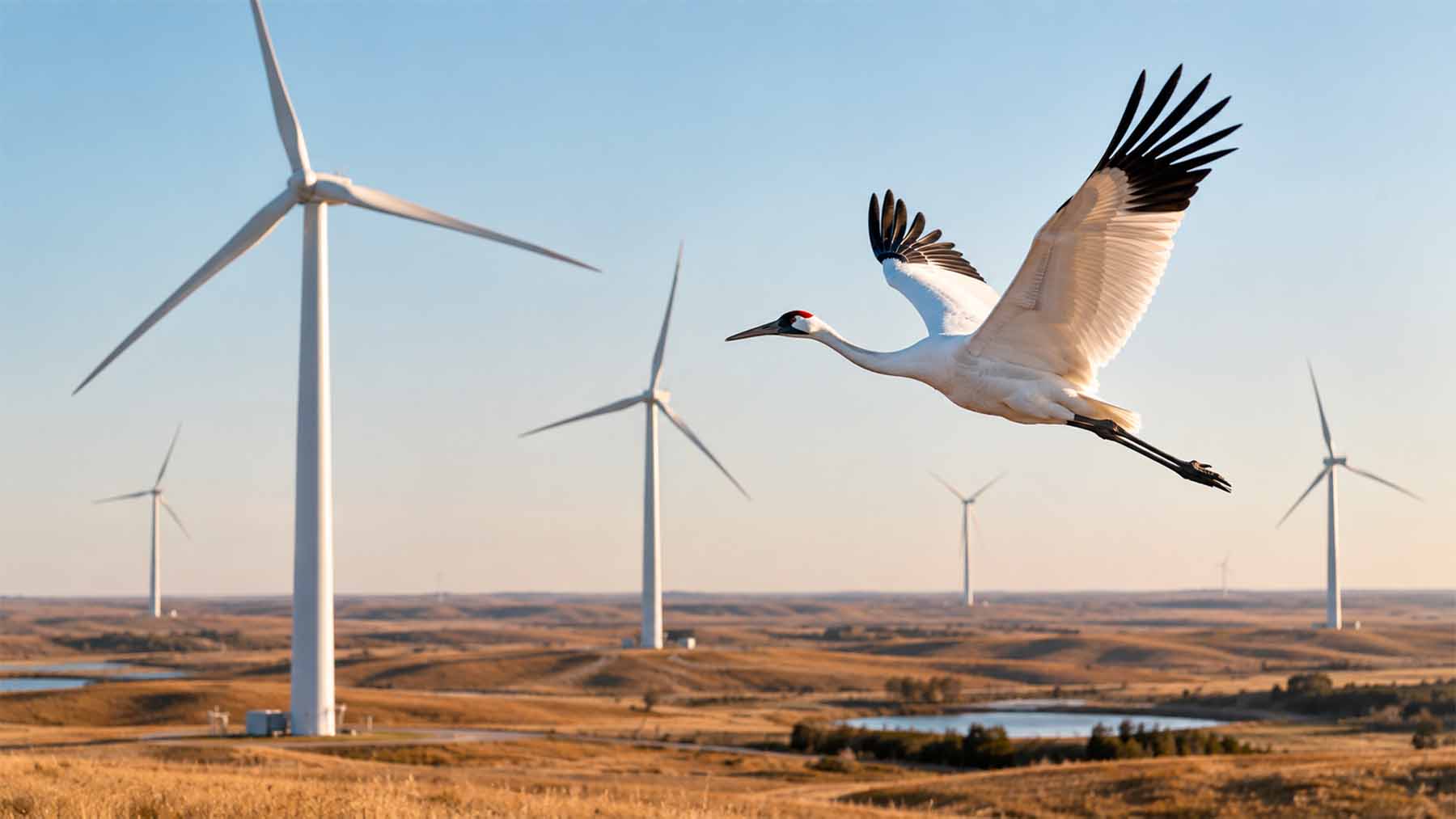
The developer has implemented a Whooping Crane Monitoring and Contingency Plan. The project is directly in the Central Flyway migration path.
In the fall, staff and biological monitors watch the skies and prairie roost sites. They’re tasked with ensuring safe passage of the endangered crane.
How an exclusion zone and shutdown protocols work together
The safety plan involves setting up a two-mile safety zone, and the blades have to be shut down if a whooping crane is sighted. The curtailment must remain active until the bird moves from the area of its own accord or goes beyond the two-mile zone.
Project staff have to go through identification training. The detection of the birds has to happen as fast as possible. This is carried out before the migration windows in spring and fall start. The crew are taught how to tell the difference between the endangered whooping cranes and lookalikes. Other species like sandhill cranes, snow geese, and American white pelicans have some similarities with the cranes.
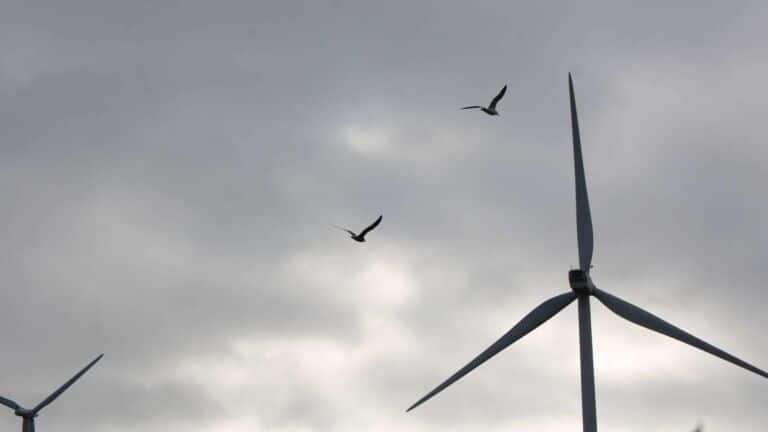
Monitoring takes place from September 16-November 15 and March 25-May 15 each year. Operators track the behavior of birds, GPS location, and number of birds in groups. Collisions are avoided through vigilance and rapid turbine shutdowns.
Haakon County’s regulatory review and infrastructure design processes
Philip Wind Partners committed to active avian monitoring, but they also put long-term wildlife protection plans into the design of the facility itself. Hosting up to 87 turbines and a 5.5-mile, 230-kilovolt generator tie line, the facility will produce 333 megawatts of electricity.
It took several years to carry out the major wildlife and environmental analyses of the 71,000 acres of Haakon County, but the end result is a set of comprehensive data.
The Western Area Power Administration works in consultation with the U.S. Fish and Wildlife Service, which together decide on the best placement of the turbines. Engineers create stringent setbacks to ensure that no turbines are located within two miles of golden eagle nests or large prairie grouse leks.
Local wetlands and stock ponds were assessed and mapped so that disturbance of potential crane stopover locations could be avoided.
Federal environmental oversight and thoughtful equipment siting mean habitat fragmentation can also be avoided. These are design choices made in the early stages that ensure clean energy installations can operate while not exposing wildlife populations in South Dakota to risks.
The future of wind and environmental safeguarding
The shutoff protocols are effective at eliminating collision protocols. This is only as long as the birds are spotted in the first place. There are operational limitations when it comes to visual monitoring, because birds cannot be seen in the nighttime or if the weather conditions are not clear.
Whooping cranes are known to travel in small family groups or even with flocks of larger sandhill cranes. When the wind is high, identification is harder. There are only 500 individuals that make up the wild population group in this area, called the Aransas-Wood Buffalo population. Losing even one bird is a notable setback in conservation efforts.
Combining site planning with operational flexibility
The visibility issues are being resolved with human observations and shutdowns. This is in addition to the crews in the field doing human observation work.
The South Dakota Public Utilities Commission approved the Philip Wind application. Flexibility in operations and smart site planning means that clean energy infrastructure can expand at the same time that vulnerable bird populations on the Great Plains are protected.
Read the whole thing?
Get the week's signal, not the noise
Our sharpest reporting on energy, climate and nature — free, once a week.