A new penguin species, hidden for a century on one of Earth’s most isolated islands, was finally identified — split from its relatives by half a million years of evolution
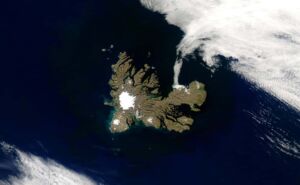
The Kerguelen Islands sit nearly 2,000 miles from any permanently inhabited landmass — so remote the French named them the Desolation Islands. Battered by near-constant winds, rarely visited, and largely forgotten by the wider world, they’re among the least-observed places on Earth.
And yet, for more than a century, an entire penguin species lived there, unrecognized by science — catalogued, photographed, and quietly folded into a species it didn’t belong to. In an age of satellites and global biodiversity surveys, how does that happen?
A species hiding in plain sight
Biologists call it a cryptic species — an organism that looks nearly identical to its relatives but is genetically distinct. The newly named southeastern gentoo penguin, Pygoscelis kerguelensis, shares the same familiar black-and-white coloring as other gentoos. Subtle differences in body size and vocalizations exist, but nothing that would flag an obvious mismatch to a field researcher cataloguing birds from a distance.
The sheer inaccessibility of the Kerguelen Islands only deepens the oversight. When a place is almost never visited, its wildlife rarely gets the scrutiny needed to catch fine-grained distinctions.
The formal description of P. kerguelensis, published in Communications Biology, makes it the first new penguin species named in more than 100 years. An international team led by researchers in Chile and at the University of California, Berkeley made the finding — and it didn’t arrive alone.
One species becomes four: what whole-genome sequencing revealed
What scientists had long treated as a single, wide-ranging gentoo species is actually four genetically distinct ones. That conclusion came from whole-genome sequencing of 64 penguins drawn from 10 breeding colonies spanning nearly the entire geographic range of the group.
The team analyzed thousands of single nucleotide polymorphisms — tiny, one-letter variations in the genetic code — to reconstruct how each population diverged. Their estimates place that split between 300,000 and 500,000 years ago. Two forces drove the separation: geographic isolation kept island populations from interbreeding, and the Antarctic Polar Front — a sharp boundary in the Southern Ocean where water temperature and salinity shift abruptly — acted as an additional barrier, restricting movement across it.
Three populations previously classified as subspecies were elevated to full species status. The Kerguelen lineage, previously unrecognized, became the fourth.
How each species adapted to its corner of the Southern Ocean
The genomic data didn’t just confirm that four species exist — it revealed how each one adapted to its particular environment over hundreds of thousands of years.
The southern gentoo (Pygoscelis ellsworthi), the only one that lives in Antarctica, carries more genes linked to heat production, fat storage, and light perception. That last trait may help the birds cope with extreme seasonal swings in daylight and the intense glare reflected off ice. The eastern gentoo shows a different pattern: more genes associated with deep diving and oxygen efficiency, including variants involved in blood vessel formation, mitochondrial activity, and lung development — traits that may help it forage in oceans with relatively low biological productivity.
The northern gentoo of South America carries enrichment in genes tied to digestion, heart contraction, and muscle excitation — adaptations suited to sustained underwater feeding.
Underlying all of this is the gentoo’s unusually flexible diet. These birds eat fish, krill, squid, and cuttlefish — whatever’s available. Because they don’t need to travel far from their colonies to find food, populations on isolated islands stayed put, accumulated local adaptations, and gradually became reproductively separate. The dietary flexibility that makes gentoos resilient may also be what split them into four species.
A century of debate, finally resolved
Gentoo taxonomy has been contested for well over a century. Previous researchers proposed anywhere from one species to six subspecies, and no consensus ever held. The new study is the most comprehensive attempt yet to settle the question — and it drew heavily on collaboration.
Co-senior authors Juliana Vianna of Andrés Bello National University, Rauri Bowie of UC Berkeley, and Elie Poulin of the University of Chile assembled specialists from more than a dozen countries, combining genomic data with physical measurements, vocalizations, breeding schedules, diet, and feeding behavior.
“There’s probably no species of penguin where the taxonomy has been more debated than the gentoo penguin,” Bowie said. He described the study’s approach as using “cutting-edge integrative approaches” to resolve a long-standing controversy in ornithology. The research also builds on nearly a decade of prior work — in 2019, Bowie and Vianna published findings suggesting penguins originated near Australia and New Zealand roughly 22 million years ago, a lineage that eventually spread across the Southern Hemisphere as ocean currents shifted.
Climate change and the uncertain future of island penguins
The discovery comes with an immediate conservation concern. Under a moderate warming scenario, climate models suggest the three sub-Antarctic gentoo species could lose suitable habitat on all of the islands they currently occupy by 2050, with few or no nearby islands available to replace what’s lost.
The Antarctic gentoo may fare better — its suitable range is projected to expand farther into the continent as conditions change. Island-bound species have nowhere to go. Warming oceans, invasive predators, habitat destruction, competition with commercial fisheries, and accidental capture in fishing nets all compound the risk. Vianna pointed to Galápagos penguins and other island-endemic species as parallel cases: populations so geographically confined that environmental shifts leave them with no viable alternative.
Vianna stressed that conservation institutions across the many countries governing sub-Antarctic territories — including Chile, France, South Africa, Australia, and New Zealand — must formally recognize these newly defined species before they can act to protect them.
That recognition is now, at least scientifically, within reach. Whether it translates into policy before the window narrows is the question worth watching.
The complete study is available here: Daly Noll, Jane Younger, Luis R. Pertierra, Michelle Greve, Eduardo J. Pizarro, Fabiola León, Debora Y. C. Brandt, Joshua Tyler, Gemma Clucas, Hila Levy, W. Brian Simison, Julie McInnes, Pierre Pistorius, Céline Le Bohec, Francesco Bonadonna, Phil N. Trathan, Andrés Barbosa, Andrea Raya Rey, Gisele P. M. Dantas, Rauri C. K. Bowie, Elie Poulin, Juliana A. Vianna. Integrative evidence reveals adaptive divergence and speciation in gentoo penguins. Communications Biology, 2026; 9 (1) DOI: 10.1038/s42003-026-10081-7
Read the whole thing?
Get the week's signal, not the noise
Our sharpest reporting on energy, climate and nature — free, once a week.