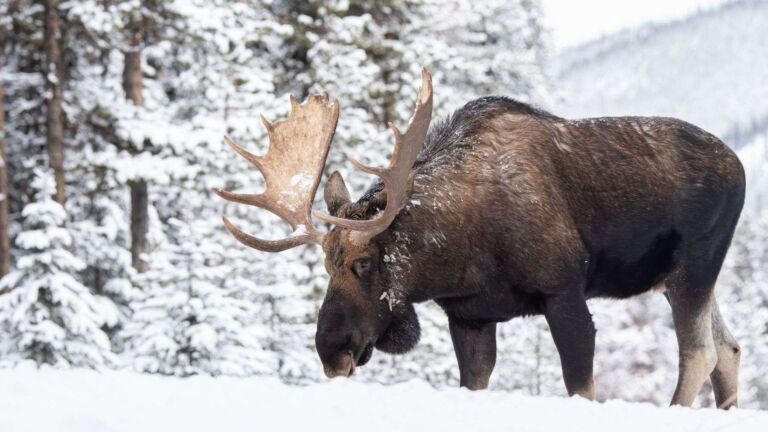
Interior Alaska leaves little room for mistakes in the winter.
If wood frogs choose a poor place to hide, they can end up trapped in ice, making survival seem unlikely.
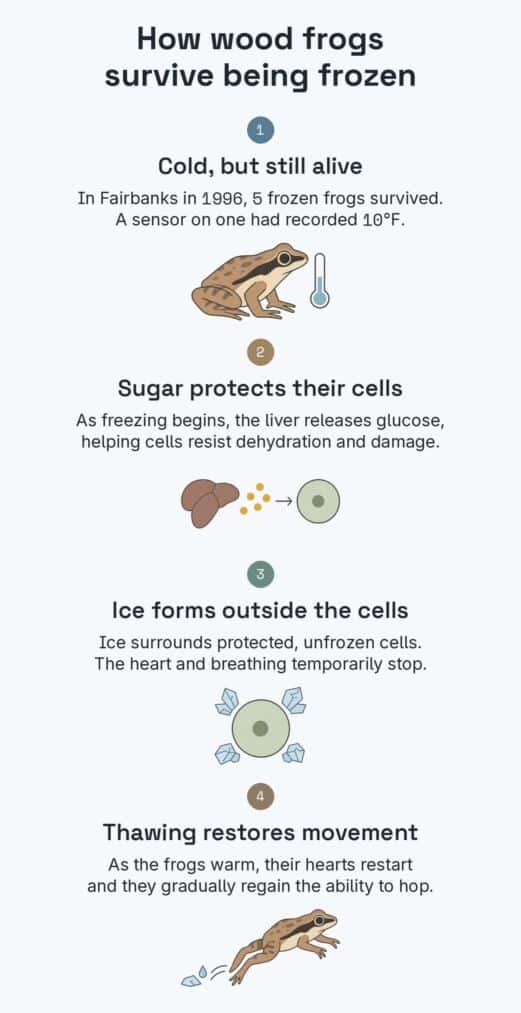
All signs suggested they would die. However, wood frogs survive the winter by freezing, so their body temperatures match their surroundings.
Cellular biology turned a lethal threat into survival
Upon freezing, their livers convert glycogen into glucose to help them survive.
The glucose is sent to vital organs and tissues, and it helps keep cells from drying out and being damaged.
At that point, they resemble living sculptures carved from ice. There is, however, a limit to this ability, as studies suggested certain temperatures should prove fatal.
Seasonal hiding places shaped winter survival chances
However, some frogs decided to hide in different locations, some even hid within moss and some in loose sand.
Tracking studies showed that they were not all hiding in the same places during winter.
Small differences in shelter type mattered because snow, leaves, and moss helped keep heat from escaping, providing natural insulation.
It became evident that shelter was important because some areas remained surprisingly warm, which helps explain why some locations offered a better chance of survival.
A surprising backyard temperature record challenged expectations
Five frogs survived within a wooden box at the back of someone’s house in Fairbanks, as described by University of Alaska Fairbanks.
The conditions were different from those found in natural shelters.
A temperature data logger had been attached to one of the frogs and recorded a minimum temperature of 10°F.
Studies have suggested that wood frogs cannot survive much below 20°F.
This box lacked a thick layer of snow cover and was insulated from the heat below, which would likely increase their exposure to the cold.
The conditions looked harsher than the known survival temperatures.
Compared to those in natural shelters, these frogs experienced much lower temperatures (27°F, 31°F).
So, it seemed unlikely they would survive, and at the time, the evidence seemed clear.
Laboratory conditions missed part of the story
However, in controlled testing, they died at 18°F.
In natural conditions, temperatures do not usually drop at a constant rate, and temperatures often vary between freezing and thawing.
This provides varying conditions which can be hard to replicate.
Therefore, the results from the laboratory may not always include everything. Important biological processes may occur based on timing.
A steady temperature drop may not capture those biological responses, indicating that there was something missing from the indoor conditions.
Autumn weather swings may shape the outcome
Temperature changes through the seasons seem to affect how they prepare for winter.
Exposure to the cold before extreme freezing may be a big factor. One reason for this is the fact that during Autumn temperatures freeze and thaw.
This could result in the liver releasing more glucose.
Having more glucose available could help protect them from extreme cold later on, which could explain their survival.
Eventually the five frogs started to thaw and came back to life. They started to twitch and then later jumped away, indicating that preparation could be a big factor for their survival.
Unanswered preparation questions continue shaping future research
The most interesting part of this is why they were prepared so well. Whilst some evidence exists, it does not fully answer the question.
The survival was surprising in light of previous studies, yet the underlying process is still not fully understood.
Wood frogs continue to give us a unique insight into freezing life.
Their biology still holds some mysteries, and maybe the next clue is hiding somewhere under the snow, moss, and winter.
Read the whole thing?
Get the week's signal, not the noise
Our sharpest reporting on energy, climate and nature — free, once a week.