At their core, many solar farms rely on a straightforward concept.
Generate electricity during the day.
Transfer that electricity into the grid.
Do all that again tomorrow.
Two large-scale developments under construction in Central Queensland will employ an alternative strategy.
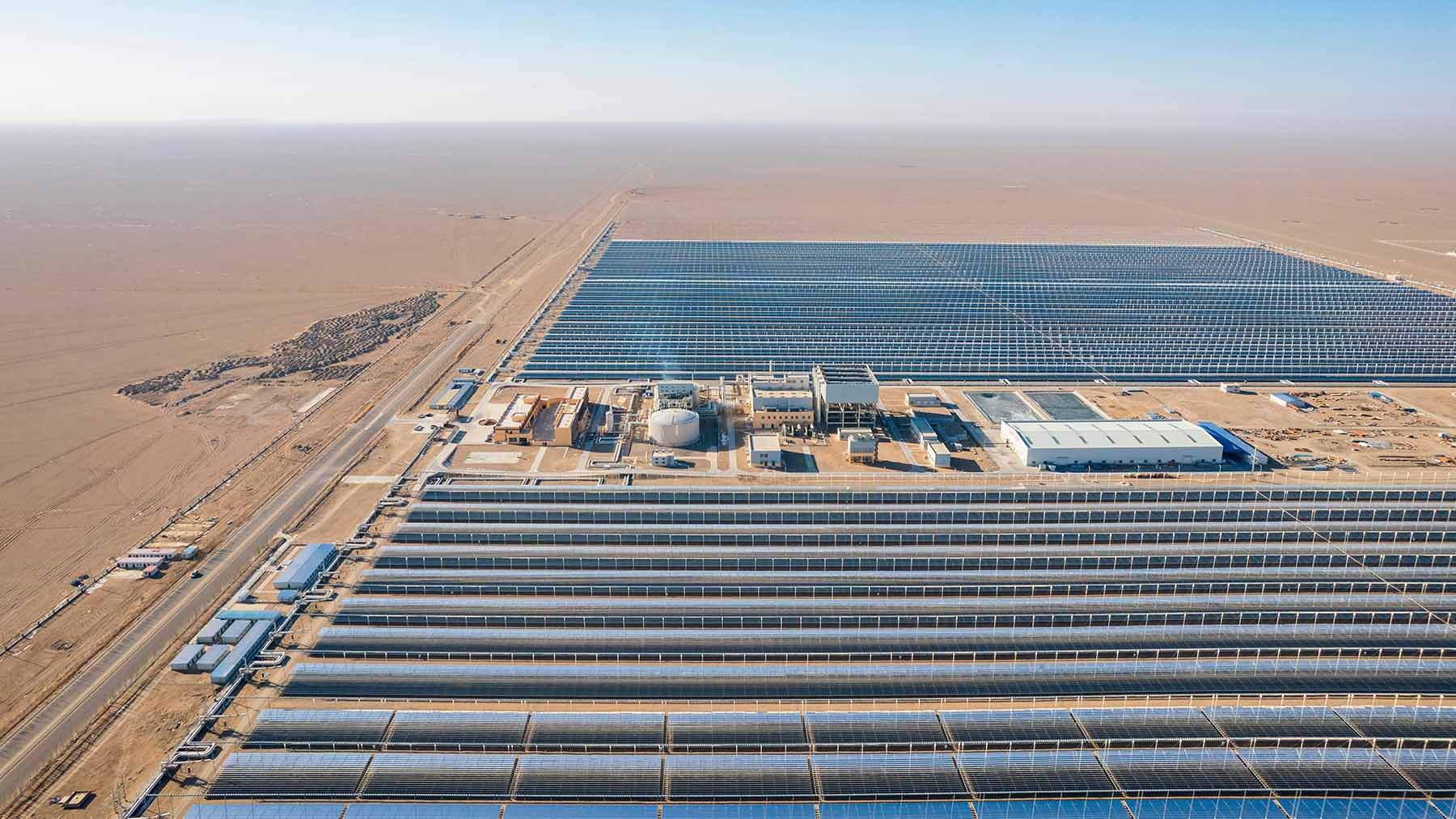
In conjunction with a 2,400-MWh battery system, the Smoky Creek and Guthrie’s Gap projects will integrate 720 MWp of solar generation.
These projects are expected to become the largest deployment of back-contact solar technology on a utility scale once completed.
The solar panels themselves still play a role. How the electricity produced from those panels is subsequently treated may prove to be just as important.
Why these Queensland projects are so large
The projects cover roughly 1,800 hectares in Central Queensland, about 75 km south of Rockhampton and 40 km north of Biloela.
Combined, the two facilities are projected to offer 720 MWp of solar generation capability.
The combined project is expected to generate up to 1,589,000 MWh of renewable electricity each year.
That would provide enough renewable electricity to supply more than 244,000 homes.
The facilities are expected to avoid more than one million tons of carbon dioxide emissions each year.
During peak construction, approximately 800 workers are anticipated to work on-site in the surrounding area.
Back-contact technology is moving beyond rooftops
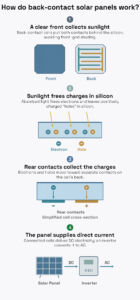
TCL Solar was awarded the contract to supply the modules for the Smoky Creek and Guthrie’s Gap developments. Those modules utilize back-contact technology.
In contrast to traditional solar panels, contact areas for generating electricity are positioned behind (or “back”) each solar cell rather than along the front side of the solar cells.
Back-contact technology was largely associated with high-end residential systems.
Smoky Creek and Guthrie’s Gap represent a dramatic shift from that model.
Edify Energy is developing both of the projects. Once completed, they are projected to become the world’s largest solar powered plants utilizing back-contact modules.
How the battery becomes part of the power station
The battery will not be constructed as a stand-alone entity adjacent to the solar farm. It will be an integral component of the overall configuration of the facility.
The initial phase includes a 600 MW, 2,400 MWh lithium-ion battery system spread out across the entire solar development. This type of layout is called a DC-coupled battery system.
These two facilities will differ in that regard. Electricity generated by the solar panels can flow directly into storage before it passes through parts of the conversion process that enable transmission onto the AC grid.
That reduces conversion losses and improves efficiency.
The design enables one common group of inverters that form the grid interface to simultaneously support both the battery and solar arrays.
The battery becomes part of the power plant itself.
Why storage may matter as much as generation
Renewable energy sources have experienced increasing affordability.
Storage remains among the next major hurdles facing renewables today.
Electricity is most valuable when it can be delivered when it is needed.
A battery capable of storing 2,400 MWh gives operators greater control over when electricity reaches the market.
Generation is no longer the only challenge
The projects already have long-term demand secured through agreements that will purchase most of the power and storage capacity generated by the facilities.
Generation alone is no longer the entire challenge.
The ability to store electricity efficiently and release it when required is becoming equally important.
Smoky Creek and Guthrie’s Gap will attract attention because of their size.
They may ultimately be remembered for a different reason.
The projects combine one of the world’s largest deployments of back-contact solar technology with a battery system designed to sit at the center of the power station itself.
The solar panels will generate the electricity. The battery will decide when much of it leaves.
Read the whole thing?
Get the week's signal, not the noise
Our sharpest reporting on energy, climate and nature — free, once a week.