For 4.5 billion years, a small, dark asteroid drifted through space carrying something remarkable: the molecular alphabet that makes life possible — long before a single living thing existed on Earth.
In 2020, Japan’s Hayabusa2 mission returned just 5.4 grams of that asteroid, Ryugu, to Earth. Scientists have been carefully studying those precious flecks ever since. Now, a new study raises a question that cuts to the heart of biology itself: did the raw ingredients of life reach our planet from space?
The five letters that make life possible
Nucleobases are nitrogen-containing organic molecules — the molecular “letters” that encode genetic information in DNA and RNA. There are five: adenine and guanine (called purines), and cytosine, thymine, and uracil (called pyrimidines). Together, they form the chemical alphabet behind every instruction a living cell has ever followed.
These molecules don’t work alone. They combine with sugars and phosphates to form nucleotides — the structural units that chain together into DNA and RNA strands. Think of nucleotides as complete letters in a word, with nucleobases as the part that actually carries the meaning.
Finding all five matters enormously. Without a complete set, the genetic code that lets organisms grow, reproduce, and evolve simply can’t function. One missing letter isn’t a minor gap — it’s a broken system. That’s why confirming all five in a single asteroid sample carries such weight.
A pristine sample from deep space
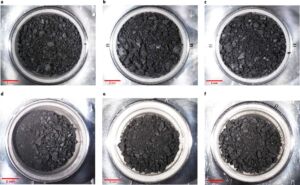
JAXA’s Hayabusa2 spacecraft traveled to the near-Earth asteroid Ryugu, collected surface and subsurface material, and returned it to Earth in December 2020. The total haul: just 5.4 grams. Small in weight, enormous in scientific value — because those samples arrived largely uncontaminated by Earth’s environment.
Handling the material requires ultra-clean lab conditions to prevent biological or chemical interference. Researchers extracted organic molecules using water and hydrochloric acid, then purified them for analysis, according to The Conversation via Science Daily.
A 2023 study found uracil — one of the five nucleobases — in these samples. Promising, but incomplete. Now, a new study published in Nature Astronomy confirms all five nucleobases are present in both Ryugu sample sets, in roughly similar amounts. The full alphabet was there all along.
Not the first clue — but the clearest one
Scientists have suspected for decades that space rocks carry organic chemistry. The Murchison meteorite, which fell in Australia in 1969, and the Orgueil meteorite, recovered in France in 1864, both yielded nucleobases in earlier analyses. The catch: both meteorites landed on Earth and were exposed to biological contamination before researchers could fully protect them.
That’s a serious problem when you’re trying to prove something came from space rather than from the soil it landed in.
In 2025, NASA’s mission to asteroid Bennu added weight to the picture — samples collected directly in space also contained all five nucleobases. Ryugu now reinforces that pattern. Because Hayabusa2 gathered its samples directly from the asteroid and sealed them before returning to Earth, the Ryugu material offers one of the clearest chemical windows into the early Solar System we’ve ever had.
Why the mix of molecules differs between asteroids
Not all asteroids tell the same chemical story. The Murchison meteorite is enriched in purines, while Bennu and Orgueil contain more pyrimidines. These differences suggest that each asteroid’s specific chemical environment — its temperature, composition, and history — shapes which nucleobases can form.
Ammonia may play a key role. Scientists think this molecule can influence which nucleobases develop in a given chemical setting, acting as a kind of molecular gatekeeper.
Ryugu’s relatively balanced mix of purines and pyrimidines gives researchers new comparative data. By mapping chemical differences across multiple asteroids and meteorites, scientists can begin reconstructing the organic chemistry of the early Solar System — and understand why life’s ingredients appeared in the forms they did.
A cosmic origin story for life on Earth
Taken together, findings from Ryugu, Bennu, and decades of meteorite research point toward a striking possibility: prebiotic chemistry — including the molecular alphabet of life — may have been widespread across the early Solar System, forming in space long before Earth existed.
The delivery hypothesis suggests that asteroids could have seeded the young Earth with these ingredients during the period of heavy bombardment billions of years ago. If true, the origin of life on our planet may be inseparable from the chemistry of ancient space rocks.
Finding nucleobases in an asteroid isn’t the same as explaining life, though. How these molecules assembled into functional genetic strands capable of self-replication remains one of biology’s deepest open questions. The letters exist. How they first formed words — that mystery is still unsolved.
The same molecular components found in every living cell on Earth were drifting through space 4.5 billion years ago, locked inside a dark, tumbling rock. Whether that’s the beginning of life’s story, or just one early chapter, scientists are still working to find out.
Read the whole thing?
Get the week's signal, not the noise
Our sharpest reporting on energy, climate and nature — free, once a week.