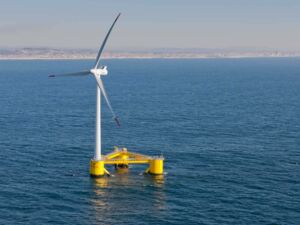
Marine life has been experiencing a unique situation along the coastline of Portugal.
Over time, researchers documented changes that occurred in that zone, eventually identifying more than 270 marine species.
However, one of their observations was somewhat unexpected.
The number of fish living in the zone was larger compared to the surrounding water.
Why did marine life appear to thrive in the vicinity of the wind farm, but avoid it?
Less activity created an unexpected opportunity
One possible reason why marine life thrived in the wind farm zone was reduced human pressure.
There is limited fishing allowed near the wind turbines.
Additionally, there appears to be less boat traffic in the wind farm area versus surrounding waters.
Effectively, the zone became a type of refuge for fish and octopus, among others.
Similarities exist regarding the positive impact of this protection on marine species, and what is commonly seen in protected marine areas.
In time, some signals emerged indicating that marine communities were adapting to the new conditions.
Some species responded almost immediately to the new conditions
These changes were most pronounced in fish populations.
Populations of fish were generally larger within the wind farm area as opposed to nearby control areas.
This was a period of significant increase in biomass overall, suggesting that marine biological communities became both larger and more productive.
The number of commercially important species increased within the protected area.
There was evidence of increased population growth and numbers for sole and octopus in particular.
In addition, the lesser spotted dogfish utilized the seafloor quietly to settle and expand its habitat use.
Something else was taking shape beneath the turbines
Protection was not the only factor occurring at the wind farm.
The introduction of artificial structures into a soft-bottom marine environment rapidly attracted a variety of mussels, barnacles, algae, and other species.
The colonization of these artificial structures by increasing numbers of species generated new feeding opportunities for a variety of consumers.
The artificial structures effectively created a new type of habitat that did not previously occur in that location.
The growing biological community resulting from the colonization of the artificial structures supported a developing complex food web in the local area.
Soon, larger predators started arriving too
Consequently, the impacts of these processes extended far beyond the animals colonizing the artificial structures.
Increased populations of fish and invertebrate animals created further feeding opportunities for predators in the area.
Dolphins began appearing more frequently within the wind farm zone, according to Ocean Winds.
Additionally, an increase in seabirds using the area was observed soon after the turbines came online.
The increased prey availability caused by the increased populations of fish and invertebrates essentially drew predators hunting in open water directly into the turbine array.
Not every signal pointed in the same direction
They did not find that everything about the ecosystem changed.
Plankton communities were generally similar before and after construction of the wind farms.
Environmental conditions are still causing most ecological patterns on seasonal and yearly time frames.
Data from monitoring studies show that some parts of the marine environment experienced a significant amount of alteration during and immediately following installation.
However, overall marine ecosystem function did not appear to be affected.
What happens over the coming years may matter most
Instead, a number of species, including fish and octopus, are becoming more abundant within what now resemble ecological “safe havens.”
Continued monitoring will remain necessary.
Both positive environmental effects associated with REI development and adverse environmental impacts will require continuous monitoring.
The results of their research demonstrate that, if managed correctly, Renewable Energy Infrastructure (REI) and marine biodiversity can coexist.
Read the whole thing?
Get the week's signal, not the noise
Our sharpest reporting on energy, climate and nature — free, once a week.