The belt never stops now, not even at midnight in the high desert outside Silver Springs, Nevada.
A retired solar panel rides the conveyor into the building.
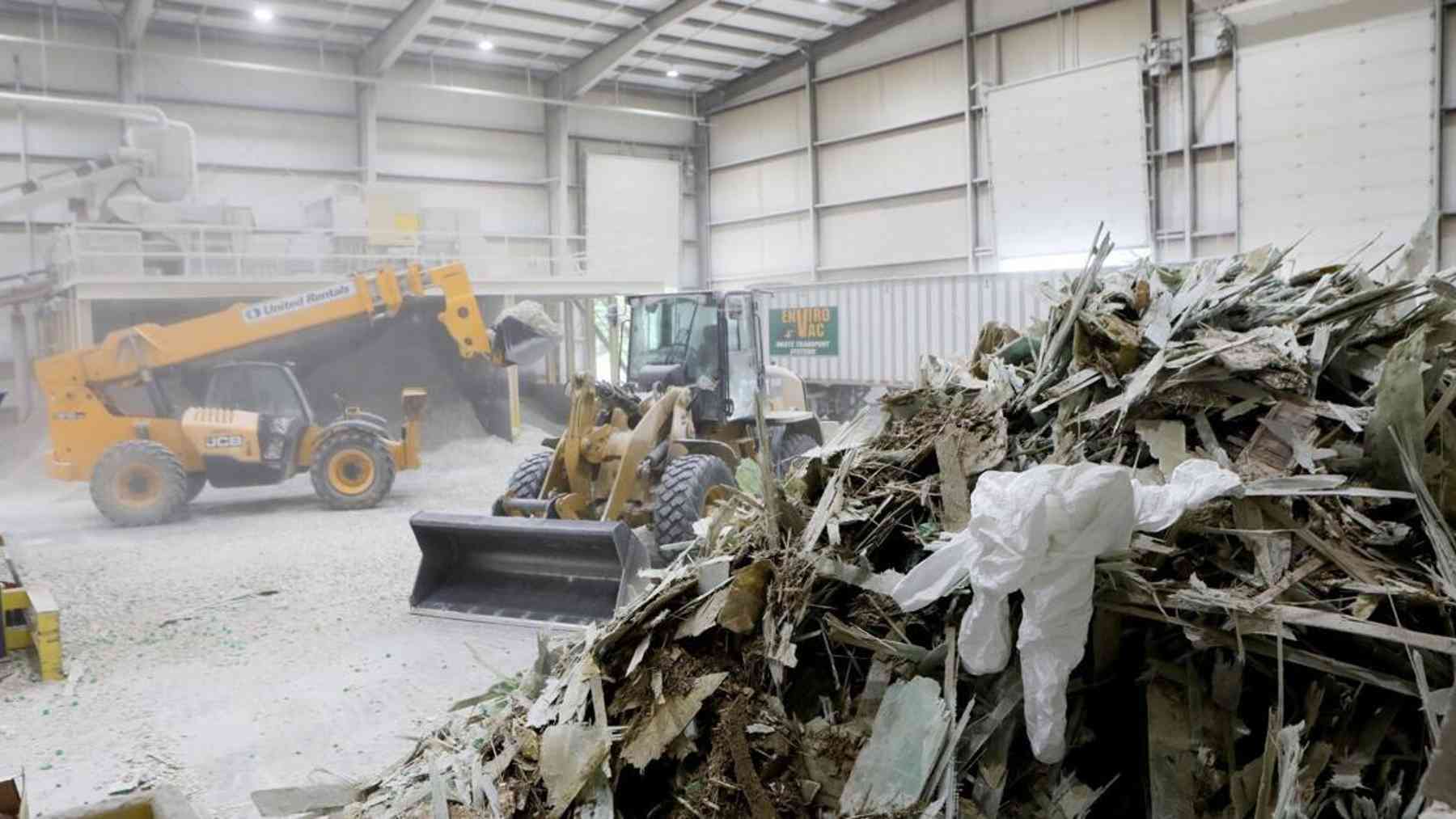
A shredder bites it into pieces a couple of inches across.
Then heat does the rest.
Until recently this line only ran while engineers tested one machine at a time, and now it runs straight through, which says a lot about how fast old solar panels are piling up across the country.
The mechanism is heat that destroys the plastic holding a panel together
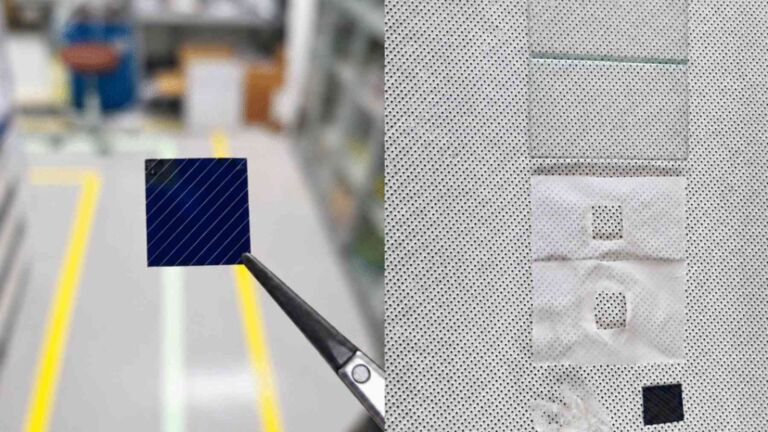
Most solar panels are a stack of thin layers bonded under heat during manufacturing, which makes them durable on a rooftop but miserable to take apart later. Glass sits on top, silicon cells sit in the middle, and a sticky polymer called encapsulant binds everything to a plastic backing sheet and an aluminum frame.
So the plant’s process goes after that plastic before it tries to separate anything. Shredded panel material moves into a thermal stage designed to decompose the adhesives, encapsulant and plastic laminates, and only then are the remaining components sorted and separated. The company says the plastics break down into carbon dioxide and water vapor, which strips away the contamination that normally clings to those layers.
Once the polymer is gone, the rest of the stack comes apart far more easily. A second size reduction step, screening and separation divide the stream into aluminum flakes, glass and a metal rich residue that the company plans to keep for its own recovery of silver, silicon and copper rather than shipping it elsewhere.
The scene is a line that runs seven days a week after years of test days
Inside the plant, the system now operates around the clock, seven days a week, staffed by four shift teams. That is the milestone the company announced when it said its recycling production system had moved into continuous operation at Silver Springs.
Getting there took patience.
Technicians commissioned each unit operation separately, including the shredding systems, before linking them into a single integrated line. Only after that did the plant process panels through every stage of production for the first time, from intake to finished offtake materials.
That is the point where a demonstration project either becomes a real working factory or stays a prototype forever. The company’s own framing is that the first time scaled deployment hurdles are now behind it and the open question is volume.
The hardest number is a rated capacity near 3.3 million panels a year
On paper, the facility is rated at roughly 100,000 tons of panels at the end of their life each year, which the chief executive has put at about 3.3 million modules annually, sorted into aluminum, glass and metal bearing fractions under what the company calls a zero landfill model. Securities filings describe the same plant in slightly more conservative terms, as over three million panels representing up to 100,000 tons of processed waste material.
That number is a ceiling, not a current count. The plant was first commissioned and tested in August 2026, and the company is still working the output upward in stages.
The first stage is modest on purpose. Management has described running at about 25 percent of capacity for several months to demonstrate stability and unit economics before pushing market activity harder in the following two years.
Eighteen months of feeder sites built to solve the harder half of the problem
Scaling a recycling line is only half the problem. The harder half is making sure enough retired panels reach the loading dock, because the common industry practice is to strip off the glass and frame and send the laminated interior to other recyclers, often overseas, or to a landfill. The challenge echoes other awkward industrial retrofits, like when specialized recovery crews needed self leveling underwater tools to deal with a damaged nuclear fuel load in Hungary.
That is why the company built feeder sites before the main plant was finished. It has facilities in Cambridge, Ohio, and in California’s Central Valley at Hanford that collect, prepare and aggregate decommissioned panels, adding storage capacity to absorb inbound volume before material is moved to Nevada.
Even with that pipeline, the company’s own language stays cautious. Executives describe the next phase as a shift from proving the technology works to proving the volume ramp can keep pace with customer demand.
A record breaking pilot line aimed at the metals left behind by 2026
The glass and aluminum were always the easy part, since they make up most of a panel’s weight and already have scrap markets. The harder prize sits in the small quantities of silver and silicon locked inside each module, which have been difficult to recover without high temperature smelting. Self built hardware for a narrow job is a recurring theme in this kind of engineering, like the spiral screw turbine installed on a Belgian canal to let fish pass through unharmed.
The company’s chief financial officer has said the strategy is to retain that metal rich material for a pilot scale metals recovery operation, also planned for Silver Springs, with the goal of having the pilot line running continuously and reliably by the end of 2026. The next stated milestone is a single ton daily pilot system.
None of this guarantees that every panel built today finds its way back through a line like this one decades from now. But a facility that once ran only on test days and now runs through the night is a small, concrete sign that the industry is building somewhere for old panels to go besides the ground.
Read the whole thing?
Get the week's signal, not the noise
Our sharpest reporting on energy, climate and nature — free, once a week.