In the early hours of the morning, on 28 March 1979, at a nuclear plant in Pennsylvania, disaster struck.
The control room showed no issue, but inside the Three Mile Island plant, a valve was stuck open.
Critical water meant to cool the reactor was escaping. Yet, nobody knew.
The reactor core overheated and melted, creating a mess that took years to clean up.
How could such a disaster occur?
A dangerous morning in Pennsylvania
The accident began around 4 a.m. on Wednesday, 28 March 1979.
A failure in the non-nuclear section of the plant had stopped the main feedwater pumps.
Without these pumps, the steam generators could not remove heat from the core. As an automatic reaction, the turbine-generator and the reactor shut down.
Then, pressure in the primary system rose. Pressure is dangerous, so a pilot-operated relief valve opened to control it.
But then, it didn’t close.
The valve was stuck open, but none of the staff knew.
Instruments in the control room mistakenly reported that the valve was closed. No one realized that cooling water was escaping as steam.
The staff assumed the core was covered with water because the pressurizer level was high. It was not.
The pumps began to vibrate, and the staff turned them off, thinking they were solving the problem. They also cut back the emergency water because they thought there was too much water in the system.
By trying to solve what they thought was the problem, they made it worse. The core lost its cover of water and overheated, causing the meltdown.
The U.S. Nuclear Regulatory Commission says a combination of equipment malfunctions, design-related problems, and worker errors led to the partial meltdown.
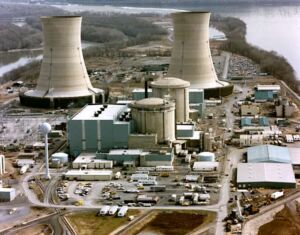
The effects of the valve meltdown
The small releases of radioactivity luckily had no detectable health effects on workers or the public.
People nearby received a 1 millirem dose above background, which is not enough to cause harm. For context, a chest X-ray is about 6 millirem, and is a common treatment.
The cleanup began with the reactor building. In July 1980, about 43,000 curies of krypton were vented from it. That month, the first manned entry took place.
The reactor vessel head was only removed in July 1984. That’s four years after the incident. Fuel removal began even later, in October of 1985.
Although the process was a long one, there is a positive side to it. It changed the industry regulations for the better.
Plant design and equipment were upgraded. Operator training and staffing were improved, and emergency preparations were intensified.
Furthermore, the resident inspector program was expanded. Each U.S. plant now has at least two inspectors who live nearby and work only at that plant.
Today, 99 percent of the TMI-2 fuel has been removed.
The water was handled differently.
The removal of accident-related water
The evaporation of accident-generated water began even later, in January 1991.
The radioactive water was decontaminated and evaporated, and the reactor coolant system was fully drained.
In August 1993, the processing of 2.23 million gallons of water was completed.
The accident’s radioactive waste was shipped off-site to an appropriate disposal area.
The reactor is now permanently shut down.
At another site, shutdown could have also been on the cards due to extremely high contamination levels. But the real culprit was not what workers expected.
The milestones of 1993 closed only one stage of the work. More needed to be done still.
Nearly all of the fuel was gone, and the water had been processed. The plant then moved to a possession-only license and monitored storage.
The remaining decommissioning processes lie with TMI-2 Solutions, which acquired the license in 2020. But how long that will take remains unclear. Other dangerous nuclear plant incidents have occurred in Europe, but this time, something even stranger is at fault.
Read the whole thing?
Get the week's signal, not the noise
Our sharpest reporting on energy, climate and nature — free, once a week.