It is just before 2 a.m. on the Lower Mississippi River, and the water near a bend looks like a long black ribbon under the deck lights.
Two towboats are approaching each other from opposite directions.
One is pushing 19 barges. The other is pushing 42.
Twenty minutes earlier, their pilots had settled something over the radio.
They agreed on which side to pass each other on.
Then one of them remembered it wrong.
The upbound pilot recalled the agreed side backward twenty minutes later
On the Lower Mississippi, boats meeting in a bend do not just steer around each other the way cars might. They radio ahead and settle a passing side in advance, because a loaded tow can run more than 1,000 feet from the head of the barges to the stern of the boat and does not turn on a dime.
Near mile 312, close to Fort Adams, Mississippi, the pilots of the downbound Big D and the upbound Carol McManus did exactly that, agreeing over VHF radio to a port to port passage about 20 minutes before they expected to meet. That should have sent each tow toward its own side of the river.
Instead, federal investigators determined that the Carol McManus pilot incorrectly recalled the arrangement, steering his upbound tow toward the right descending bank, the same side the downbound Big D was already using. The arrangement was never repeated back over the radio, so the mismatch went uncaught until the two strings of barges were converging in the bend.
By the time either pilot saw it, the tows were committed. The channel at that bend is about 2,400 feet wide, room enough when both sides are managed as agreed, but far too little once one pilot’s picture of the meeting no longer matched the other’s.
Sixty one barges met head on at mile 312
Picture the scene from the water. The Big D was pushing its 19 barges downbound at a speed over ground of about 10 miles an hour as it approached the bend, lined up toward the right descending bank as planned, boat and tow together running just over 1,000 feet.
Coming the other way, the Carol McManus had 42 barges made up in six strings of seven, each barge roughly 195 to 200 feet long, with boat and tow measuring about 1,563 feet end to end. Both pilots recognized the danger as the gap closed and tried to maneuver clear, the upbound pilot putting his throttles full astern, but there was not enough time to do it.
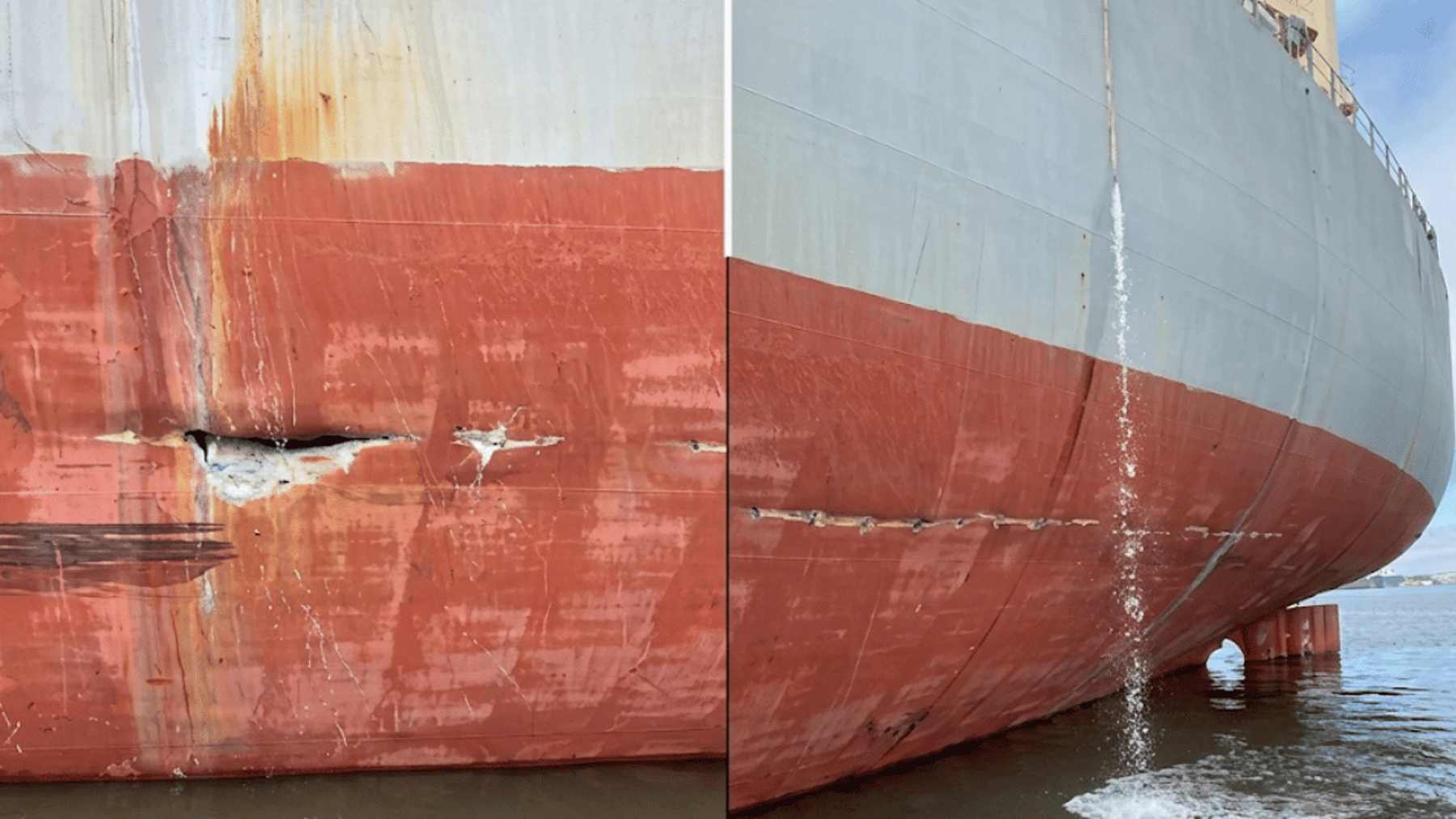
At 1:52 a.m., the two tows collided head on, and barges in both tows broke free of their lashings. Several barges were damaged, with indented hull and deck plating and damage to deck fittings and piping. Two minor injuries were reported, and about 1,380 gallons of ethanol spilled into the waterway.
A twenty minute silence let the mixup go unchecked
So how does a clear agreement unravel in twenty minutes? When the National Transportation Safety Board published its findings on the January 2023 collision, it pointed to something almost mundane: the plan was agreed to, but never said back out loud.
Under the inland navigation rules, vessels meeting or crossing signal their maneuvering intentions by whistle or VHF radio, and investigators concluded that a repeat back would have made the upbound pilot more likely to recall the agreement correctly and move to the left descending bank. The board also listed ordinary conditions that can muddle a mariner’s understanding of an arrangement made by radio, including garbled transmissions, strong accents or unfamiliarity with English, fatigue, distraction, or a preconceived expectation of how the meeting will go.
Damage to the vessels was estimated at well over a million dollars. No pollution was reported from the damaged barges in the upbound tow.
A habit that still decides who passes which way
None of this unfolded on an unfamiliar stretch of water. Pilots up and down the Mississippi River rely on this kind of radio agreement every day, because a loaded tow cannot simply yield the way a car can on a highway.
The system works because it is routine, which is also why a mismatch between two memories can slip through unnoticed. That same reliance on quick radio calls shows up across American inland waterways, where tows meeting in tight bends or crowded channels have only seconds to adjust once a misunderstanding becomes visible.
The river itself rarely changes. The habits mariners use to share it do.
One repeated sentence was the missing safety step
What stands out about this collision is how ordinary everything was right up until the moment it was not. Two pilots on a familiar bend, a plan already agreed, equipment and weather that were never the problem. The gap was in a habit as small as saying a sentence twice.
The safety board’s lesson from the case is blunt. When mariners make passing arrangements by radio, repeating the arrangement back confirms that both sides heard the same thing and locks in the plan for each of them.
It costs nothing, takes a few seconds, and asks each pilot to do what was not done that night: say the plan back, and make sure it matches.
Read the whole thing?
Get the week's signal, not the noise
Our sharpest reporting on energy, climate and nature — free, once a week.