Most of the known planets in our universe are really old.
The planets we have discovered have had billions of years to settle into their orbits.
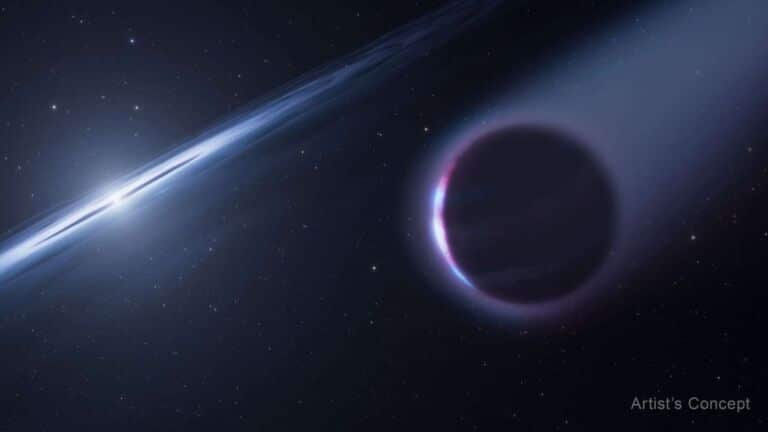
Now, astronomers have confirmed a planet that is less than a million years old. It is still inside the dust and gas that formed it.
How have astronomers not seen this young planet before?
A planet that is hard to see
Stars are born in swirling clouds of gas and dust.
Planets then form from the leftover material, which clumps together and gradually creates a path around the star.
That early stage in planet development is difficult to study because dust often shrouds observation.
Exoplanets, those outside our solar system, have so far only been found by transits. This happens when the planet passes in front of its star and briefly dims the light we receive.
An overwhelming majority of the 6,000 confirmed exoplanets we have discovered this way are billions of years old.
The four youngest known planets are all more than 5 million years old. Until now.
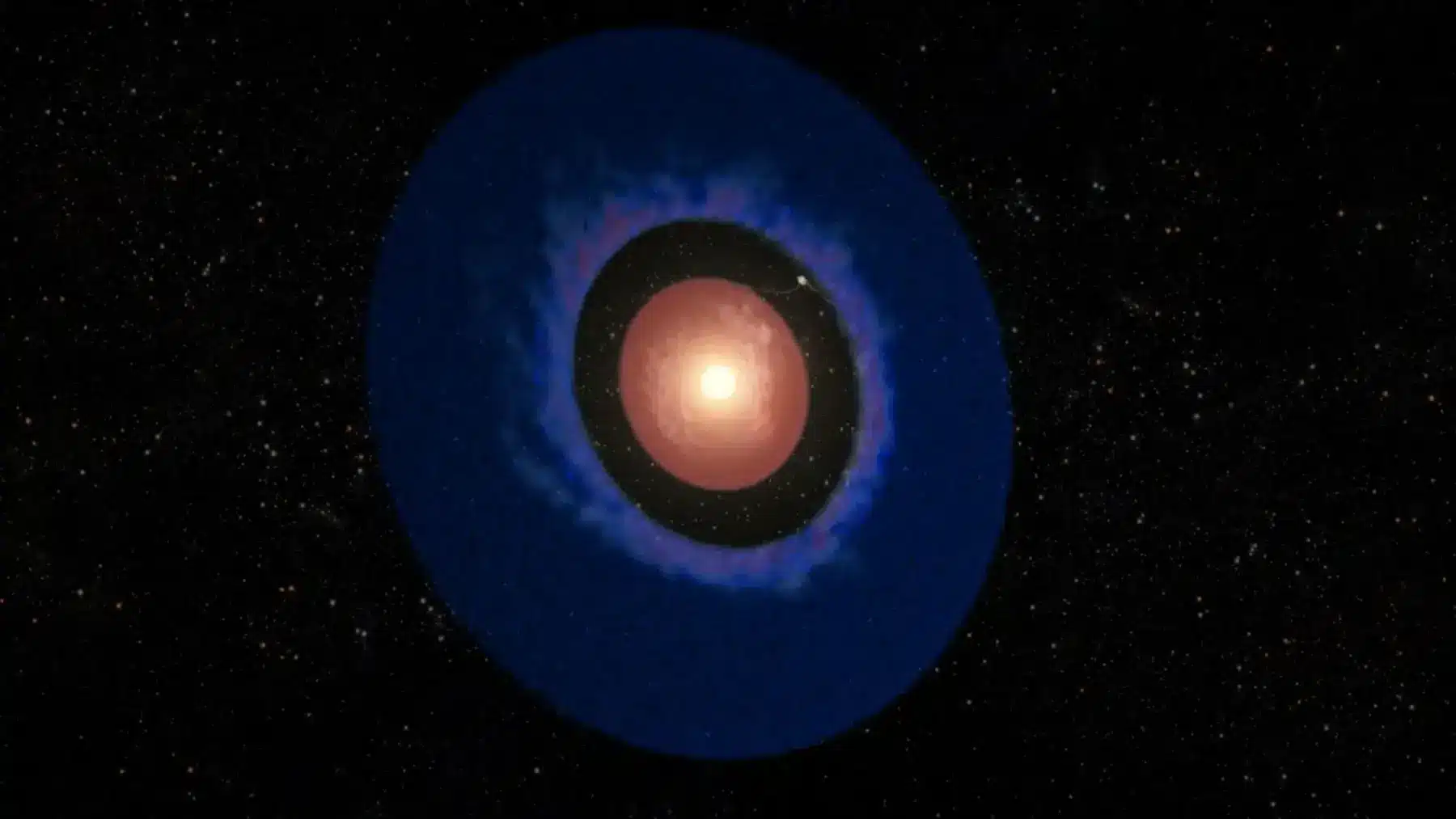
A gap in Elias 2-24’s young disk
Elias 2-24 is a young star about 450 light-years from Earth.
About a decade ago, the ALMA telescope array in Chile showed a gap in its dusty disk.
This is not unheard of.
Such rings and gaps have appeared in many disks. Astronomers have suspected that younger planets create them, but direct evidence has been limited.
The European Southern Observatory’s Very Large Telescope then further detected a faint bit of light sitting right in Elias 2-24’s gap.
This was more promising.
Astronomers debated whether or not this could be evidence of a planet.
However, according to theory, a planet could not yet have formed there. The gap is too early in the star’s life, and too far from the star.
Current models predict that a Jupiter-size planet needs about 5 million years to form at Jupiter’s distance from the Sun. Farther out, it takes even longer.
The observed dot of light lay 55 times farther from its star than Earth is from the Sun. So, by theory, it should not have been a forming planet.
But Lucas Cieza, a co-author of the Elias 2-24 b study, says the best theories are clearly still missing some important information. But what is it?
The answer was in the archive
The answer did not come from a new telescope or new observations. It came from old data sitting in the archives.
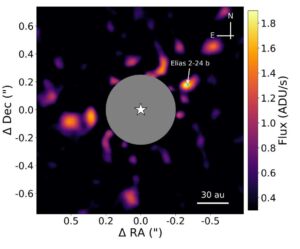
Back in 2018, images of Elias 2-24 were observed with the NIRC2 camera at the W. M. Keck Observatory. These images showed a faint signal, but not strong enough to call it a planet.
Years later, Andrea Bernardi, a doctoral student in Chile, returned to those images through the Keck Observatory Archive.
Bernardi reanalyzed the 2018 observations with new data-processing techniques. This time, the signal was consistent with a forming planet.
More Keck observations from 2020, independent observations from the Very Large Telescope, and evidence from ALMA helped confirm it.
The team also followed the dot’s motion over time and found it to behave more like a planet than like an imaging defect or a background star.
This current evidence confirmed Elias 2-24 b, which sits inside the gap in the disk.
Keck’s chief scientist, John O’Meara, says astronomical data can have “a remarkably long shelf life”.
According to the team’s analysis, the planet is still actively gathering material. It is in a brief but critical growth phase, rapidly gathering gas and building its atmosphere.
Telescopes are finding new discoveries from archives all the time. If more young planets hide in other disks, or in stored data, they may soon be easier to see. And with models being updated, there are probably many more to be discovered.
Read the whole thing?
Get the week's signal, not the noise
Our sharpest reporting on energy, climate and nature — free, once a week.