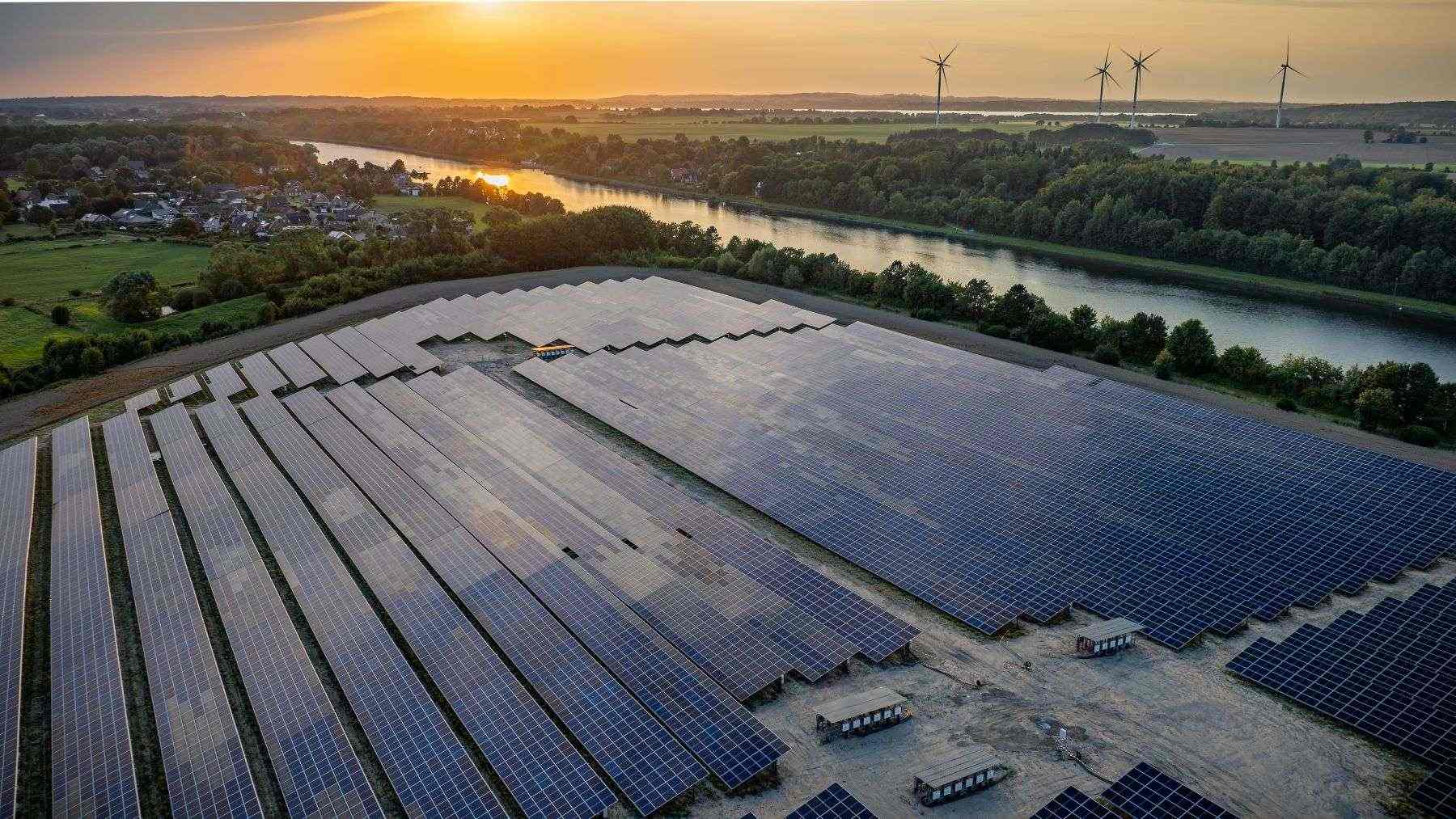
Not all solar parks include spaces for wildlife.
The wildlife aspect of the Aller Langport Solar Park was included when the project was designed.
The site has habitat corridors that connect different parts of the landscape.
Existing wildlife features were also protected, including an active badger sett surrounded by specialist fencing.
Beyond protection measures, dedicated wildflower areas were established for one of Britain’s rarest bumblebees.
Annually generating 14 GWh of electrical energy, the solar park provides enough electrical power to meet the demands of about 3,501 homes.
Each year, operational activities keep about 3,101 tons of CO2 out of the atmosphere.
Wildlife shaped the layout of the solar park
Wildlife influences where the site was laid out.
New hedgerows and screening have been placed throughout the solar park.
Establishing new connections between other habitats has been a main objective.
Improved ecological connectivity across the larger landscape is another goal.
During construction, an active badger sett was found.
A specialized type of fence has been installed around this area to prevent disturbing the animals.
Protection of the badger sett continued throughout construction and operation of the site.
In addition to protecting the badgers, the project also generates renewable energy and leaves space for some of the natural habitat features already present.
One of Britain’s rarest bumblebees became a design priority
Two sections in the solar park were seeded with custom seed mixes specifically designed to attract pollinators.
Working with both the Bumblebee Conservation Trust, Habitat Aid and British Solar Renewables, the project developed two separate areas specifically for pollinators.
Particular emphasis was placed on the Shrill Carder Bee.
The Shrill Carder Bee is considered one of the rarest types of bees in England; therefore, it became a particular focus of the plantings.
To support that objective, the selected seed mixtures contained species that would provide forage for pollinators throughout the flowering period.
Those habitats also provide resources for a wider range of pollinating insects.
Rather than just creating areas of wildflowers, the program focused on meeting the needs of a specific pollinator.
The habitat depends on a carefully timed annual cycle
Creating habitat is only half of the equation. Long-term planning determines what happens to that habitat over time.
Grazing is stopped during the flowering period of the summer months.
This allows the plants to grow and bloom completely before grazing begins again. It also provides pollinators access to a critical food source.
Early in the autumn, the flowers are cut down. The seeds then fall naturally back onto the ground, while the cut vegetation is baled and used on the farm.
Later in autumn and again in early spring, grazing resumes. Together these practices prepare the soil for the next growing season.
These processes allow the habitat to recover and rebuild itself over time naturally.
Surveys show the habitats are being used
Surveys conducted as part of a volunteer program covering British Solar Renewables’ properties have documented many different species across the solar park.
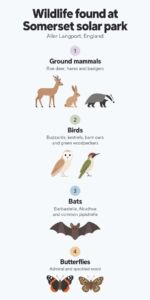
Bat surveys have documented the presence of three different bat species at Aller Langport Solar Park.
Additional roosting opportunities have also been created through the installation of bat houses.
Other wildlife documented includes roe deer, hares, buzzards, kestrels, barn owls, green woodpeckers, admiral butterflies, speckled wood butterflies, and rare bumblebees.
Collectively, these data illustrate that a diverse array of mammals, birds, insects, and bats utilize the environment surrounding the solar park.
The real result will only emerge over time
From planting day forward, continued management of wildlife will occur.
As part of its long-term management plan, a continuing monitoring program will take place.
Scheduled walk-over surveys for years 1, 2, 3, 5 and 10 will document changes to the habitats over time.
Included among the assessments will be observations of grasslands, hedgerows and individual elements of habitat such as bird boxes, log piles and hibernacula.
Every survey contributes to our understanding of how the site develops. The findings can also help guide future habitat management decisions.
Construction generated the habitat. Over time, monitoring will demonstrate how the habitat matures.
Read the whole thing?
Get the week's signal, not the noise
Our sharpest reporting on energy, climate and nature — free, once a week.