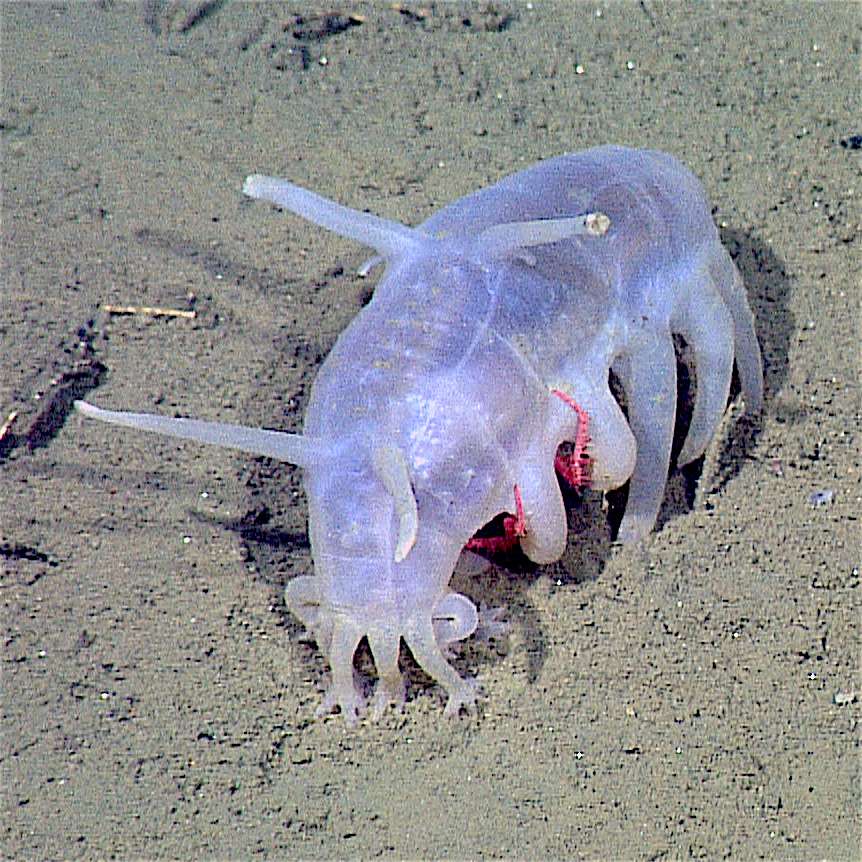
Deep beneath the ocean surface, translucent creatures known as sea pigs inch slowly across the pitch-black seafloor, gathering decaying matter with delicate tentacles. Strange enough on their own, these little-known relatives of sea cucumbers have now yielded an even stranger surprise.
Researchers at the University of Tokyo discovered a previously unnamed bacterium living tucked within the body walls of sea pigs — a microscopic hitchhiker no scientist had ever described before. Its genome, they found, is unlike anything documented in bacteria living this close to a host.
Meet the sea pig: an overlooked giant of the deep
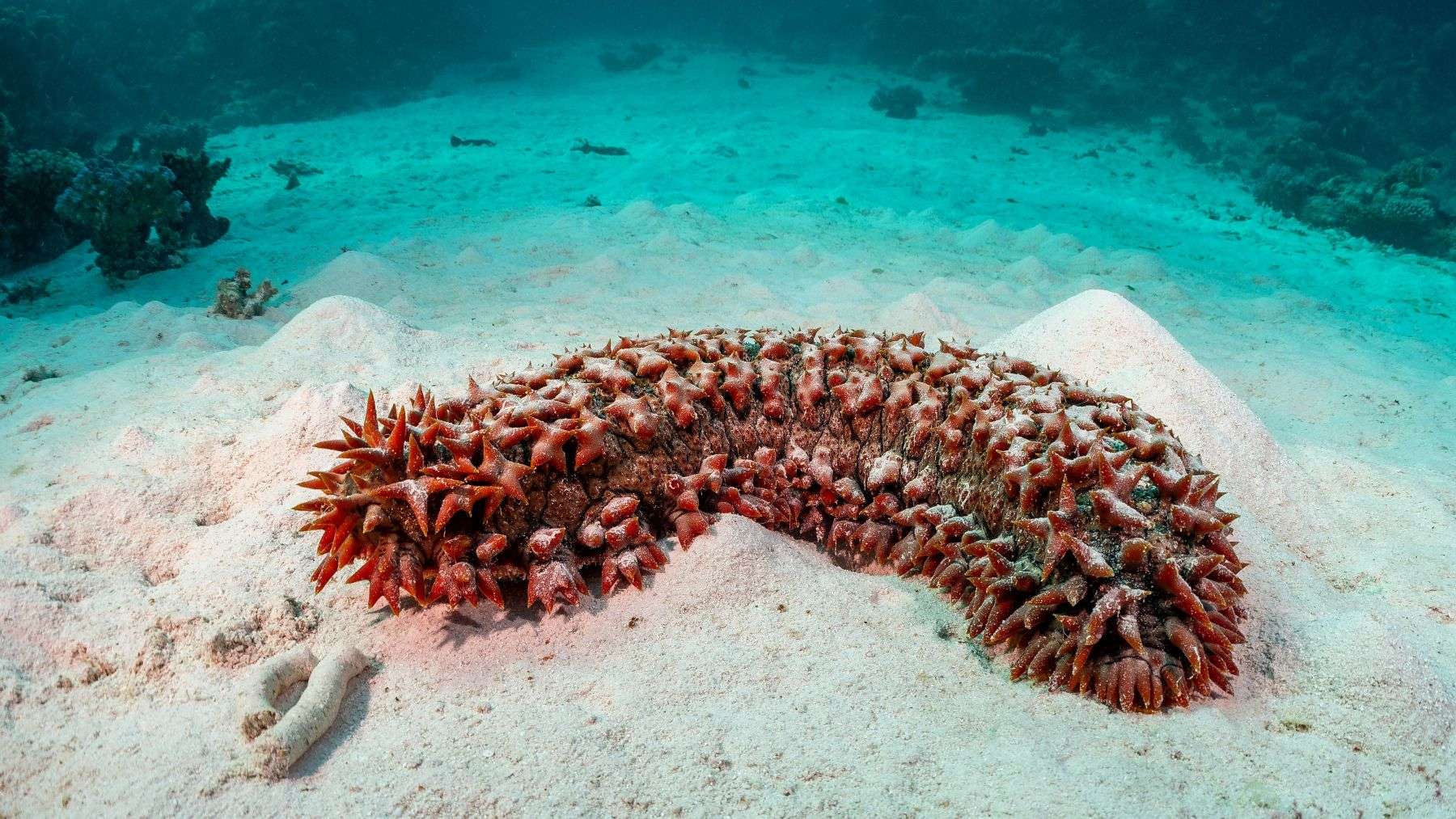
Sea pigs are a type of sea cucumber. They spend their lives crawling across the deep-ocean floor on dozens of tube-shaped feet, gathering decaying organic material with specialized tentacles and delivering it to their mouths — slow, methodical recyclers operating in one of Earth’s most extreme environments.
That recycling role matters more than their obscurity might suggest. Sea cucumbers as a group account for more than 90% of the biomass of large animals on the seafloor in some deep-ocean regions. Remove them, and entire nutrient cycles collapse.
Their ecological relationships run deeper still. Young king crabs have been observed pressing against sea pigs’ soft bodies to avoid predators, using them as living shelters. It’s a hint that these overlooked animals sit at the center of a web of interactions scientists are only beginning to map.
A hidden passenger no one had named before
To investigate what lives inside sea pigs, researchers from the University of Tokyo and several other Japanese institutions collected eight specimens during deep-sea expeditions, then extracted DNA from different tissues and reconstructed the genomes of the most abundant bacterial groups they found.
One bacterium stood out immediately, according to ISME Host Microbe. In body-wall samples from three separate sea pig species, a single microbe accounted for more than 70% of all bacterial genetic markers detected. It didn’t just live there — it dominated.
Fluorescence imaging confirmed exactly where the microbe resided: tucked within the sea pig’s body-wall tissues. It differed so substantially from any known relative that the team proposed an entirely new genus and species: Candidatus Abyssoplasma scotoplanesicola.
A genome that breaks the rules
The bacterium’s genome contains just 649,000 DNA bases — roughly one-seventh the size of E. coli, a well-studied bacterium found in human intestines. That alone makes Ca. Abyssoplasma scotoplanesicola exceptionally compact.
What surprised the researchers even more was the genome’s organization. More than 27% of its entire genetic sequence is devoted to surface-associated proteins. In a genome this small, dedicating that much space to a single category of molecule is extraordinary. Some of those proteins exceed 5,000 amino acids in length, against a bacterial average of around 300. These aren’t minor variations — they’re proteins of a fundamentally different scale.
Meanwhile, genes for several common energy-generating pathways are entirely absent. The bacterium appears to have shed biological machinery it no longer needs, suggesting it relies on its host for resources it once would have produced itself.
What the giant proteins might be doing
The purpose of these outsized surface proteins remains unknown. One possibility is that they help the bacterium interact directly with sea pig tissues; another is that they allow bacterial cells to cluster together, forming denser communities within the host.
What’s clear is that in a genome stripped down to near-minimum size, retaining more than a quarter of that space for surface proteins represents a deliberate evolutionary trade-off. These molecules aren’t incidental — they appear central to how this bacterium survives.
The pattern echoes what scientists have observed in other host-dependent bacteria. As organisms shed their independence, they tend to retain highly specialized surface machinery, and Ca. Abyssoplasma scotoplanesicola may be offering a new example of that same principle playing out in one of the planet’s most remote ecosystems.
A one-sided partnership — for now
The bacterium almost certainly depends on its sea pig host for amino acids, lipid components, nucleic acid precursors, and mineral nutrients — all things its stripped-down genome can no longer produce independently. The host, in this sense, functions as a life-support system.
Whether the sea pig gains anything in return is still an open question. One hypothesis holds that the bacteria may offer some protection against pathogens, but the researchers are careful to note this hasn’t been demonstrated.
What comes next is a fuller investigation into how this microbe becomes so dominant, what competitive advantages it holds over other bacteria, and what its presence means for the sea pig’s health. Understanding the giant surface proteins will be particularly important. Cracking their function could illuminate broader principles about how bacteria make the evolutionary leap from free-living organisms to permanent, host-dependent partners. In the deep ocean, that story is far from finished.
Read the whole thing?
Get the week's signal, not the noise
Our sharpest reporting on energy, climate and nature — free, once a week.