Transporting a wind turbine is one task. Transporting it to its intended destination may well be another.
For the proposed wind farm in Southern Italy, access has become the key issue.
While the turbines are sizeable, the available road network presents the real test.
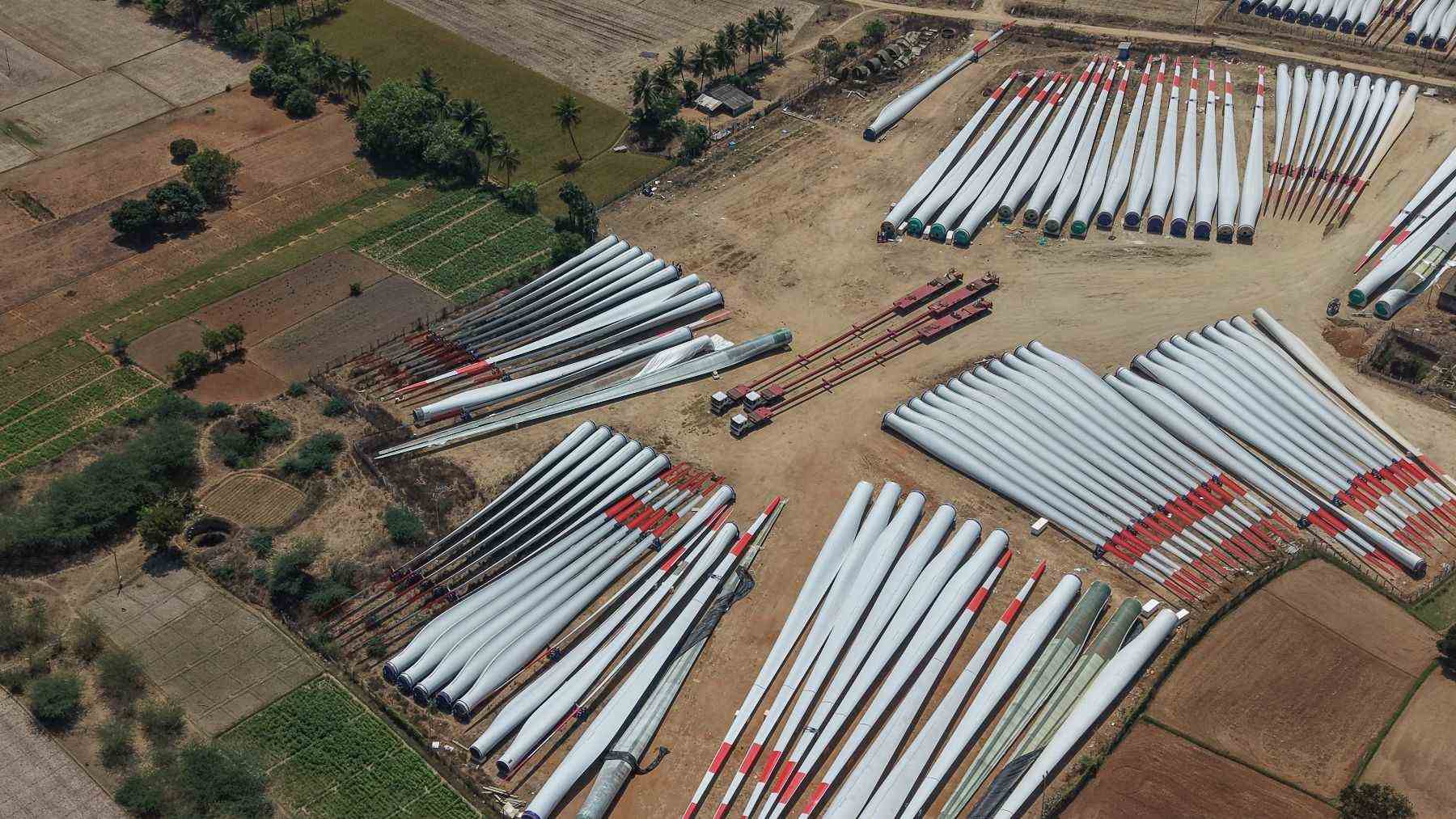
There are some innovations around transporting the blades.
The movement period may be as significant as the site’s subsequent power-production lifetime.
Blade geometry allows greater flexibility in access
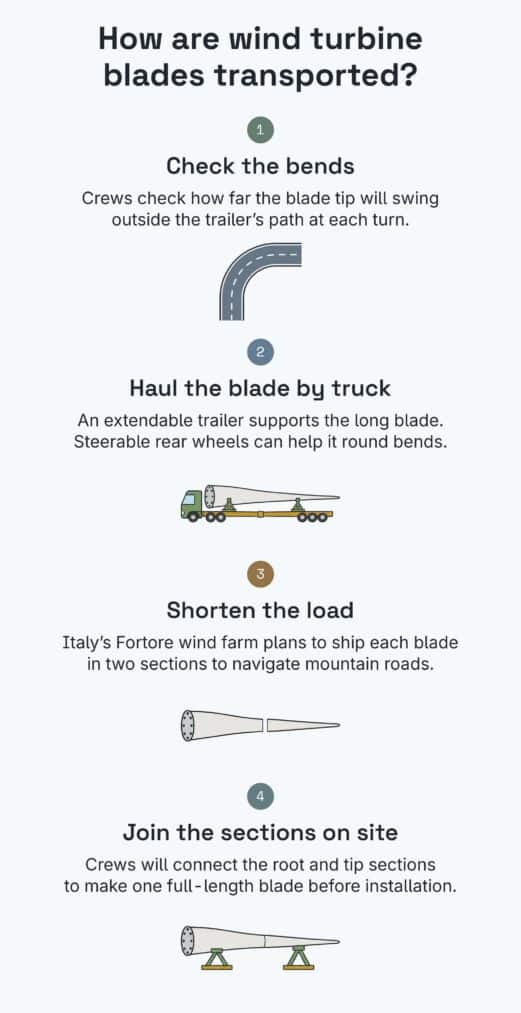
The Fortore scheme will incorporate GE Vernova’s two-piece blade.
It was developed to facilitate blade logistics and enable the project to proceed in areas of constrained access.
Each blade will be constructed in two separate pieces, which can then be moved independently to the worksite.
Upon arrival at the site, these two components will form a single, fully functional blade.
It opens up the potential for larger, state-of-the-art wind turbines to be sited where access was previously limited.
This provides further scope for project developers where blade logistics may become a limiting factor.
Access routes and other features of the site will not dictate the scheme to the same extent.
The aim is to fit the turbines to the site and its associated road network, not vice versa.
Earlier collaboration helped shape the Fortore agreement
A previous deal saw GE Vernova and IVPC Group team up on a wind project, which formed the basis for the recent Fortore award.
Under that framework, the company will also provide turbines for the adjacent scheme in Benevento.
Previously, the pair had worked together to commission and install Italy’s first Cypress 6.1 MW turbine at Montefalcone.
The Fortore deal is the natural progression of that partnership.
It continued the trend of increased wind energy deployment across Italy.
Scale of the project apparent from public data
A total of 17 land-based turbines will be deployed at Fortore, delivering more than 100 MW.
The project was highly competitive when awarded through the GSE tender process in Dec 2025.
Turbines selected for the site are rated at 6.1 MW and feature 158 m rotor diameters.
Those dimensions help explain the transport challenges associated with the project.
According to GE Vernova, the Fortore project will utilize its two-piece blade technology.
We know the key characteristics of the turbines and their expected generation.
Further work remains before delivery and commissioning can begin.
Additional considerations for moving substantial plant and equipment
Beyond simply fitting the physical footprint of the wind turbine, there are many further factors to consider.
These include road width, gradients, entry and exit options, and third-party assets.
Each can affect the feasibility of transporting the required equipment to the site.
The two-part blade will alleviate some of these concerns.
However, other elements of the site will still require detailed evaluation.
Only then will it be possible to determine whether the required plant and services can be successfully mobilized to the site.
Some minor features along the access tracks may force changes to the overall plan.
Maintenance offering to complement equipment provision
In addition to turbine supply, IVPC Group and GE Vernova will also partner on certain transactional maintenance tasks.
A bespoke operations and maintenance package will support the Fortore project.
Taken together, transport planning and post-build support can now be considered in light of the selected plant.
Attention now turns toward the turbine supply program
As the project moves towards implementation, the focus will shift to the timing of the turbine supply program.
Supply of the required stock is expected to take place from Q2 2027.
Until that point, a series of preparatory steps must be actioned, given the specific turbines chosen for the Fortore project.
What remains to be seen is the extent to which the two-piece blade proves beneficial in practice.
Read the whole thing?
Get the week's signal, not the noise
Our sharpest reporting on energy, climate and nature — free, once a week.