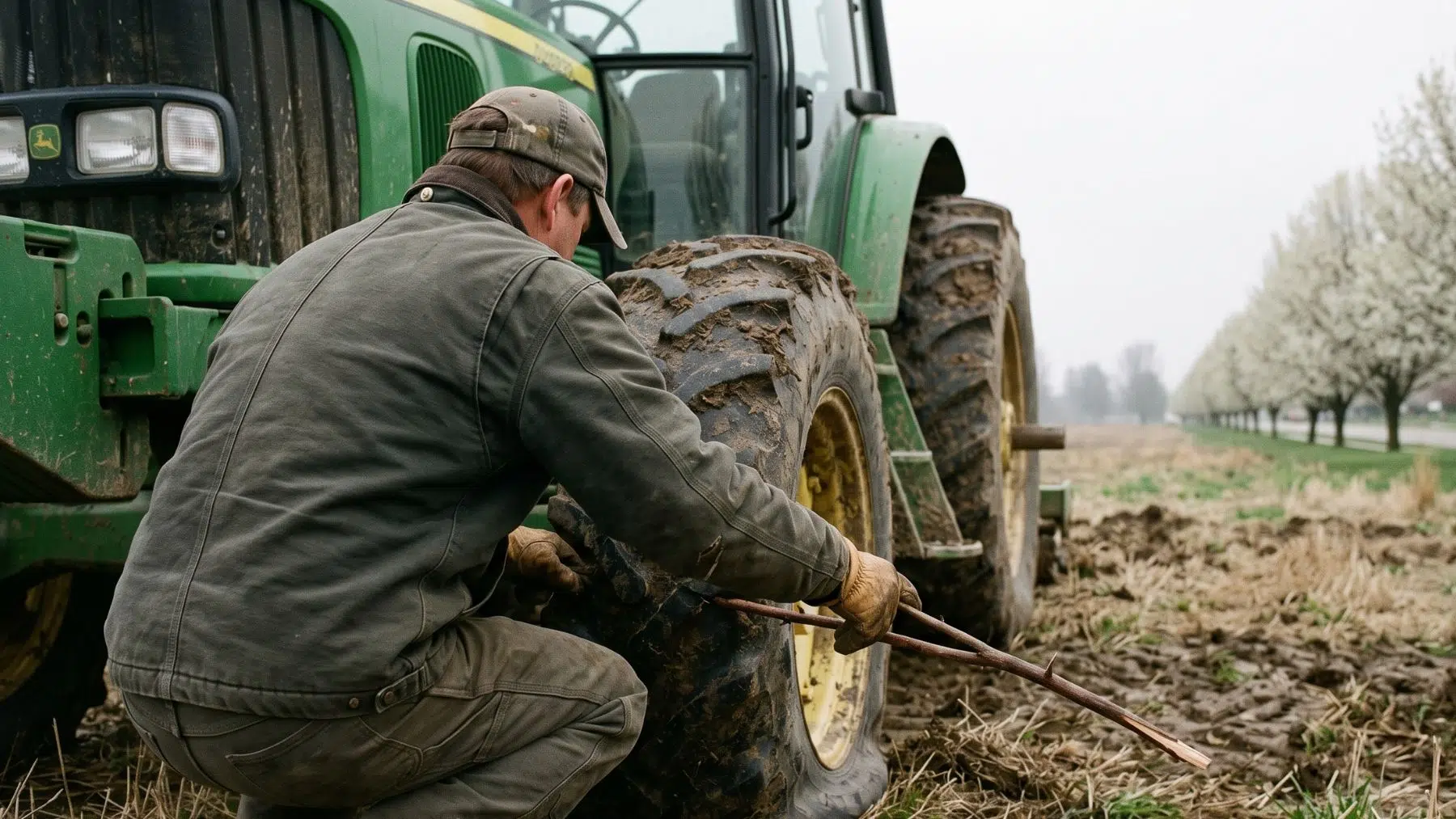
A farmer walks out to the field and finds a tractor tire hissing flat.
The culprit is a single woody thorn, driven clean through the rubber.
It grew on a Callery pear, the wild cousin of a beloved yard tree.
That yard tree is the Bradford pear, once the darling of American streets.
Nurseries sold it as tidy, fast, and best of all sterile.
They promised it would stay neat and fruitless forever.
But that promise broke in the worst possible way.
Its wild children came roaring back armed with thorns.
Those spiked descendants are being banned in state after state.
The prettiest tree in town became one of its worst invaders.
A tree bred for beauty, brought in from Asia
The Bradford pear is a cultivar of the Callery pear, a native of East Asia.
American scientists first imported the wild tree from China in the early 1900s.
They wanted its tough disease resistance for orchard breeding.
The wild pear shrugged off a blight that was ruining American orchards.
By the 1960s, the USDA had shaped it into a neat ornamental.
The Bradford grew fast, held a tidy oval shape, and bloomed on schedule.
Nurseries and cities planted it by the millions of trees.
Within a few decades it lined streets across some thirty states.
For years it was the default choice for a quick, cheap street tree.
The sterility promise that unraveled
The tree earned its fruitless reputation for a simple reason.
A Bradford pear cannot pollinate itself or another identical Bradford.
So an early street of pure Bradfords set almost no fruit.
For years that looked like proof the tree was safe.
But that quiet truth did not last long.
Nurseries soon sold other Callery cousins like Cleveland Select and Aristocrat.
Those different cultivars could freely pollinate the Bradfords nearby.
Bees carried the pollen from one variety to the next.
Grafted trees also sprouted wild shoots from their own seedling rootstock.
Suddenly the sterile tree was setting fruit by the thousands.
Each of those fruits was a small seed bomb waiting for a bird.
What the birds planted
Each of those little fruits holds seeds a bird can carry.
Robins, starlings, and other songbirds ate them by the fistful.
A single tree can feed a whole flock in one winter afternoon.
They dropped the seeds along fencerows, fields, and forest edges.
Every empty lot and highway margin became fair game.
There the seedlings grew into something far wilder than their parents.
Freed from the grafted cultivar, they reverted to the original thorny tree.
These wild pears form dense choking thickets in a few short years.
They leaf out early and steal the light from everything below.
They crowd out native trees and offer little food for wildlife.
The native insects that birds depend on cannot eat their leaves.
A tidy yard tree had become an invasive forest weed.
Farmers and land managers now spend real money fighting it back.
Thorns, storms, and a wave of bans
Out in the wild, the Callery pear shows its true armed nature.
Its branches sprout stiff spurs that harden into thorns.
They can shred a work glove or a bike tire in seconds.
Some grow as long as four inches and can flatten a tractor tire.
A Clemson study even documented a single thorn punched clean through one.
The trees are also weak and split apart in storms.
Most live less than 25 years before they break down.
States have finally started to act against the tree.
Ohio banned the sale of Callery pears in 2023.
South Carolina and Pennsylvania followed with their own bans in 2024.
Several more states are weighing their own restrictions.
Like the turbines of an offshore wind farm, the trouble took years to surface.
What to plant instead
The good news is that native trees can do everything the Bradford did.
They bloom just as brightly and hold a graceful shape.
A serviceberry or redbud offers white and pink spring flowers.
A dogwood or fringetree brings the same early color.
Many of them bloom earlier or longer than the pear ever did.
Unlike the pear, these natives actually feed wildlife.
Their fruit and leaves support native birds and insects.
Removing a Bradford is worth the effort while it is young.
A small tree comes out with a shovel, but a big one needs a saw.
Cut it low and treat the stump, or it sprouts right back.
Extension experts now urge homeowners to replace it with a native.
Like a fox pushed off its den by solar panels, a quick fix can carry a long cost.
In the end, the prettiest tree on the block turned out to be the worst neighbor around.
Read the whole thing?
Get the week's signal, not the noise
Our sharpest reporting on energy, climate and nature — free, once a week.