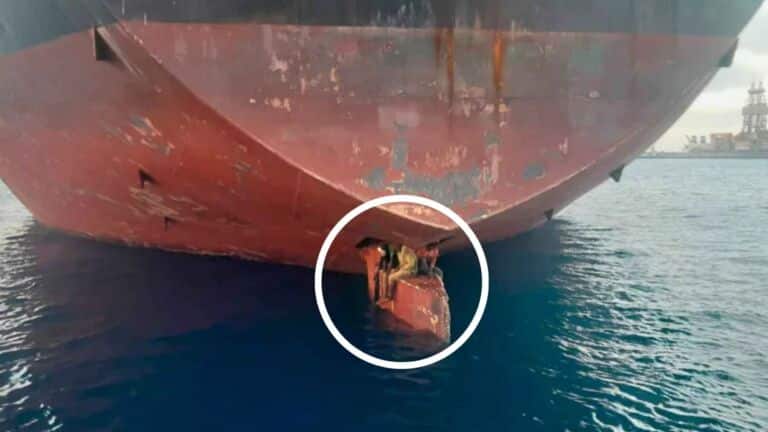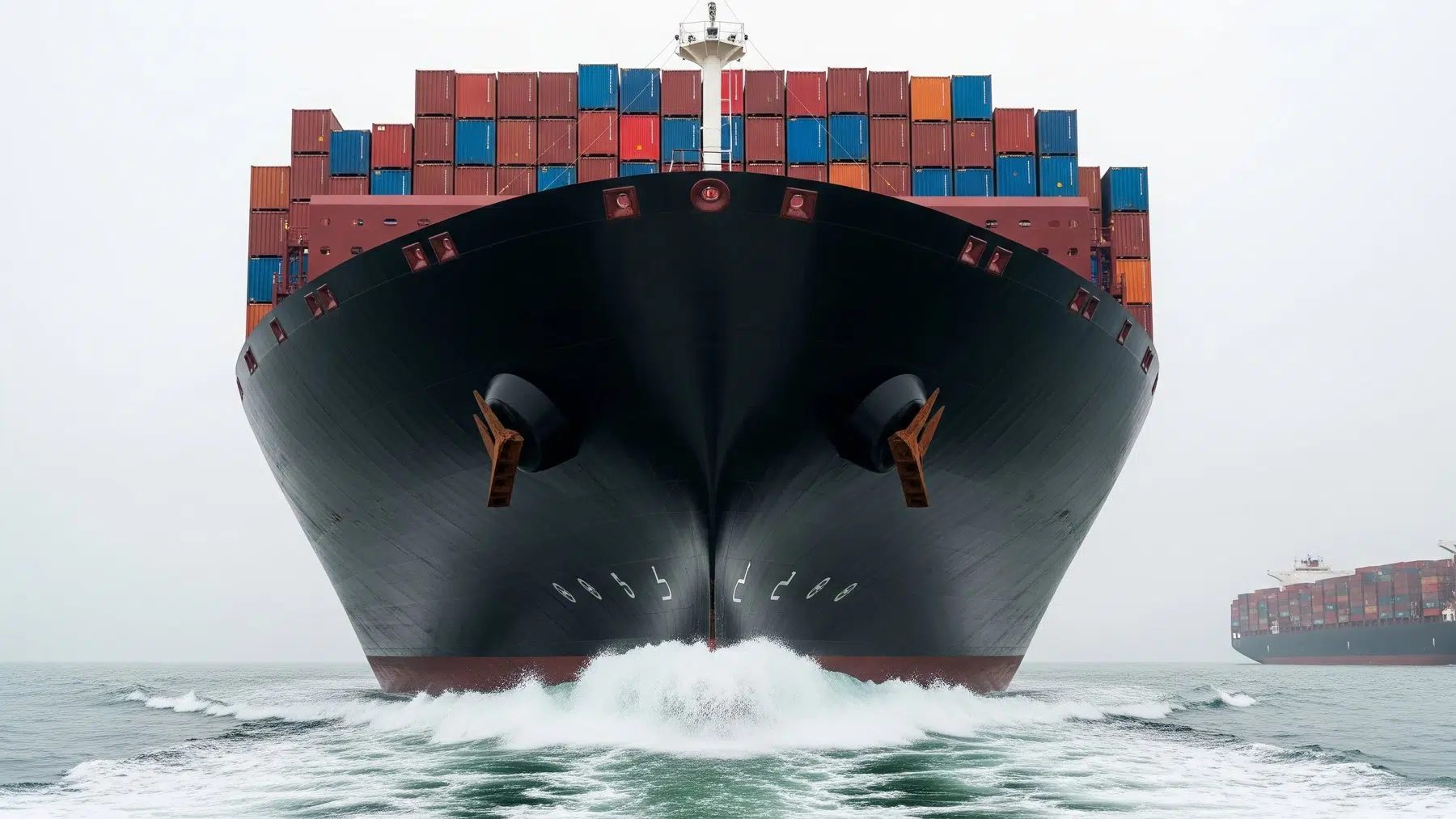
Stand on a pier in Los Angeles or Houston and watch one pass.
It is so large your brain refuses to scale it.
A wall of painted steel, stacked with thousands of boxes, moving at the pace of a slow jog and making almost no sound for its size.
What is inside those boxes built the room you are sitting in right now, and the story of how they got there is stranger and more consequential than almost anyone realizes.
The everyday object almost no one thinks about
The metal shipping container is one of the most familiar and most invisible objects in American life.
You have seen them on flatbed trucks, stacked at rail yards, rusting beside warehouses.
Most people assume the container is simply a big metal box, a convenience.
But that rectangle of corrugated steel is the single most consequential object in the global economy.
About 90% of non-bulk cargo worldwide is transported by container.
Everything from the smartphone in your pocket to the coffee maker on your counter crossed an ocean inside one of those boxes, stacked on a vessel so large it would dwarf most American landmarks.
And the size of those vessels has been growing fast in ways that have outpaced almost every other engineering story of the last two decades.
When a ship is taller than the Empire State Building is long
The biggest cargo vessels sailing today are genuinely hard to comprehend.
The largest container ships measure about 400 meters, or 1,300 feet, in length, and a single vessel can do the work that once required a whole convoy of earlier freighters.
Think about that for a moment: one vessel doing the work of many.
The MSC Irina class is currently the largest class of container ships in the world, operated by MSC on the Asia-Europe trade route, measuring approximately 400 meters long and 61.3 meters wide, with a maximum capacity of 24,346 TEU.
A TEU is a standard 20-foot container.
Stacked end to end, the containers on a single sailing of that ship would stretch for hundreds of miles.
The engineering required to keep a structure that size stable on open ocean, loaded unevenly, crossing weather systems and swells, is a discipline unto itself.
The hidden physics inside a floating skyscraper
What holds a vessel of that scale together in heavy seas is not brute force alone.
Engineers calculate the weight and position of every single box before it goes aboard.
Move a heavy container to the wrong bay and the whole vessel develops a list it may never fully correct at sea.
The most advanced vessels carry large-diameter propellers, energy-saving ducts, and air lubrication systems designed to minimize drag.
That air lubrication system does something almost poetic: it pumps a carpet of tiny bubbles under the hull so the steel slides against a cushion of air rather than solid seawater.
The fuel savings across a single voyage are measurable enough to make the technology standard on the newest generation of mega-vessels.
The country that now builds the floating cities
Here is the fact that changes everything you just pictured.
China’s share of the commercial vessel market grew from less than 10% in 2000 to over 50% in 2023, while the U.S. dropped to a fraction of a percent of global shipbuilding output over the same period.
Chinese shipyards now produce over 1,000 ocean-going vessels a year while the U.S. builds fewer than 10.
America’s fleet currently numbers under 100 vessels.
Only a fraction of the ships carrying goods to and from the country fly the American flag, by some estimates less than 0.4%.
China also holds a near-monopoly in shipping container production, accounting for around 95% of global output.
That means the box the ship carries was almost certainly made in China.
So was the ship carrying it.
According to vessel tracking data, 21% of all U.S. trade imported in 2024 arrived on Chinese-built vessels.
A fifth of last year’s American imports was delivered, in almost every material sense, aboard a Chinese machine.
Why the gap matters, and what comes next
A Center for Strategic and International Studies report found that China’s largest state-owned shipbuilder, CSSC, built more commercial vessels by tonnage in 2024 than the entire U.S. industry had built since the end of World War II.
That is a sentence worth sitting with.
Washington has begun treating the situation as urgent, with steep levies on Chinese-made ships arriving at U.S. ports proposed, up to $1.5 million per vessel, as part of a plan that carries bipartisan support.
Meanwhile, the engineering of the ships themselves keeps pushing forward, and that is genuinely hopeful.
Each new generation of mega-vessel is more fuel-efficient than the last, and the world’s largest car carrier that set sail recently uses the same hull-efficiency science now being tested in wind-assisted and hydrogen-powered prototypes.
The same invisible forces that complicate a thousand-foot ship passing under an aging bridge are the ones engineers are learning to use rather than fight.
The container ship is not going away.
What is changing is who builds it, who owns it, and, slowly, what powers it.
The next time that steel wall drifts past a pier near you, it is carrying a lot more than coffee makers.
Read the whole thing?
Get the week's signal, not the noise
Our sharpest reporting on energy, climate and nature — free, once a week.