
Altitude tables describe an atmosphere that does not quite exist.
They assume air thins at the same rate everywhere on the planet, so a given height always returns a given pressure, and for most purposes that is close enough.
Over the tropics it stops being close enough.
The atmosphere is not a smooth shell wrapped evenly around the globe. It bulges.
Warm air over the equator pushes the mass above it outward, and the pressure at any stated height there sits higher than the standard model predicts.
The margin lives in that bulge.
The air over the tropics is thicker than the model allows
Pressure at altitude is not a property of height alone. It is a property of how much air is stacked overhead, and that stack is not distributed evenly.
Circulation piles mass toward the equator and thins it toward the poles, which is why a given elevation in the tropics carries a heavier column of air than the same elevation in the Arctic.
The effect is small in percentage terms and enormous in consequence, because human performance at extreme altitude does not fall off gently.
It falls off a cliff. Below a certain inspired oxygen pressure the working muscles and the brain stop being supplied at any useful rate, and the difference between possible and impossible is a handful of units.
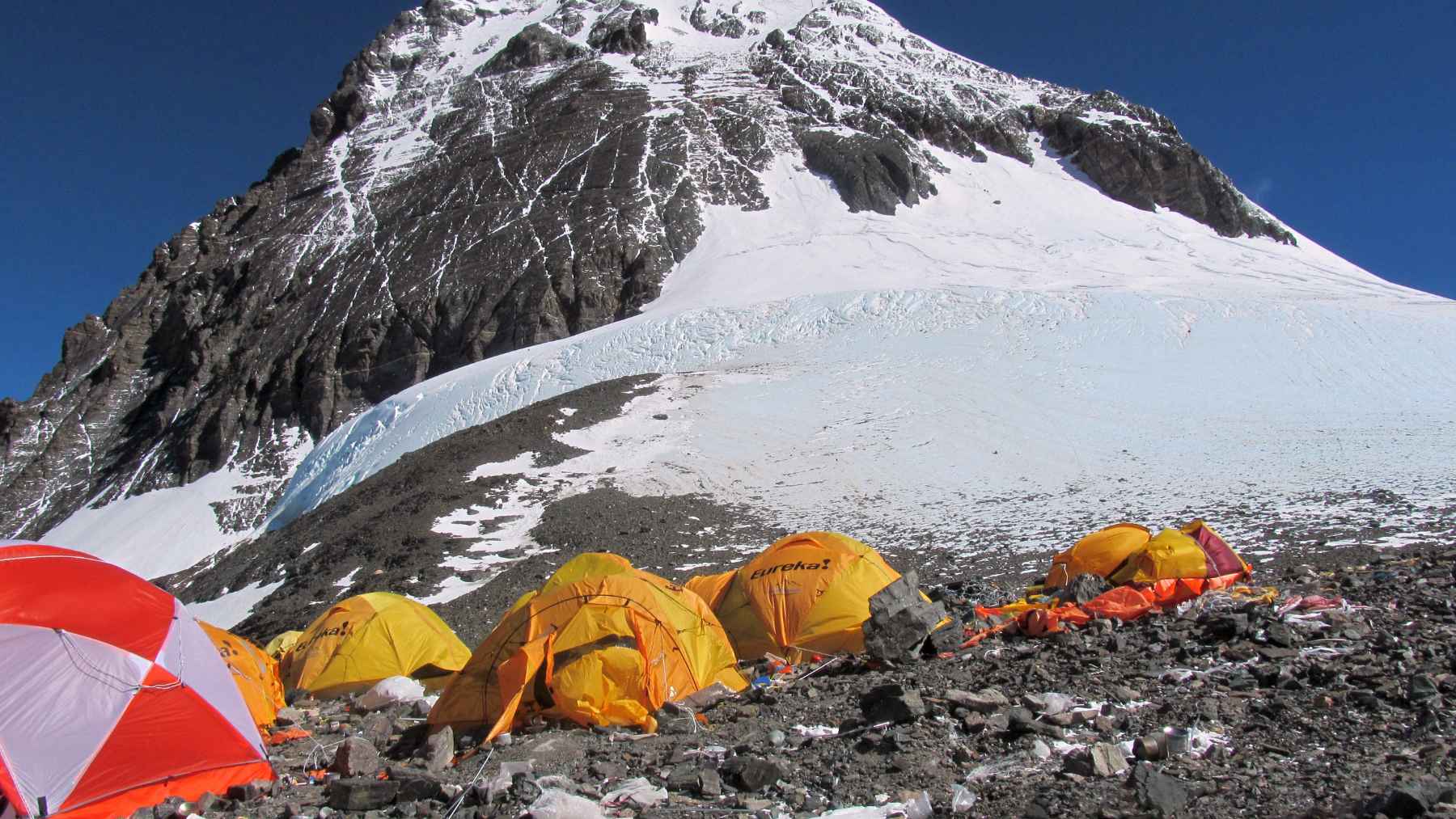
The highest point on Earth happens to sit near enough to the tropics to collect that extra weight of air.
Geography supplies the missing pressure.
Hand signals on the last ridge
Climbers working the final slope on ambient air describe a narrow and repetitive world.
Progress comes in short bursts, ten or fifteen paces, then a stop to breathe that lasts longer than the movement did, and the rest interval lengthens as the day goes on.
Speech goes first. Talking costs breath that cannot be spared, so communication collapses to gestures and a shared direction.
Judgment goes quietly. Decisions that would be automatic lower down have to be assembled deliberately, and climbers describe watching themselves think slowly rather than noticing nothing.
None of this improves with effort or training on the day. It is the supply rate, and the supply rate is fixed by the air rather than by fitness, will or acclimatization already banked.
A climber who has spent six weeks adapting arrives at the top with the same inspired oxygen pressure as everyone else standing there.
The body is running on the minimum.
What a barometer on the summit actually recorded
In October of 1981 a physician on an American research expedition carried instruments to the top and took the measurement nobody had taken before.
Barometric pressure came in at 253 torr. The standard atmosphere for that elevation predicts roughly 236, so the real summit is meaningfully lower in physiological terms than its elevation suggests.
That 253 gives an inspired oxygen pressure near 43 torr once the lungs have added water vapor, and alveolar samples taken on the summit put carbon dioxide at about 7.5 torr.
The breathing is doing all the work. Hyperventilation strips carbon dioxide out to a quarter of the sea level value, which drives the blood alkaline and pulls oxygen onto hemoglobin more tightly in the lungs.
Blood drawn from climbers at 27,600 feet years later showed hemoglobin near 19 grams per deciliter and oxygen tensions in the twenties.
Chemistry is deliberately unbalanced.
How much of this was measured and how much was inferred
The famous summit numbers are thinner than they look. A single person took the alveolar samples, on one day, in one season, and the arterial values that go with them are calculated rather than drawn.
The only blood actually taken high on the mountain came from four climbers well below the top, in the way that a single documented extreme or a stretch with no data becomes a textbook figure.
Those samples showed a blood pH between 7.45 and 7.65, which is extreme but short of the values the summit estimates imply.
The original prediction of gas exchange at that height is laid out in the summit gas exchange paper alongside the pressure reading.
Precision is partly reconstruction.
Why the ratio has barely moved
The practical test of all this is how many people manage it, and the answer has stayed stubbornly small.
Against more than thirteen thousand successful ascents of the mountain, only around 232 have been made on ambient air, which is under two percent and has not grown with better gear.
Bottled oxygen does not make the climb easier by a margin. It moves a climber to a physiological altitude thousands of feet lower, and the summit record keeping shows the gap in success rates that follows.
Breathing ambient air up there works by a few torr.
Those torr are a gift of latitude.
Read the whole thing?
Get the week's signal, not the noise
Our sharpest reporting on energy, climate and nature — free, once a week.


