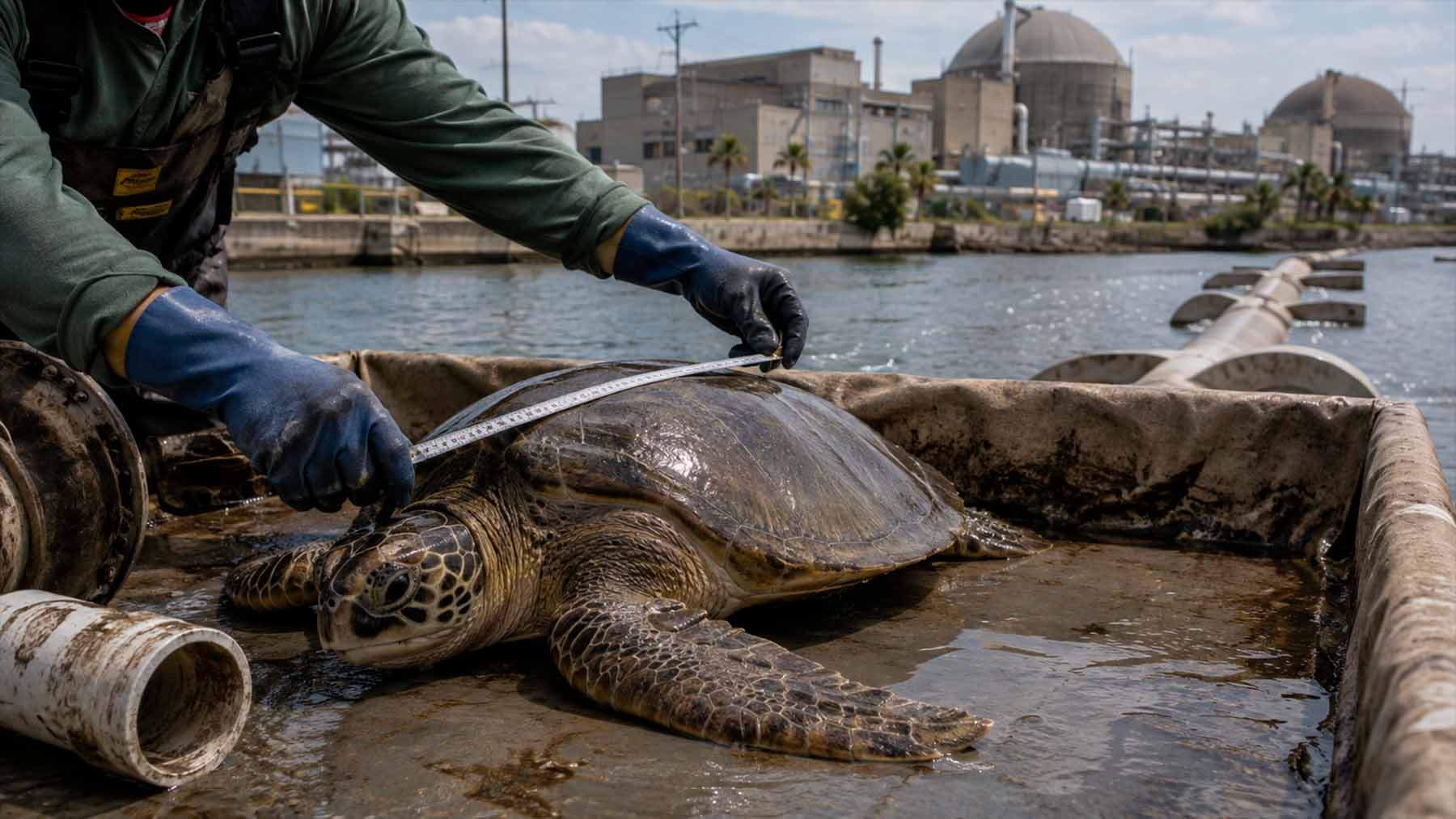
The St. Lucie Nuclear Power Plant off Florida’s Hutchinson Island relies on huge amounts of water moving through its cooling canal. It is fed by massive submerged intake pipes. Marine turtles swimming along the Atlantic coast have been swept into the waterway for five decades.
Biologists monitoring the canal have recorded almost 20,000 capture events. This is one of the world’s longest marine tracking datasets.
How were three distinct ecological groups identified among the thousands of similar-looking juveniles?
What it takes to monitor accidental capture on Hutchinson Island
The St. Lucie nuclear plant has three intake pipes, all extending 1,200 feet offshore and pulling in water from the ocean for cooling. The currents created in the pipes suck in nearby ocean wildlife, with turtles being among the most common creatures captured.
Inwater Research Group sent a team of biologists to run daily net surveys in the canal. Each turtle is picked up, weighed and measured, and the figures logged for monitoring. The healthy turtles are released back into the sea after being tagged on a flipper.
Over the 47 years of constant monitoring, 19,987 turtle captures have been recorded. Most of them were green sea turtles between 12 and 24 inches long.
This population appeared identical. The thousands of juveniles were around the same age, size, and health, so researchers assumed they all belonged to one local coastal group.
Long-term tracking patterns emerged in the recapture records
Collating the dataset required more than simply looking at shell measurements. The physical sizes alone indicated that the region was a standard juvenile nursery. But the decades of tagging pointed to a more complex situation.
Researchers cross-referenced 47 years’ worth of recapture dates and noted clear mathematical patterns. Some turtles were captured once and never again.
Others disappeared over specific months of the year but returned on a predictable schedule.
Members of another group kept being picked up and returned to sea over and over again, remaining in local waters year-round.
The variations in capture rates challenged biologists’ long-held ideas about how turtles behave.
Traditional models made the assumption that juvenile turtles stayed in their nursery habitats and only moved on to adult feeding locations in a few years.
Scientists proved through the gaps in recapturing and residency times that turtles along the Florida coast that looked the same actually followed three different lifestyles.
Nomads, residents, and seasonal visitors: A three-track turtle lifestyle
The 47-year canal dataset revealed three distinct life paths among visually identical juvenile turtles.
Residents settle in Florida’s coastal reefs and seagrass beds for long stretches, repeatedly entering the canal across months or years to feed.
Seasonal visitors travel into local waters on predictable annual schedules. They arrive during specific temperature windows before continuing along their migratory routes.
Nomads are ocean-going transients. They ride open offshore currents, getting caught just once as they pass through without ever establishing a local home range.
Turtle conservation just got a boost
Differentiating these three behaviors changes how biologists protect endangered sea turtles. Coastal management plans cannot treat habitats as simple, uniform nurseries. A loss of seagrass harms resident turtles while leaving passing populations unaffected.
According to the Inwater Research Group, the canal records demonstrate that juvenile turtle life stages are more flexible than models suggested.
Understanding the intake data over the long term makes it easier for marine biologists to apply broader advances in tracking science.
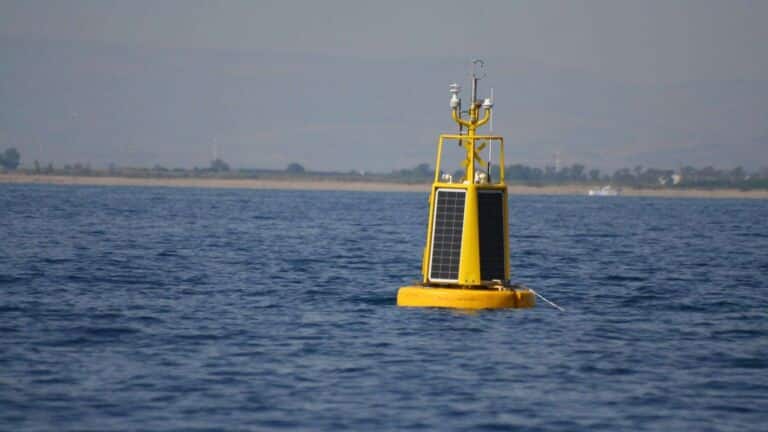
Similar operations are being undertaken with sensor arrays along busy shipping channels, where automated seafloor monitors track deep-water biological movements to help commercial vessels avoid marine life impacts.
You can find all the study information here: Welsh, R.C., Mansfield, K.L. Hidden Markov models reveal ontogenetic plasticity in green and loggerhead sea turtles. Sci Rep 16, 13696 (2026). https://doi.org/10.1038/s41598-026-42842-z
Read the whole thing?
Get the week's signal, not the noise
Our sharpest reporting on energy, climate and nature — free, once a week.