A researcher glues a small transmitter onto the fur behind a seal’s head and lets the animal go.
Months later the tracks come back as lines on a chart, and most of them wander the way you would expect.
A few do not. A few run dead straight, then turn at a right angle, then run straight again.
Laid over a map of an offshore wind farm, those lines land on the towers.
The number of animals doing it is smaller than the headlines, and more interesting than they make it sound.
Three seals, not eleven
Dozens of harbor and grey seals were tagged along the British and Dutch coasts, and the great majority never went near a wind farm at all.
Eleven harbor seals did swim inside the two farms being watched, which is the number that usually gets quoted.
But only three of those eleven traced the grid, moving tower to tower rather than crossing the open water between them.
What made it read as hunting was the speed. Those animals slowed at each leg, and a seal that slows down is a seal that is working.
Two others did something stranger off the Dutch coast, following a seabed pipeline on repeated trips of up to ten days.
So the honest version is three animals out of eleven, and eleven out of dozens, which is a small signal rather than a rule.
That is still the first time anyone had watched a wild predator at sea use a human layout as a route.
The two farms in question
Neither site is enormous, and the difference between them is part of the point.
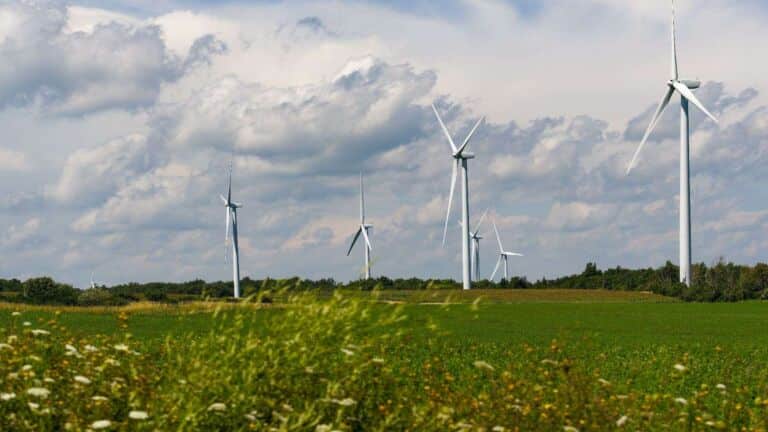
Sheringham Shoal sits about 11 miles off Norfolk in water between 52 and 72 feet deep, with 88 turbines rated at 3.6 megawatts apiece.
That comes to 317 megawatts in total, and the site has been turning since late 2011, so the growth on its legs has had years to build up.
Alpha Ventus is far smaller, just 12 turbines of 5 megawatts each for 60 megawatts total.
It stands 28 miles north of the island of Borkum in about 100 feet of water and went commercial in 2010.
Both are laid out on a regular grid, because that is how you stop one turbine stealing another’s wind, and regular spacing is exactly what the tracks matched.
Why a foundation turns into a meal
The seabed under both farms is soft, and soft bottom offers almost nothing to hold onto.
Drive steel into it and the surface starts filling within months, first with barnacles and mussels, then anemones and worms.
Rock is usually dumped around the base as scour protection, which adds gaps and crevices on top of the tower itself.
Small fish come for the growth. Bigger fish come for the small fish.
None of which the seal cares about directly. It cares only that the fish are in a known place rather than scattered thinly across open sand.
Swimming a straight line between reliable spots beats searching, which is the whole advantage the grid hands them.
What the hammering does first
The other half of this is less comfortable and it comes earlier in a project’s life.
During pile driving, seal numbers within about 15 miles of the work dropped by somewhere between 19 and 83 percent, which worked out to roughly 440 animals pushed off, as the follow up found.
That is a real cost, it lasted for the whole construction season, and it belongs in the story rather than buried under the nice part.
What is equally real is how fast it ended. Within two hours of the hammering stopping, the animals were spread out exactly as they had been before it started.
And the finished, spinning wind farm produced no measurable displacement at all, as the tracking set out.
The same split shows up around any offshore array or fenced solar site, where the building is the disturbance and the standing structure is not.
What it proves and what it does not
Three seals is not a population, and none of the people who did the work claim otherwise.
It shows the behavior is available to the species, not that most of them use it.
What gives it weight is the timing, because Europe is now deciding what to do with turbine foundations as the first farms reach the end of their lives.
Pulling the steel out removes the structure. Leaving it removes the reef with it only if you take the whole thing.
Tracks like these are the sort of evidence that argument has been short of, and there are far more foundations going in every year.
Whatever gets decided, part of the case will rest on three animals that swam in straight lines and stopped at every tower.
Read the whole thing?
Get the week's signal, not the noise
Our sharpest reporting on energy, climate and nature — free, once a week.