Pre-construction activity and site preparation for Heritage Wind commenced in western New York in January 2026, ahead of the civil construction scheduled for later in the year.
It takes years of preparation for a project involving production of wind energy to reach a stage when excavation can begin.
Construction engineers gave priority to the planning of the main electrical substation and switchyard during the initial earthworks.
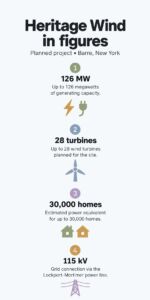
This project involves 28 wind power turbines.
The preparation of agricultural land for civil construction
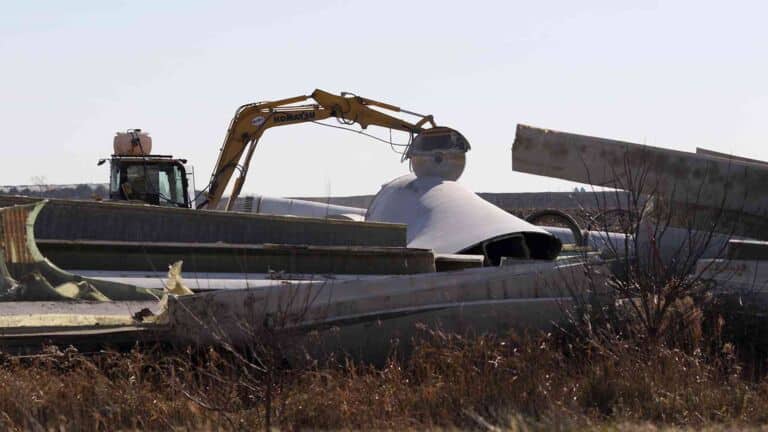
The civil engineers are using earth-moving equipment from the town of Barre to create safe pathways and staging areas.
Notifications that were issued before the construction commenced contained information on how the process of land clearance would take environmental concerns into consideration as the area was cleared for the assembling of the turbines.
Land clearance is underway.
Land preparation was very important, as carrying it out the right way will help avoid soil erosion while at the same time making it easier for large vehicles to get around the site.
Thorough groundwork will lay a stable foundation to support the complexity of the electrical component work later in construction.
Constructing the major collection substation and foundations
Substation construction is an important phase that helps ensure voltage consistency for transmission of the irregular supply from wind farms.
Work on the collection substation and switchyard foundations was scheduled to begin in October 2026 as part of the project’s civil construction phase.
Conduits were set below the earth’s surface to link potential wind turbine placement sites to the main substation in the future.
Strengthening concrete foundations will guarantee that transformers and switch gears can withstand the severe weather conditions in this area.
The installation of electrical infrastructure should be done at the same time as construction to keep pace with the schedule and assure compatibility.
Renewable energy fed directly into the New York state grid
High-voltage transmission lines will be linked to transfer renewable energy into the regional grids.
The designers created a connection using the existing 115 kV Lockport-Mortimer transmission link.
The flow of energy will be regulated by the New York Independent System Operator.
A technique has been devised to facilitate connection.
Once the new point of interconnection on the 115 kV Lockport–Mortimer line is constructed and commissioned, renewable energy will be transmitted into the NYISO-managed regional grid.
This type of transmission system allows for economic feasibility of utility-scale generation of renewable energy for other companies and investors.
Significant economic benefits to the region
The project is expected to generate tens of millions of dollars in total revenue over its life through municipal payment-in-lieu-of-tax (PILOT) and host-community agreements.
It is projected to create jobs for more than two hundred workers in the region alone during the construction stage.
Separate from these long-term projected PILOT payments, neighboring communities will receive additional financial benefits through smaller existing grant programs and electricity discounts.
The advantages of the project are significant, according to Heritage Wind.
Public schools and towns in Orleans County should start seeing the positive spinoffs within a few short years.
Integration of the two aspects of clean power generation and economic development in the region makes a strong partnership within the host communities.
Thinking about the future: Complex assembly and installation of the turbine
Each step of the construction process has been planned in such a way that simultaneous transportation and installation of electrical equipment and turbines are allowed.
The transportation of towers, nacelles, and rotors during the installation on the concrete foundations will be carried out by a crew assigned for this complex task.
The project will be successful depending on whether the objective of reaching its total maximum installed capacity of 126 MW to supply the regional New York grid is achieved.
Other than this, the project is a good example of planning, setting standards for future projects.
Through proper planning, the clean energy mix in the western parts of New York will be enhanced while considering the health of the environment.
Read the whole thing?
Get the week's signal, not the noise
Our sharpest reporting on energy, climate and nature — free, once a week.