Wildfires create so much smoke that it covers mountainsides and doesn’t stop at highways, towns, or park borders.
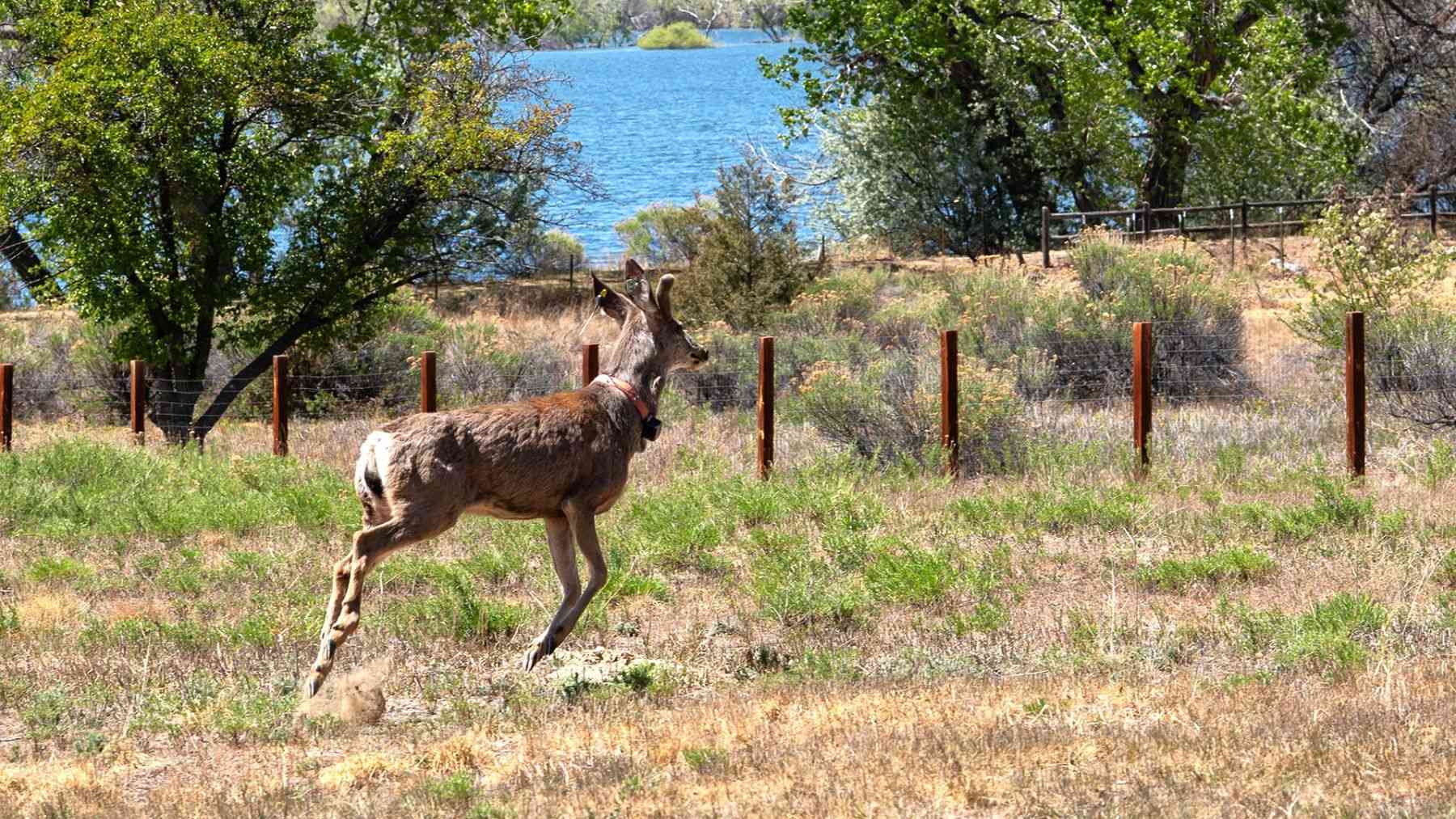
Under smoky skies, animals keep eating or migrating as air quality shifts—a reality researchers found problematic.
Scientists knew about the smoke (they could see it) and how bad it was in specific areas.
Where was the actual air quality when the animal was standing there?
Why air-quality monitors often miss wildlife exposure
Most air-quality monitors are intended to provide safe air for humans.
They are typically located close to townships and communities.
Because monitoring stations are placed for people rather than wildlife, deer, elk, and bears often travel far beyond the nearest sensor.
So, if you take a measurement taken miles from where the animal is standing, it probably won’t tell you what the animal breathed.
Instead of measuring exposure, scientists would often have to make estimates of exposure instead of direct measurement.
The missing piece wasn’t location, it was smoke exposure
Scientists have been studying wildlife for years and are very good at following the animal’s migration routes.
The data collected from GPS collars can demonstrate where the animal went and how they utilized the landscape.
One component was missing: with animals constantly on the move, researchers couldn’t tell how much smoke they inhaled along the way.
As time passed, the lack of knowledge concerning smoke exposure limitations hindered research that connected smoke exposure to either behavioral responses or physical health effects.
The solution was placing the sensor on the animal
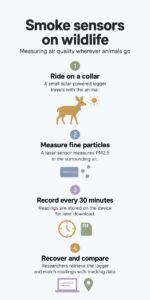
Researchers at Colorado State University bypassed stationary air monitors to find a direct way to track animal smoke exposure.
To accomplish that goal, the scientists built a compact smoke-monitoring unit which they attached to existing wildlife-collaring systems that researchers were already using.
The device contained a small solar-powered unit that measured PM2.5 and recorded these measurements every thirty minutes.
Therefore, a portable smoke monitor was produced that followed the animal through its movement through the environment.
This portable smoke monitor allowed researchers to determine what ambient PM2.5 concentration existed at the exact point of observation by the animal.
What the device can measure, and what it can’t yet reveal
While this technology measures local smoke concentrations, it does not yet show how animals react or how health is affected.
However, this technology does allow researchers to begin collecting data necessary to investigate both behavioral responses and potential health effects due to wildfire smoke exposure.
Collecting data on exposure is an essential initial step before addressing subsequent impacts.
Smoke data can now be compared with collar data
Collars for wildlife can generate enormous quantities of data.
Researchers can identify the route taken by the animals.
They can track how those routes change over time.
In many cases, researchers can correlate those observations to various environmental factors such as weather or habitat conditions.
With this new sensor, another layer can now be added to this picture of an individual animal’s movements in relation to those environmental factors.
The data generated by this new sensor can be compared with other data already being collected from the same animal.
This will enable them to formulate hypotheses and test them rather than infer results based upon indirect evidence.
Wildfire smoke isn’t going away, but researchers can finally measure it
As wildfires grow more frequent across western landscapes, researchers finally have a way to measure smoke directly from the animal’s perspective.
Future studies can build upon the measurements collected by the sensors.
Researchers may be able to identify patterns that were previously difficult to detect.
The smoke itself may already be familiar.
The view from inside it is only now becoming clearer.
Read the whole thing?
Get the week's signal, not the noise
Our sharpest reporting on energy, climate and nature — free, once a week.