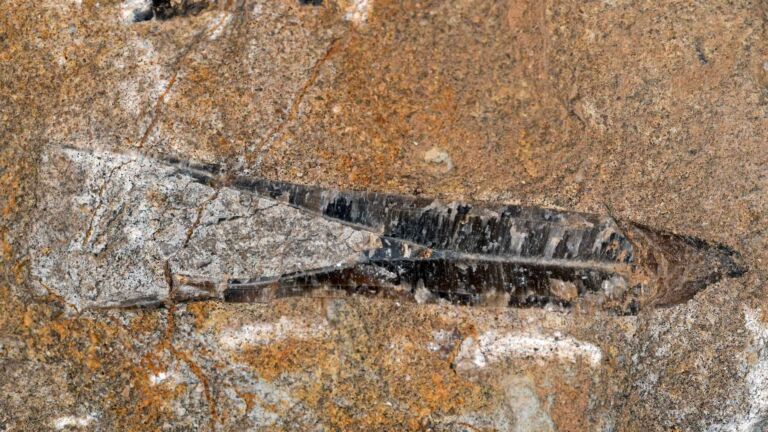
On the morning of July 15th, aquatic biologist Eric Gardunio led a crew of firefighters and wildlife staff up a three-quarter-mile trail into still-smoldering terrain near Nate Creek — carrying buckets, equipment, and a hard deadline of 1 PM.
Miss that cutoff, and the mission gets called. Let the fire win, and a species with no genetic backup anywhere on Earth disappears with it.
A fish that exists in exactly two places on Earth
The Uncompahgre cutthroat trout doesn’t live in a river system. It lives in two creeks — Wildcat Creek and Nate Creek, both small tributaries of the Dolores River drainage in Colorado. The entire wild population fits within those narrow ribbons of mountain water.
Rarity alone doesn’t make the species irreplaceable. It’s the genetics. The Uncompahgre cutthroat carries unique genetic markers called haplotypes — biological signatures so specific that no breeding program could reconstruct them from scratch. Once those markers are gone, they’re gone permanently.
Individual counts have barely cleared 100 fish, sitting uncomfortably close to the threshold where a population can no longer sustain itself. Formal conservation monitoring began in 2007, but for nearly two decades, wildfire wasn’t the threat it became in 2025.
The first alarm: Stoner Mesa Fire forces a dry run for survival
The Stoner Mesa Fire burned nearly 10,000 acres — reaching 9,900 acres at just 27% containment. High winds and dry conditions pushed it hard through Colorado’s forests, directly toward habitat the Uncompahgre cutthroat couldn’t afford to lose.
Colorado Parks and Wildlife, San Juan National Forest staff, and aquatic biologists hiked to Wildcat Creek and the Upper Dolores River. Electro-netting temporarily stunned the fish; crews hand-netted them into buckets. The team captured 226 Uncompahgre cutthroat trout and transported them by hatchery truck to CPW’s Roaring Judy Fish Hatchery — safe from smoke, ash, and contaminated runoff.
That rescue did something else: it built the playbook. The protocol developed during Stoner Mesa — the equipment, the technique, the logistics — would be deployed again the following year, under far tighter conditions.
A second fire, a tighter clock, and a harder call
The Gold Mountain Fire was a different scale of threat entirely. As explained in A-Z Animals t grew to over 33,000 acres, with containment fluctuating between 7% and 24%. When CPW received a call from the Gold Mountain Fire Incident Management Team, they mobilized in under 24 hours.
One hard constraint governed everything: a 1 PM deadline on July 15th. That was the moment the fire was projected to breach its trigger point — the threshold beyond which the mission would be too dangerous to continue.
To reach Nate Creek, crews hiked three-quarters of a mile and climbed 400 vertical feet through terrain that could still be smoldering underfoot. Every minute of that approach ate into an already compressed window.
Electro-shocking the creek: an established method with a precise purpose
Electro-shocking sounds dramatic, but the technique is well-established in fisheries management. A controlled electrical current temporarily stuns fish without harming them, letting teams hand-net them quickly from the surface. In a conventional survey, crews might spend days carefully working a creek. Here, they had hours — and the method was chosen precisely because it compresses time without compromising the fish.
The team worked Nate Creek and captured 103 trout before the 1 PM cutoff. All rescued fish were transferred to a hatchery, where they’d be protected from smoke inhalation, ash fall, and the chemical changes wildfire debris causes in water. Speed was the deciding factor.
Splitting the risk: a calculated gamble on the species’ future
Eric Gardunio made a deliberate choice not to remove every fish from Nate Creek. The team took roughly one-third of the population — 103 individuals — and left two-thirds in place. That decision was strategic, not logistical.
Concentrating every surviving Uncompahgre cutthroat in a single location creates a single point of failure. If something goes wrong at the hatchery, the species is gone. If ash fall devastates the creek but the hatchery population survives, there’s still something to work with. The split hedges against both outcomes simultaneously.
The remaining wild fish aren’t safe. Ash fall can alter water chemistry and suffocate aquatic life, and the fire’s aftermath poses real ongoing risk. Gardunio described splitting the risk as the species’ best available chance — a strategy built on uncertainty, not confidence.
That framing is worth sitting with. The people who know this fish best, who’ve monitored it since 2007 and hiked into active fire zones to save it, aren’t claiming victory. They’re managing probability. In a world where wildfires are growing more frequent and more intense, the Uncompahgre cutthroat’s story raises a harder question: how many species are quietly teetering at the same edge, waiting for a team with buckets and a deadline to show up in time?
Read the whole thing?
Get the week's signal, not the noise
Our sharpest reporting on energy, climate and nature — free, once a week.