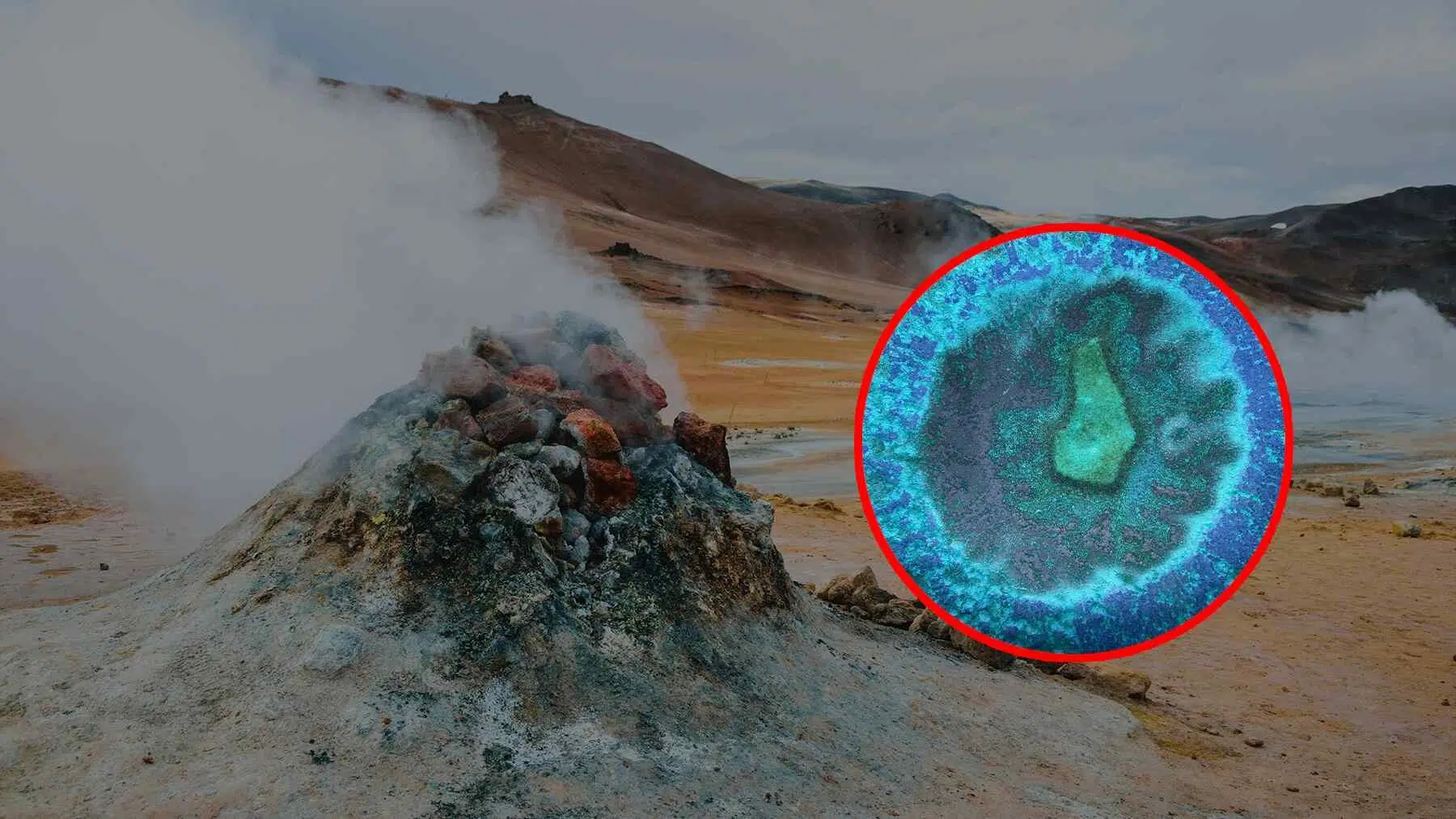
Lasson Park in California is home to a wide variety of wildlife, from huge beasts to tiny microorganisms.
But a “fire” single-celled organism recently discovered has set the scientific community down a path of change. As science progresses, along with the technology around it, new discoveries are being made that reshape previously proven facts.
What are the limitations of life in extremely hot temperatures? We now have some record-breaking answers.
How our scientific knowledge has revealed some strange developments
It certainly is not an understatement to say that science has revealed some seriously weird facts about life on our planet.
The “Carnivorous Caterpillar” discovery found that about 1% of caterpillars wear the bodies of their deceased prey as a form of camouflage that wouldn’t be out of place in a Predator movie.
And the scientific revolution rolls on as new findings are made, almost every day.
Science has also proven that all beings, including us, emit a tiny beam of light. Known as Ultraweak Photon Emissions, the biological light is so dim that we can never see it, but it can be captured on specifically designed sensitive cameras.
The Earth: The ultimate mystery we are yet to solve
Our planet holds a treasure trove of secrets just waiting to be found.
While some target space and the never-ending questions of time, other researchers are more focused on life down here on Earth. Teams of scientists regularly dig up parts of the planet to make astonishing findings that rewrite our understanding of how, and where life can pop up.
And one team dug up an iconic part of this state to make a record-breaking discovery with profound implications for science.
Studying the tiniest single-cell organisms can reveal how life is able to operate in extreme conditions. One team in California headed down to the stunningly beautiful Larson Park and made a truly remarkable finding.
Studying the oceans and the oldest parts of our planet can reveal how life has evolved over the billions of years on our home.
The Golden State mystery of how life can live in extreme conditions
The Lassen Volcanic Park in California holds a wide variety of life in all its forms.
From the big and beautiful wolves to the tiny organisms in the volcanic water that is millions of years old, the region plays a vital role in our need to study life in all its beautiful shapes and sizes.
A team of researchers led by Beryl Rappaport has found that the boiling volcanic waters in Lassen Park have tiny “fire amoeba.”
A finding of profound importance to life itself. In the bigger picture, that is…
The single-celled organisms were previously thought to only exist in water temperatures below 145.4 degrees Fahrenheit. However, the team found evidence of the fire amoeba replicating itself in temperatures exceeding 147.2 F. Even still being a busy body in temps as high as 158 F.
The team noted that only when water temperatures reached 176 F did the fire amoeba give up on life and pass away.
The team from Syracuse University proved that life is far more complex than we ever thought. The study showed that even tiny, single-celled organisms indeed can stand the heat in the kitchen.
The study, “Fire amoeba survives in hotter conditions than any other complex cell”, published in Nature, has rewritten what we thought about complex organisms.
While scientists delve deeper into our brains to discover what makes us tick, this team of researchers has pointed their focus towards understanding how tiny, single-celled organisms are able to survive in the hottest of environments.
What future discoveries are waiting for the right time and team to make their way to us?
Read the whole thing?
Get the week's signal, not the noise
Our sharpest reporting on energy, climate and nature — free, once a week.