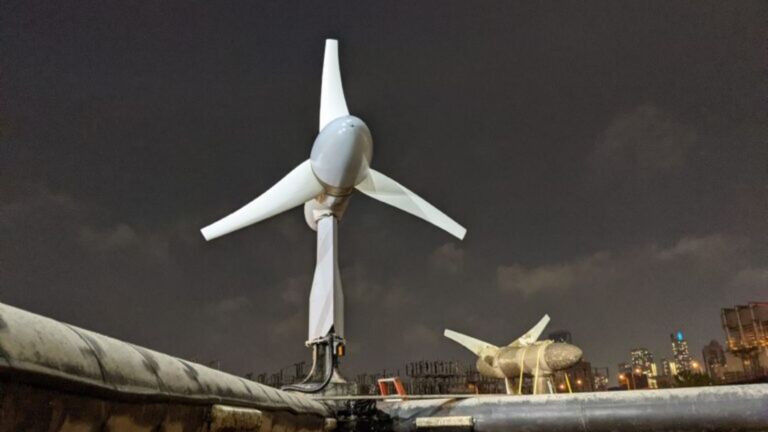
Wind turbines are usually easy to spot. They tower over vast areas of land and can be seen from great distances.
At night, another identifying feature becomes obvious.
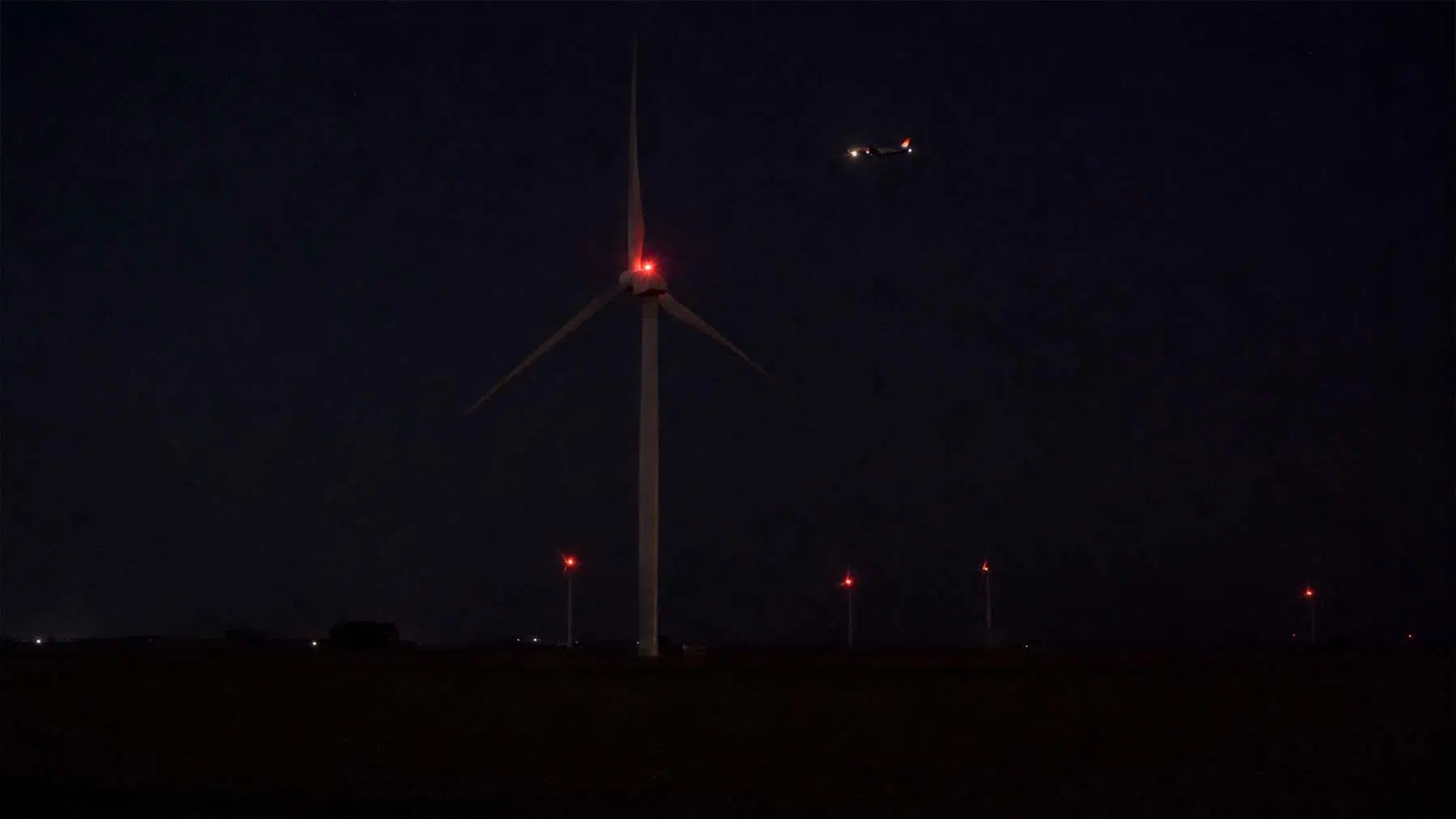
The red flashing aviation warning lights placed atop large wind towers help pilots identify them after dark. These red flashers are federally mandated by the FAA for pilots’ protection.
However, in Iowa alone, approximately 200 wind turbines use a different lighting system.
For most of the night, the warning lights remain off.
So why did wind turbines keep their warning lights flashing throughout the night?
Why the red lights never stopped flashing
Wind turbines were designed to create electricity. However, their height can also create challenges for pilots flying at night.
Because of this, the FAA requires many wind turbines to have aviation warning lights.
Before this new system was introduced, the red lights of numerous large wind farms could be seen flashing throughout the night.
People living near these wind farms became accustomed to the flashing lights.
Over time, patterns of blinking turbines became a normal part of the landscape.
Some saw the flashing lights as simply an added feature of the area.
Others questioned why they continued flashing throughout the night when there were no airplanes nearby.
The question remained. Was there a way to keep pilots safe without leaving the warning lights flashing throughout the entire night?
Turbine lights remain dark until something changes
Three Iowa wind farms, Adair, Eclipse, and Morning Light, were selected to test the new method. Together, the sites contained more than 200 turbines spread across several counties.
The idea was to find a different approach without compromising aviation safety. Throughout the project, the turbines continued generating power exactly as before.
The challenge was finding a way to keep pilots safe without filling the night sky with flashing lights.
Nobody looking across the wind farms would have noticed any difference during daylight hours.
It was only after sunset that the change became obvious, as long stretches of the night passed without the familiar pattern of flashing red lights.
The turbines were still there. They simply appeared different once darkness settled across the landscape.
Local residents and aviation officials responded positively to the pilot project.
A MidAmerican Energy announcement said the project successfully demonstrated the aircraft detection lighting system under real operating conditions.
If approved by the FAA, similar systems could eventually appear at additional wind farms across Iowa.
No more flashes all night long
The turbines aren’t deciding when to light up on their own. A radar-based Aircraft Detection Lighting System (ADLS) constantly watches the airspace around each wind farm.
Most airplanes traveling through this area do so at a safe distance from the monitored zone.
Most nights, nothing happens at all. The turbines continue spinning, power continues to flow, and the surrounding landscape remains dark.
However, when an aircraft enters the predetermined detection zone, the radar system immediately activates the red warning lights attached to each turbine.
This allows pilots to identify the turbines as they approach.
Once the aircraft has safely passed through the area, the warning lights automatically switch off again.
Most nights, the warning lights never turn on at all, yet the system continues to meet federal aviation safety requirements.
The turbines didn’t go anywhere
For residents living near these wind farms, perhaps the greatest difference they will notice is not what they see. It is what they no longer see.
The red flashers that previously illuminated the night skies are no longer visible most of the time.
Yet the turbines remain standing.
They continue generating electricity.
They have simply learned how to retreat into the darkness until a reason appears for them to light up again.
Read the whole thing?
Get the week's signal, not the noise
Our sharpest reporting on energy, climate and nature — free, once a week.