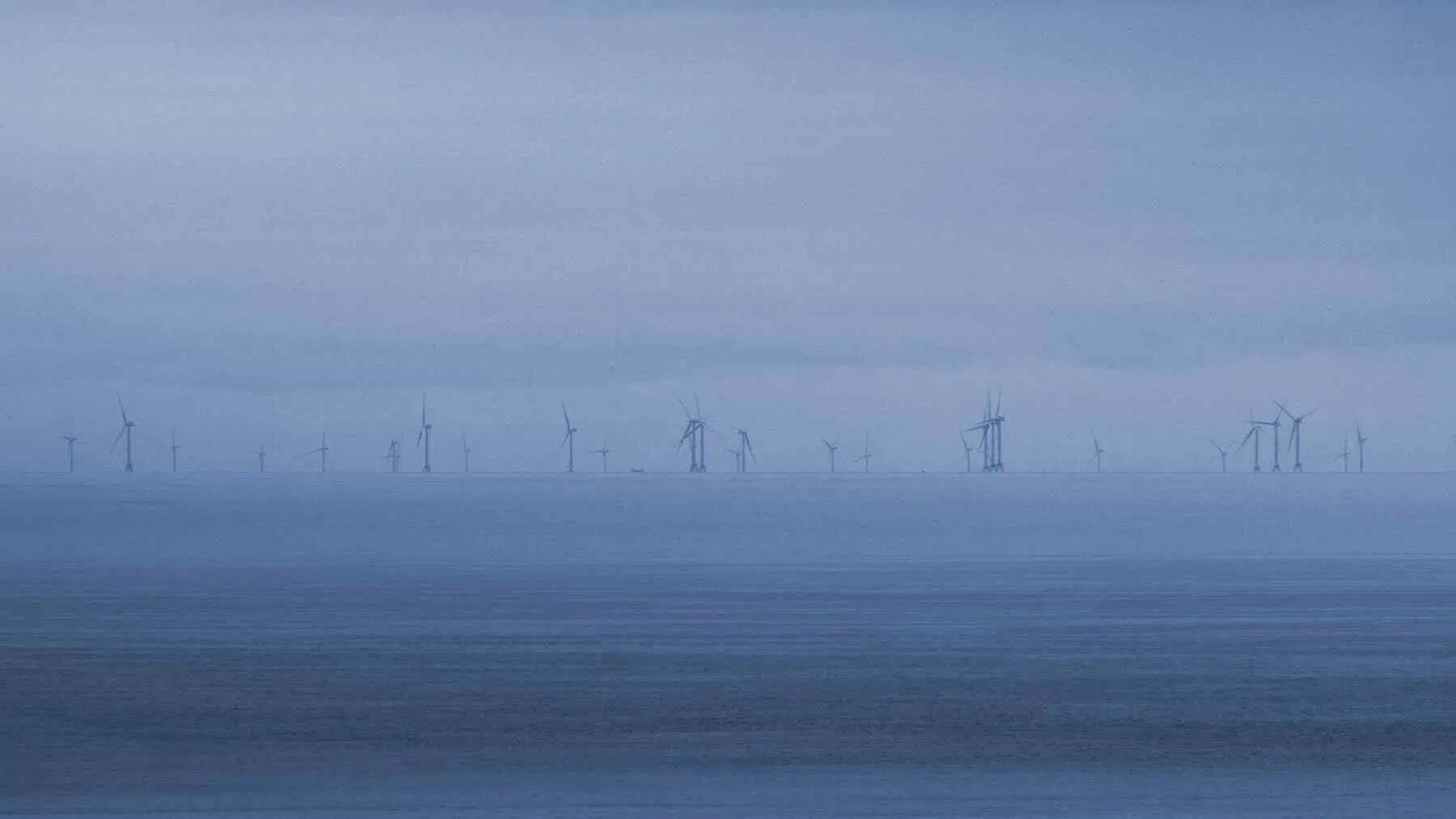
Who would have thought a wind farm would pose a threat to UK air defense?
The Fallago Rig Project is in the Ministry of Defense’s radar, and they say it’s an “emergency concern.”
Wind turbines could disable tracking of all unknown aerial vehicles (UAVs). This would create blind spots where trajectories can’t be tracked.
The security implications could be catastrophic if enemy agents decided to take advantage.
So why was this project still approved?
How wind power is causing blackouts, but not the kind you think
Brizlee Wood’s air-defense radar has the vital job of directing and identifying unknown aircraft.
And the Ministry of Defense (MOD) needs it for the monitoring of UK Airspace.
The MOD used the technology to monitor and assess all unknown craft entering or approaching UK airspace in real-time.
The technology is vital for the workings of National Surveillance Systems, so it cannot be allowed to fail.
It also coordinates responses to potential threats.
Obviously, the MOD has a stake in anything affecting radar operations.
So when turbines started interfering, it was a big deal.
For the Brizlee Wood wind farm to be approved, it would need to prove it wouldn’t pose a risk to national security.
What did they find —and what was that “blind spot”?
The MOD got very concerned about a reduction in its confidence in what the radar system sees.
This was related to the potential degradation that could result from the operation of the wind turbines.
A “blind spot” refers to a type of gap that defense planners express concern over.
It occurs whenever a radar has its detection or tracking capabilities diminished in some specific direction or area.
Such interference was potentially detrimental to the radar’s ability to detect unknown aircraft.
This wasn’t seen as a risk to the radar’s overall functionality.
Fallago Rig is a clear example of how renewable energy developments can intersect with defense priorities in practice. As reported in the case study, the developer believed that interference would exist.
However, it could be made acceptable through measures to reduce these effects.
At the time of the appeal, UK Government documentation shows the department saw things differently.
It felt that any interference from the wind farm would be unacceptable.
It therefore urged against continuing with construction.
Approval came with conditions of mitigation
In the end, approval was granted for Fallago Rig under specific conditions.
Approval did not depend on demonstrating that the radar would remain unaffected. It was instead contingent upon effective technical mitigation, according to the Pager Power Fallago Rig Case Study.
The debate hinged on whether interference could be effectively mitigated, rather than whether it would occur.
Documentation prepared by the MOD further demonstrates that both parties were willing to talk it out.
These consultations related to the consideration of the proposed Fallago Rig Extension by the Scottish Government.
This suggests that national security concerns will continue beyond initial approvals.
Bigger picture implications
These barriers do not necessarily occur on-site. They may instead occur around or beyond the facility.
The assessment of the potential for a wind farm to create problems for an air-defense radar will differ.
It is different from evaluating the ability of the wind farm to generate electricity.
Instead, the evaluation will move into considering the radar’s coverage area, reliability, and exposure to risk.
A blind spot in radar coverage provides one example of this type of risk, relating to locating a renewable energy-generating facility.
It is typically used as a reference point to guide builders and indicate the areas they should avoid.
They do not stop at the end of their fence line. Shadows from wind turbines can reach as far as the eye can see.
Radar signals are bent by the steel towers. Gaps will be present where people least expect them.
These hazards are right in front of us. Developers will have to be more aware of the unintended consequences before they land in trouble with national security forces.
Read the whole thing?
Get the week's signal, not the noise
Our sharpest reporting on energy, climate and nature — free, once a week.