
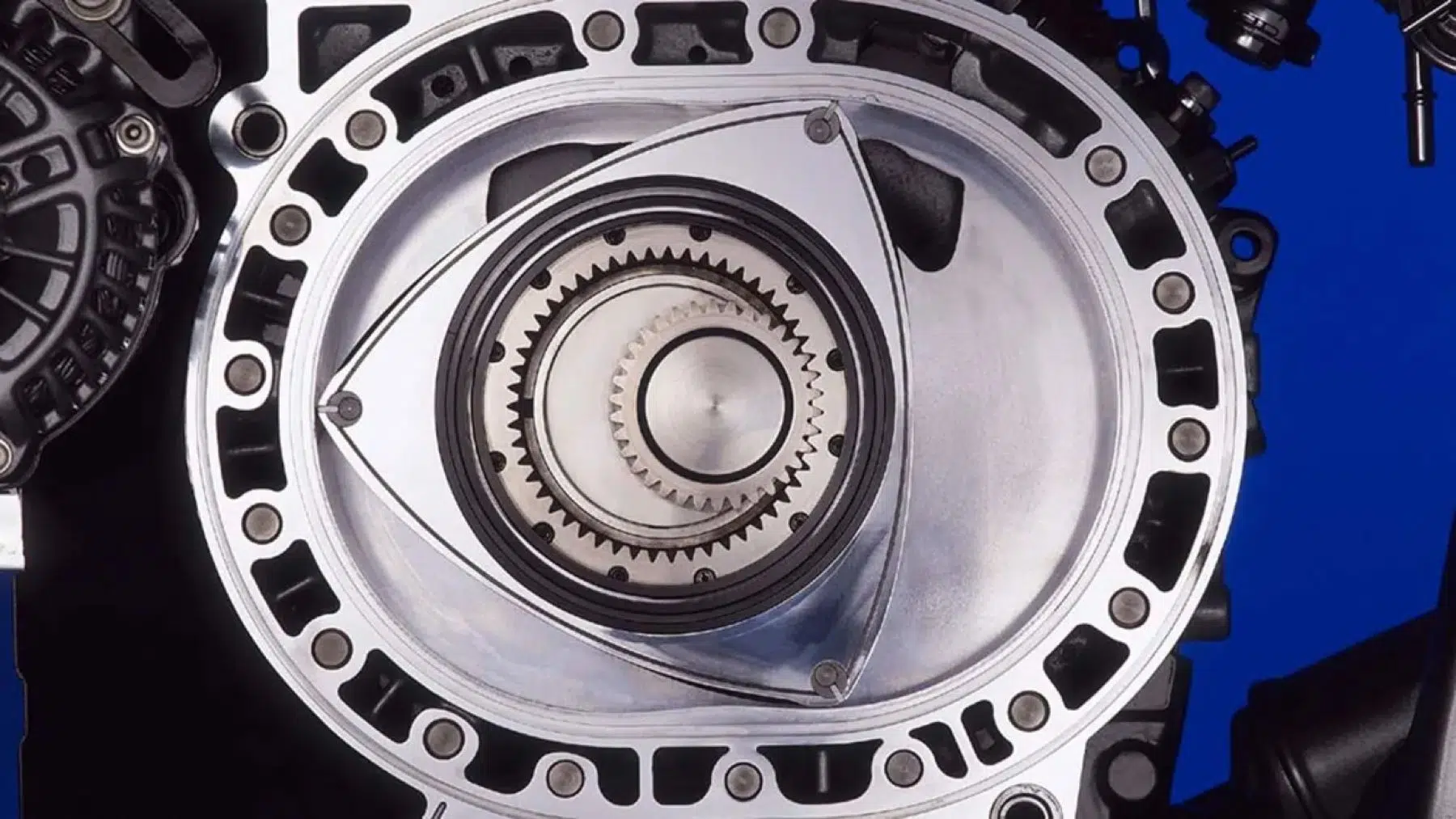
Laser ignition is the future? Japanese automakers have been searching for a new fuel for decades now. Hydrogen and electric powertrains are the most famous, but sometimes the best thing a manufacturer can do is search for a way to make combustion engines not harm the environment as much. With that in mind, Mazda unveiled the plans for a new engine that would keep the performance and the visceral part old school drivers enjoy. As governments push for stricter emissions targets and consumers demand greener options, carmakers face mounting pressure to rethink how engines ignite fuel.
New, renewable engine or adapt the old ones?
This urgency has sparked fresh approaches to combustion that stray far from the conventional piston-and-spark formula. Instead of abandoning the internal combustion engine entirely, some are exploring ways to radically improve its efficiency and cut pollutants without sacrificing the driving experience. In that spirit, a new wave of technologies is quietly emerging, promising to reshape how engines light up the fuel-air mixture inside cylinders.
These advances could redefine power delivery and emissions standards in ways many wouldn’t have predicted just years ago. Soon, one automaker’s bold move in this space will signal a turning point in the long-running battle to reconcile performance with sustainability: laser ignition.
Laser ignition to substitute the “spark”
Laser ignition used to be something only seen in aerospace or lab settings, but now carmakers are starting to explore it as a way to cut emissions, boost fuel economy, and squeeze more performance out of engines. Instead of using regular spark plugs, lasers can ignite the fuel-air mix with more precision, even when the mixture is leaner — something traditional sparks just can’t do as well.
This isn’t just theory anymore. Some automakers are quietly testing engines fired by lasers, which could bring new designs and cleaner combustion closer to real roads — even competing with hydrogen cars on the eco-friendly front. And Mazda is leading the pack.
Rotary engines have never been known for being eco-friendly, and Mazda knows it too. The company made big improvements with its SkyActiv technology, but the rotary needed a fresh approach to keep up with tighter emissions rules worldwide. That’s where laser ignition comes in. It replaces spark plugs with a tiny laser beam — about 9 mm wide and 1 cm long. This means better combustion control, less waste, and fewer emissions.
The machine’s design
The laser ignition could change how people see rotary engines. Instead of old relics, they might become efficient, high-performing options that don’t sacrifice on environmental standards. Mazda is clearly trying to rewrite the story — especially after the 2023 MX-30 R-EV brought back the rotary, but only as a quiet helper in a hybrid, not the wild RX-8-style engine fans really want.
Now, Mazda has a dedicated team working on rotaries and the Iconic SP concept hints at something bigger: a sports car powered mainly by a next-gen rotary engine, supported by twin electric motors to keep emissions low and maybe even run on different fuels. The exciting part? Mazda aims to keep it affordable, with the production model with laser ignition likely dropping in late 2026 or early 2027, and a price tag around $50,000.
What’s next for Mazda?
Mazda CEO Katsuhiro Moro said the huge positive reaction to the Iconic SP at the 2023 auto show was a big push for the company to go all in on the rotary again. That’s why they set up a new rotary engine team in February — showing they’re serious about making this happen. Unlike other Japanese companies, Mazda is not fully committed to hydrogen engines now, and prefer to upgrade a machine they already know, and one that they were the first to commercialize in the late 1960s.
Read the whole thing?
Get the week's signal, not the noise
Our sharpest reporting on energy, climate and nature — free, once a week.


