
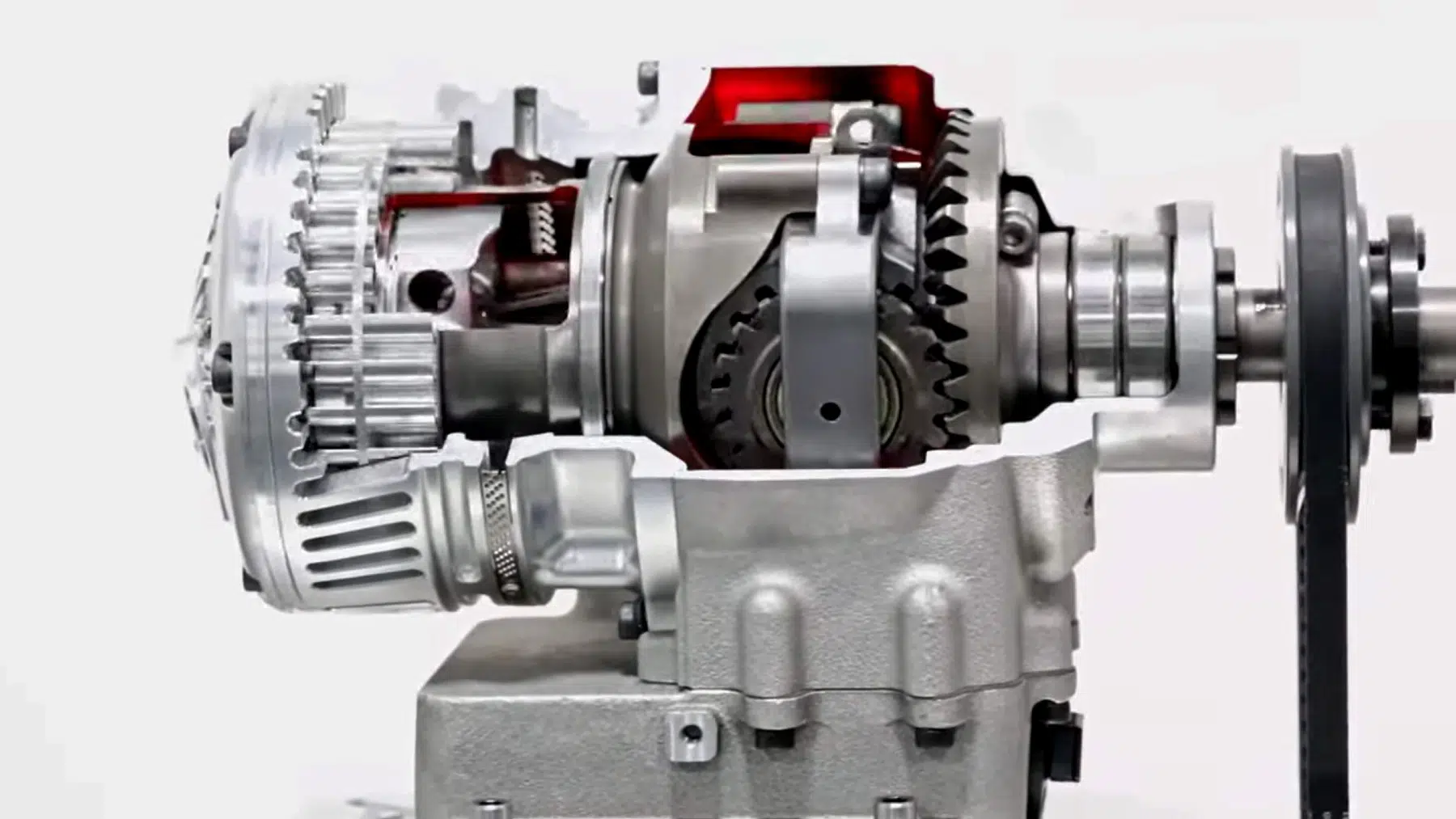
America has revealed a self-rotating engine. Rotary engines are commonly called Wankel engines, paying tribute to the inventor Frank Wankel, the person who started to create these machines. It ultimately ended up being commercialized by the Japanese manufacturer Mazda, who turned his creation into something iconic – buyers from all around the world wanted what was under the hood of the RX7. Rotating engines have long fascinated car enthusiasts for their compact design and smooth power delivery.
Rotary engines are light and powerful
Despite their unique appeal, they’ve struggled with efficiency and emissions, limiting wide use. For decades, the Wankel engine remained a niche technology, with Mazda standing almost alone in refining and popularizing it. Now, American engineers are reinventing that concept with a bold twist.
This new “self-rotating” engine breaks from tradition by rethinking the role of conventional fuel. It harnesses innovative mechanics, promising a cleaner, simpler power source. This engine goes up against long-held beliefs about combustion and opens doors to rethinking engine design across industries.
An American brand is developing its own rotating engine
Combustion engines aren’t going away anytime soon. Big automakers like Toyota are still investing in gasoline engines, while new companies like Avadi are trying to reinvent them for a cleaner future. Their latest creation is a new kind of rotating engine—but not the kind you’re thinking of.
Instead of using the classic spinning triangle (the “Dorito”) like Mazda’s famous RX7, Avadi’s prototype uses a single rotating piston. It’s a small engine, just 0.25 liters, but what’s different is how it works. Two connecting rods, shaped like scissors, help the piston spin as it moves up and down inside the engine. These rods connect to gears that keep everything balanced and smooth, creating rotation while cutting down on moving parts.
The result is an engine that’s lighter, more compact, and more efficient than a regular one. It’s about the size of a small backpack—only 23 pounds—but can produce nearly 16 horsepower. That’s not enough to power a full-sized car, but it could work well as a generator to help recharge electric vehicles. That’s actually where Avadi sees its potential: not replacing engines in regular cars, but supporting electric ones by acting as onboard power generators.
Other companies are going in the same direction
Other companies are thinking along similar lines. Mazda, for example, has a hybrid crossover that uses a small rotating engine to recharge its battery, while Ram’s hybrid pickup uses a regular gasoline engine to do the same. For now, Avadi’s engine is just a prototype. But it might not stay that way for long. The company hopes to start producing the rotating engines soon—not just for cars, but for motorcycles, ATVs, drones, and even lawnmowers. The piston itself rotates as it moves up and down. Two scissor-like connecting rods keep the motion balanced, helping reduce wear and making the system more efficient.
How does it work?
At the center of the system in the rotating engine, there’s a spinning axis that transfers the engine’s rotational power—basically doing the job of a crankshaft in a regular engine. This axis spins at the same speed as the rotating piston. However, from the details shared so far, it’s still unclear exactly how this axis connects to the counterweights or the surrounding gears.
The latest update from Avadi is that they’ve added liquid cooling to their prototype. This upgrade is helping them test a new type of rotary valve, pushing their rotating piston engine design even further. In the meantime, the company should make a partnership with an automaker to launch this machine.
Our coverage of events affecting companies is purely informative and descriptive. Under no circumstances does it seek to promote an opinion or create a trend, nor can it be taken as investment advice or a recommendation of any kind.
Read the whole thing?
Get the week's signal, not the noise
Our sharpest reporting on energy, climate and nature — free, once a week.


